 English
 русский
 Français
 عربى
عربى Español
 Português
 简体中文
简体中文
Why Plastic School Chairs Are the Default Choice for Modern Classrooms
When school administrators plan to order plastic school chairs, they usually face a mix of questions about budget, durability, and student comfort. A classroom chair is used for six to eight hours a day by students who sit, twist, climb, and occasionally tip it backward. The right plastic school chair meets height requirements, passes safety tests, and survives years of heavy use. The conclusion to draw from actual classroom practice is that material quality and size chart positioning matter far more than the initial price tag.
Content
- 1 Why Plastic School Chairs Are the Default Choice
- 2 Material Choice: What Determines Plastic School Chair Lifespan
- 3 Matching Plastic School Chair Size to Student Needs
- 4 Durability and Safety Standards to Verify
- 5 Total Cost of Ownership: Plastic vs Steel-Wood Chairs
- 6 Plastic vs Steel-Wood School Chairs: A Full Comparison
- 7 How to Evaluate a Plastic School Chair Manufacturer
- 8 Final Recommendation for School Buyers
Why Plastic School Chairs Are the Default Choice
Plastic school chairs dominate education furniture budgets because they are lightweight, easy to clean, stackable, and inexpensive in bulk. Schools with limited maintenance staff benefit from a surface that wipes clean without staining. A molded plastic seat and backrest can also be shaped with basic lumbar support, which is difficult to achieve with flat wooden alternatives in the same price range.
The main risk is that not every plastic chair is manufactured to the same standard. Differences in resin type, wall thickness, and glass fiber content lead to very different failure rates. A cheap chair may last two years, while a reinforced chair with similar proportions can last a decade. Understanding these details is the first step to a sensible purchase.
Material Choice: What Determines Plastic School Chair Lifespan
Polypropylene (PP) is the standard resin for school chair bodies because it balances flexibility and strength. High-impact PP with glass fiber reinforcement is the top choice for classrooms where chairs are dragged, stacked, and dropped. The glass fiber content in durable plastic school chairs typically ranges from 10 to 20 percent, which directly increases tensile strength and impact resistance.
ABS plastic is often used for desk or chair units that need a smoother surface finish, but it is less resistant to heavy impact. PVC is rarely used for chair seats because it scratches easily and becomes brittle in warm environments. A reliable supplier will disclose the resin type and the percentage of reinforcement, so buyers should ask for this information before signing an order.
The chart above shows how different school chair materials compare on impact resistance. Standard polypropylene absorbs roughly two thirds of the impact energy that glass fiber reinforced PP can handle. For primary school settings, where chairs are frequently moved and sometimes thrown, the reinforced version is the safer long-term investment. The steel-wood hybrid scores well because the frame carries most of the load, but the plastic seat and backrest still need adequate reinforcement to avoid cracking. When comparing plastic school chairs, ask specifically about glass fiber ratio and wall thickness before making a decision. A chair that scores below 6 in impact test is only suitable for adult seminar rooms, not for active younger students.
Matching Plastic School Chair Size to Student Needs
Seat height is the single most important dimension when buying plastic school chairs. A chair that is too low makes students slouch, which compresses the spine and reduces attention span. A chair that is too high causes students to dangle their feet and reduces blood flow in the legs. The national education standards in most countries provide specific seat height ranges for each grade band, and a professional manufacturer will follow these dimensions.
For elementary students, a seat height around 300 mm is typical; for junior high school students, the range moves to 320 to 360 mm; for senior high school, the recommended seat height is between 350 and 400 mm. Adjustable chairs eliminate the need to buy different sizes at the same time, which is why many schools now prefer height-adjustable models for their flexibility.
The column chart above shows typical seat height recommendations for three education stages. Elementary students generally fit best at a seat height of about 300 mm, while junior high students move into the 320 to 360 mm range. High school students most often require a seat height near 375 mm, with some adults and taller teenagers needing up to 400 mm. Because student populations vary, buying a height-adjustable model is the most efficient way to accommodate a single classroom without multiple inventory cycles. An adjustable plastic school chair with a simple screw or clip mechanism can serve a school for years as the student body changes. This is especially useful for schools that buy chairs in batches and want flexibility across grade levels.
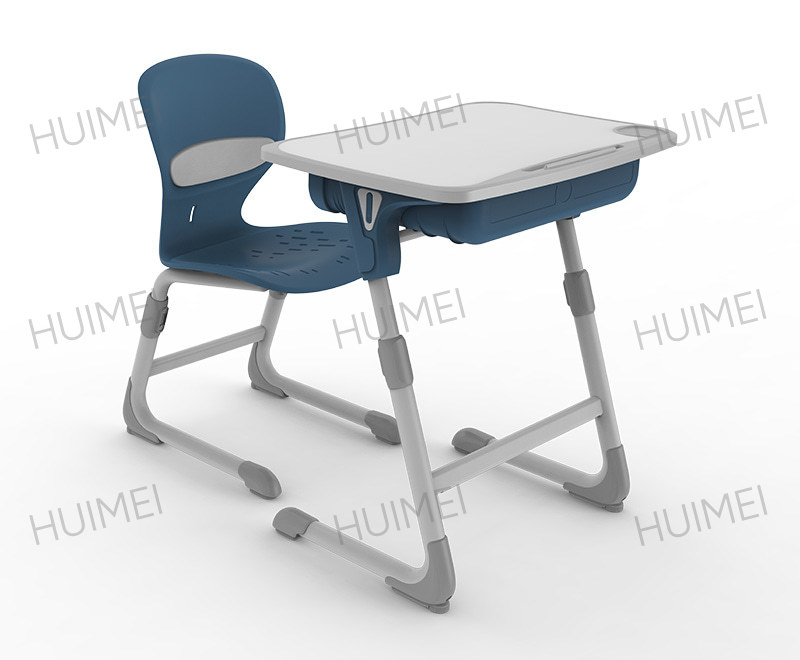 Adjustable Steel-Wood Desk and Chair Set for Elementary and Junior High SchoolsThis height-adjustable learning set grows with students, offering a comfortable workspace that reduces posture strain. Its sturdy construction withstands classroom wear, making it a practical choice for evolving school needs.View Product →
Durability and Safety Standards to Verify
Classroom furniture has to endure more abuse than office furniture. Students swing on chairs, push them across hard floors, and lean so far back that the rear legs lift. A plastic school chair must therefore pass not only an impact test but also a stability test and a load test. Look for chairs that can carry at least 120 kg without deformation and that do not tip over when a load is applied to the front edge of the seat.
Safety goes beyond structural tests. The plastic must be free of BPA and phthalates that are harmful to children. Fire safety is another consideration, especially in schools where chairs are stacked near doors or heating systems. A professional manufacturer should provide test reports for high-impact resistance, edge smoothness, and release of harmful substances.
For more technical guidance on selecting classroom furniture, consult this practical guide on classroom desk and chair selection. It covers common pitfalls in product evaluation and helps procurement teams ask the right questions before ordering.
Total Cost of Ownership: Plastic vs Steel-Wood Chairs
The purchase price of plastic school chairs is low, but the total cost over a five-year cycle tells a fuller story. A cheap all-plastic chair may need to be replaced after two or three years, while a hybrid steel-wood chair with reinforced plastic seating could last a decade. When a school has hundreds of classrooms, replacement labor and logistics produce an operating cost that is easy to overlook at the time of the initial order.
The line chart below shows an example cost curve based on typical school furniture pricing. Always obtain a written total cost estimate from the supplier, including freight, installation, and spare part availability.
The line chart above illustrates how the total cost of ownership evolves for two types of classroom chairs. Plastic chairs start at a much lower purchase price, which explains why they are attractive in a budget year. However, the cost curve rises steeply in later years because of replacement needs, extra freight, and administrative time spent on repeat orders. Steel-wood hybrid chairs have a higher initial cost but remain relatively stable over time, often becoming the more economical option by the fourth year. For a school ordering 500 chairs, the cumulative cost difference can reach several thousand dollars. Therefore, procurement teams should compare not just unit price but the projected five-year total before signing a contract.
Plastic vs Steel-Wood School Chairs: A Full Comparison
Plastic school chairs are the right solution for schools that prioritize budget, light weight, and minimal maintenance. Steel-wood hybrid chairs serve schools that need a longer service life with better structural stability. Many classrooms now use a mix of both: plastic chairs in cafeteria and common areas, and reinforced hybrid chairs in high-use academic rooms.
When deciding, consider the education level and the daily behavior of students. Younger children tend to be rougher on furniture, while high school students usually follow better care habits. The radar chart below compares the key performance areas for both chair types.
The radar chart above compares six performance factors between plastic chairs and steel-wood hybrid chairs. Plastic chairs score very high on cost and maintenance because they are cheap to replace and require almost no upkeep. Steel-wood hybrids achieve higher scores on durability and sustainability, since a longer lifespan reduces waste and the wood components can be sourced from renewable materials. In terms of ergonomics, both types can be shaped or adjusted for proper posture, so the final choice may depend on specific product design. Aesthetics varies by supplier and customization options; both materials offer attractive finishes. For a school with a very tight budget, plastic remains a practical choice, while a steel-wood hybrid serves better for long-term institutional investment.
For classrooms where comfort and quick rest are a priority, a flip chair that allows a student to recline during nap time is an excellent addition. A well-designed flip seat supports the neck and lower back with the same plastic injection molding used in standard chairs.
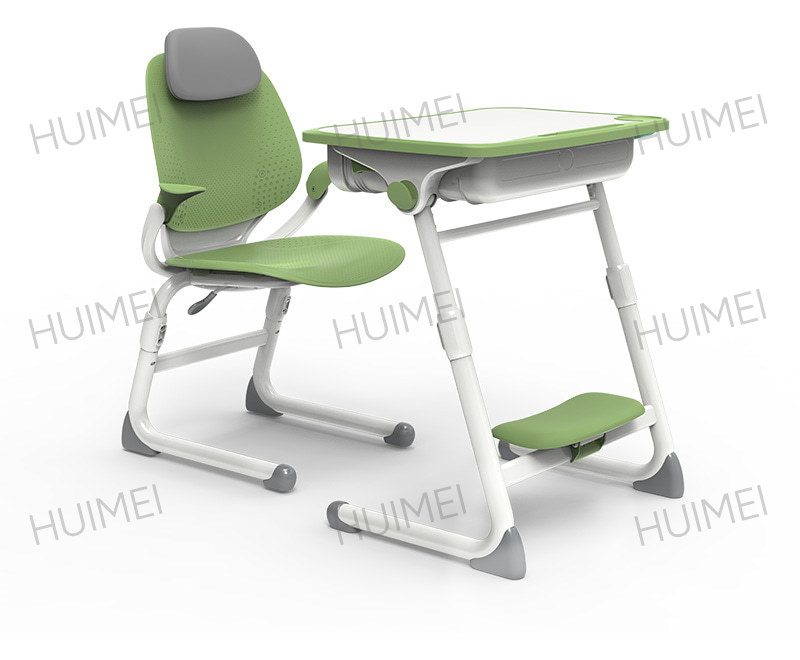 Flip Desk and Chair Set for Napping in Primary, Middle, and High SchoolDesigned for quick transitions between study and rest, this set features a rotating seat and flip-top desk. Soft foot pedals and an adjustable headrest provide comfort during short breaks.View Product →
How to Evaluate a Plastic School Chair Manufacturer
A plastic school chair is only as good as the production line that made it. When evaluating suppliers, procurement teams should ask about resin sourcing, mold making capabilities, in-house quality inspection, and delivery history. A manufacturer with automated production of steel parts, wood parts, and painting operations can consistently control the final quality of a hybrid chair. You should also request product samples from the same batch that will be delivered, as sampling from an earlier pilot production can hide batch variations.
Reference projects matter in the school furniture industry. A supplier that has completed projects for universities, education authorities, and international organizations is more likely to understand the documentation and shipping requirements needed for large contracts.
| Factor | What to Look For | Common Red Flag |
|---|---|---|
| Material Quality | Injection molded reinforced plastic with published resin specifications | Undisclosed resin type, thin walls, visible flash |
| Testing Certificates | Load test reports, impact test reports, safety data sheets | No documentation or only verbal assurance |
| Production Capacity | Automated lines with in-process quality control | Manual operations with no standard process |
| Track Record | Completed education projects with verifiable references | No references or inconsistent delivery claims |
An experienced manufacturer will also offer after-sales support for replacement parts. Even a strong plastic school chair can have a cracked seat after several years, and a supplier that stocks spare parts makes repair far cheaper than full replacement. For a deeper technical explanation of the production capabilities used by Huimei, visit the dedicated page on technological advantage.
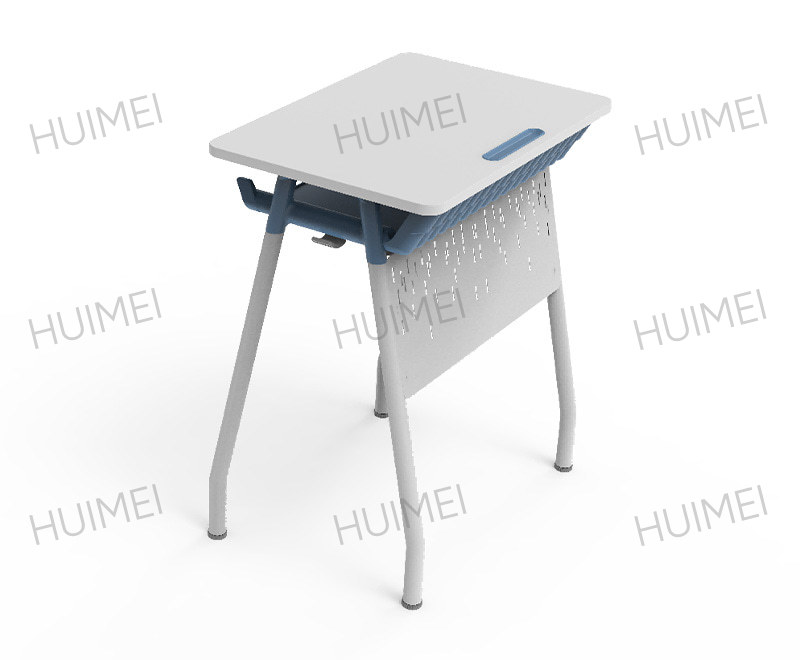 University Teaching Desk and Chair Series for Flexible Learning SpacesInspired by natural forms, this series combines strength with elegance, suiting various campus settings. Its lightweight design and accessory options support lectures, seminars, and group work.View Product →
Final Recommendation for School Buyers
Choosing plastic school chairs begins with three data points: the seating height range of your students, the daily behavior level in the classroom, and the five-year replacement budget. Plastic chairs work well when the primary need is affordability and quick deployment. Steel-wood hybrid chairs with reinforced plastic seating are the stronger option for schools that want to minimize repeat purchases. In all cases, verify that the supplier discloses material composition, has published test reports, and can show a real track record with education clients. Get the fundamentals right and your classrooms will have safe, durable seating for years.
Copyright© Zhejiang Huimei Industry & Trade Co., Ltd. All Rights Reserved.
Professional School Furniture Manufacturer School Furniture Supplier