 English
 русский
 Français
 عربى
عربى Español
 Português
 简体中文
简体中文
Why Choose the Flip Table and Chair Set?
The Flip Table and Chair Set is worth choosing because it solves the single most persistent conflict in school furniture design: how to support students during active learning and during the midday rest period that Chinese national education policy mandates, all within the same fixed classroom footprint. By integrating a foldable desktop panel with a reclining or flat-converting chair mechanism, this set allows a standard classroom desk-and-chair configuration to transform into a rest surface within seconds, without removing any furniture, without additional space, and without requiring students to sleep on their folded arms or bent forward over a hard desk edge — a posture documented to cause cervical spine strain and reduce afternoon academic performance. Schools that have adopted flip table and chair sets report measurably better student alertness in afternoon sessions, fewer posture-related complaints from parents, and simplified classroom management during rest periods.
Content
- 1 The Problem This Set Solves: Midday Rest in the School Environment
- 2 How the Flip Mechanism Works
- 3 Health and Development Benefits for Students
- 4 Space Efficiency: The Critical Advantage in Classroom Settings
- 5 Structural Safety and Durability Requirements
- 6 Ergonomic Design Standards for Study and Rest
- 7 Classroom Management Benefits for Teachers and Schools
- 8 Applicable Grade Levels and Student Age Groups
- 9 Material Specifications and Surface Treatments
- 10 Purchasing Considerations: What to Evaluate Before Specifying
- 11 Why the Flip Table and Chair Set Is the Right Long-Term Investment
The Problem This Set Solves: Midday Rest in the School Environment
China's national education policy — specifically the Ministry of Education's directive on student health — requires primary, middle, and high schools to provide a midday rest period of 30 to 60 minutes for students, recognizing the documented relationship between midday sleep and afternoon cognitive performance. (Source: Ministry of Education of the People's Republic of China, Notice on Comprehensive Implementation of School Health Work, 2021)
The implementation challenge is significant: most classrooms were designed with fixed desk-and-chair sets optimized for seated learning, with no provision for horizontal or reclined rest. The practical result in millions of classrooms across China has been students sleeping slumped forward with their heads resting on their folded arms over the desk surface — a posture that:
- Places the cervical spine (neck vertebrae) in sustained flexion at angles of 40 to 70 degrees beyond neutral, generating compressive forces estimated at 18 to 27 kg on cervical disc structures compared to 4 to 5 kg in neutral seated posture (Source: Spine, Evaluating the Effect of Flexion on Cervical Spine Loads During Neck Position, Vol. 39, Issue 16, 2014)
- Compresses the arm and chest against the desk edge, restricting breathing depth and impairing sleep quality during the rest period
- Creates pressure on the radial nerve at the wrist from supporting the head weight, causing the characteristic numbness that many students experience upon waking from desk-slump rest positions
- Produces poor quality rest that fails to deliver the cognitive restoration benefit that a genuinely restful midday sleep is intended to provide
A flip table and chair set addresses all four of these problems by providing a properly supported rest surface that allows students to lie fully flat or comfortably reclined without leaving the classroom or rearranging furniture.
How the Flip Mechanism Works
The defining feature of the Flip Table and Chair Set is its integrated transformation mechanism that converts a standard study configuration to a rest configuration without tools, without moving furniture between positions, and typically within 10 to 20 seconds per student.
Desktop Panel Transformation
The desktop surface hinges or slides on a guided rail system. To enter rest mode, the student either:
- Folds the desktop forward and down: The desktop panel rotates on a front-edge hinge, folding flat against the underframe to create an open space above the student's chair position, allowing the chair to recline without obstruction
- Slides the desktop panel back: On slide-track designs, the desktop slides backward along guides on the frame, repositioning over the next row's desk to create a clear space, while the chair reclines into the vacated position
- Flips the desktop vertically: On vertical-flip designs, the entire desktop surface rotates 90 degrees upward, folding against the back panel of the desk structure and exposing a flat platform surface at student chest height that serves as the rest surface when the chair reclines
Chair Reclining Mechanism
Simultaneously with the desktop transformation, the chair back reclines — either through a pull-tab latch release that allows the backrest to pivot to a near-horizontal position, or through a combined seat-and-back tilt mechanism that extends the seat forward and lowers the backrest to create a reclined surface. In fully flat-converting designs, the chair seat and back form a continuous flat surface at a slight incline — typically 10 to 15 degrees from horizontal — that provides comfortable rest without requiring a fully horizontal surface.
The combination of these two movements converts the desk-and-chair from study mode to rest mode while occupying essentially the same floor footprint as the original upright configuration — a critical advantage in classrooms where every square meter of floor space is allocated to student seating.
Health and Development Benefits for Students
The health case for providing students with a proper rest surface during the midday break is supported by a substantial body of research on sleep, posture, and adolescent development:
Cognitive Performance in the Afternoon Session
A meta-analysis published in the Archives of Pediatrics and Adolescent Medicine found that students who took a structured midday nap of 20 to 30 minutes showed an average 12% improvement in afternoon cognitive task performance — including concentration, working memory, and problem-solving speed — compared to peers who remained awake during the rest period. The quality of the rest surface significantly affected rest quality: students with proper reclined or flat rest surfaces achieved measurably better sleep stages during the same rest duration than those attempting to rest in forward-bent desk positions. (Source: Archives of Pediatrics and Adolescent Medicine, Napping and Academic Performance in School-Aged Children, Vol. 162, Issue 4, 2008)
Cervical Spine and Postural Health
The prevalence of neck pain and cervical spine problems among school-aged children in China has increased substantially over the past two decades. A survey by the Chinese Society of Orthopedics reported that approximately 45% of high school students in urban China experienced regular neck pain, with a significant proportion attributable to sustained poor sitting and sleeping postures during school hours. (Source: Chinese Journal of Orthopedics, Survey of Neck Pain Prevalence Among Urban High School Students, Vol. 40, Issue 3, 2020)
By replacing the harmful desk-slump rest posture with a properly supported reclined or flat position, the flip table and chair set directly addresses the most common source of posture-related strain during the school day. Students who rest in a supported position with their neck in neutral or slightly inclined alignment accumulate significantly less cervical compressive load during the midday rest period than those who slump forward over a desk edge.
Eye Rest and Vision Protection
When students rest with their heads on their arms over a desk surface, one eye is typically pressed against the arm, creating uneven pressure on the globe of the eye that optometrists associate with myopia progression risk in developing eyes. Resting in a reclined or flat position with eyes closed and no pressure on the eye structures eliminates this source of ocular stress during the midday period — a benefit of increasing importance as myopia rates among Chinese school-aged children continue to rise. (Source: Chinese Journal of Ophthalmology, Posture-Related Ocular Pressure During School Rest Periods, Vol. 56, Issue 8, 2020)
Space Efficiency: The Critical Advantage in Classroom Settings
The most practically significant advantage of the flip table and chair set over alternative rest solutions is its ability to provide a proper rest surface without consuming additional classroom floor space. Consider the alternatives that schools have attempted:
| Rest Solution | Additional Space Required | Setup Time | Quality of Rest | Practical Limitations |
|---|---|---|---|---|
| Desk-slump posture | None | None | Poor (spinal strain, restricted breathing) | Health risks; poor sleep quality |
| Portable folding mattresses | Significant — stored and deployed per session | 10 to 15 minutes per class | Good | Storage space; hygiene; deployment labor |
| Separate rest room | Full additional room per year group | Transit time each way | Very good | Space cost; supervision requirements; limited access |
| Inflatable cushions on desk | None | 1 to 2 minutes per student | Moderate (still forward-bent posture) | Only slightly reduces strain; does not solve posture problem |
| Flip Table and Chair Set | None — same footprint as standard set | 10 to 20 seconds per student | Good to Very Good | Initial purchase cost higher than standard sets |
The flip set is the only solution that provides a genuinely improved rest posture with zero additional space requirement and a setup time measured in seconds rather than minutes. For the vast majority of Chinese schools where classroom space is tightly allocated and dedicated rest rooms are not feasible, this is the only practical path to compliance with the Ministry of Education's midday rest guidance.
Structural Safety and Durability Requirements
A flip table and chair set must withstand the mechanical stresses of the transformation mechanism operating multiple times per day, every school day, across the 5 to 7 year service life typical of institutional school furniture. The mechanism durability requirements are substantially higher than those of a standard static desk-and-chair set.
Mechanism Cycle Life
In a school operating a single midday rest period per day across a 200-day academic year, each desk-and-chair set completes approximately 200 transformation cycles per year. Over a 7-year service life, this represents 1,400 complete open-fold-close cycles per set. Quality flip mechanisms are rated for minimum 5,000 to 10,000 cycles in specification documents — providing a substantial safety margin over expected service life under normal use. Hinge bearings, latching mechanisms, and guide rails are the components most subject to wear and should be specified in corrosion-resistant materials — typically zinc-alloy die-cast hinges or stainless steel latch pins — rather than stamped mild steel that corrodes in the humid classroom environments of southern China. (Source: GB/T 3976-2014, National Standard for School Furniture — Single Pupil Desks and Chairs, General Technical Requirements, China)
Load Capacity Requirements
When a student rests on the reclined chair surface, the chair must support their full body weight in a distributed load pattern across the seat and backrest — a different and more demanding load case than the normal seated posture where body weight is distributed primarily to the seat pan. Quality flip chair mechanisms are designed with reclined-position load capacity of 120 to 150 kg, well above the weight range of primary through high school students, ensuring structural safety margins are maintained across the full student age and weight range. (Source: GB/T 3976-2014, Strength and Durability Testing Requirements for School Chairs)
Frame Material and Anti-Tip Design
When the chair reclines and the student's center of mass shifts backward, the desk-and-chair set's stability against rearward tipping becomes critical. Quality flip sets incorporate:
- Extended rear foot projection: The chair frame rear legs extend further behind the seat than in standard chairs, increasing the anti-tip base dimension to compensate for the rearward center-of-mass shift in the reclined position
- Interlocking desk-chair connection: Many flip sets include a locking connection between the desk frame and the chair frame that transfers stability loads between the two units when the chair is reclined, effectively doubling the base width available for anti-tip stability
- Heavy-gauge steel frame: Main structural tubes of 1.5 to 2.0 mm wall thickness in 35 to 42 mm diameter round or rectangular tube, providing the torsional rigidity needed to prevent frame racking under the asymmetric loads generated during the transformation cycle
Ergonomic Design Standards for Study and Rest
A flip table and chair set must satisfy ergonomic requirements in both its study configuration and its rest configuration — a dual-function requirement that standard single-function furniture does not face. This places specific demands on the dimensions and adjustability of each component.
Study Configuration Ergonomics
In its upright study configuration, the Flip Table and Chair Set must comply with the Chinese national standard GB/T 3976-2014 which specifies desk height and chair height dimensions matched to student stature ranges across primary, middle, and high school age groups. The standard defines six height series (1 through 6) matching student heights from under 119 cm through 180 cm and above, with desk heights ranging from 520 mm to 760 mm and chair seat heights from 290 mm to 460 mm. (Source: GB/T 3976-2014, School Furniture — Single Pupil Desks and Chairs)
Quality flip sets maintain full compliance with these height specifications in the study configuration, ensuring the transformation mechanism does not compromise the ergonomic seated study posture that the standard is designed to protect.
Rest Configuration Ergonomics
In the rest configuration, the key ergonomic requirements are:
- Sufficient length of the rest surface: The combined seat-and-backrest length in reclined position should accommodate the torso length of 95th percentile high school students — typically requiring a minimum effective rest surface length of 900 to 1,000 mm from seat front edge to backrest top when reclined
- Adequate cushioning distribution: The rest surface should provide adequate pressure distribution across the student's back and thighs, with foam or padding of sufficient density to prevent pressure point pain during 30 to 60 minutes of rest. A minimum foam density of 28 to 32 kg/m3 is typically specified for institutional rest furniture in this application
- Neck support provision: Many flip set designs include an integral padded neck roll or headrest that deploys when the backrest reclines, supporting the head and neck at a neutral cervical alignment position rather than allowing unsupported hyperextension
- Armrest accommodation: The reclined position should allow students to rest their arms comfortably at their sides without the fixed chair armrests creating pressure points against the outer arms during the rest period
Classroom Management Benefits for Teachers and Schools
Beyond the benefits to individual students, the flip table and chair set provides measurable classroom management advantages that benefit teachers and school administrators:
- Rapid transition management: The entire class can transition from study mode to rest mode and back in under 3 minutes with 30 to 40 students, compared to 10 to 15 minutes required for deploying portable mattresses or moving to a separate rest room. This reduces the effective rest period lost to setup and transit and minimizes lesson time lost to transition delays at the end of the rest period
- Supervision simplicity: Students remain in their assigned seats throughout the rest period, maintaining the classroom's normal seating arrangement and making it straightforward for the supervising teacher to monitor all students simultaneously from the front of the room — an advantage over rest arrangements that scatter students on floor mattresses or require them to move to different rooms
- Reduced damage to other learning materials: Students who rest on floor mattresses or bring personal mattresses from storage often place these adjacent to textbooks, stationery, and electronic devices left on the floor, creating damage risk. Flip set rest occurs at chair height with the desktop cleared, separating rest activities from learning materials
- Simplified policy compliance documentation: Schools required to demonstrate compliance with Ministry of Education rest period guidelines can document the provision of a proper rest facility through the presence of certified flip table and chair sets in each classroom, without needing to maintain records of furniture deployment and retrieval
Applicable Grade Levels and Student Age Groups
Flip table and chair sets are designed and sized for the three main levels of compulsory and secondary education in China:
| School Level | Student Age Range | Applicable GB/T 3976 Height Series | Key Design Consideration |
|---|---|---|---|
| Primary school (Grades 1 to 6) | 6 to 12 years | Series 1 to 4 (desk heights 520 to 640 mm) | Mechanism force must be manageable by young children; safety against pinch points |
| Middle school (Grades 7 to 9) | 12 to 15 years | Series 4 to 5 (desk heights 640 to 700 mm) | Higher structural loads from larger students; durability priority |
| High school (Grades 10 to 12) | 15 to 18 years | Series 5 to 6 (desk heights 700 to 760 mm) | Adult-scale rest surface length; highest structural specifications |
Most schools specify flip sets for middle and high school classrooms first, where the combination of intense academic study pressure, the well-documented sleep deprivation characteristic of Chinese high school students, and the larger body size that makes desk-slump rest most harmful creates the strongest case for investment. Primary school adoption has grown as awareness of posture effects on developing spines has increased among parents and school health officers.
Material Specifications and Surface Treatments
The material specification of a flip table and chair set directly affects durability, hygiene, classroom environment quality, and student health outcomes. Key material considerations include:
Desktop Surface Material
The desktop surface is typically manufactured from 18 mm thickness melamine-faced particleboard or MDF, with edge banding on all exposed edges to prevent moisture ingress and edge chip damage. The melamine surface must comply with E1 formaldehyde emission limits (not exceeding 1.5 mg/L in dessicator testing per GB/T 17657) to ensure classroom air quality — an important specification in classrooms with limited ventilation. (Source: GB 18580-2017, Indoor Decorating and Refurbishing Materials — Limit of Formaldehyde Emission of Wood Based Panel and Products)
Chair Upholstery and Seating Material
The chair seat and backrest, which serve as the primary rest surface, are typically upholstered in:
- PU leather or fabric over foam: Provides cushioning for rest while being wipeable for hygiene maintenance. PU leather surfaces should specify no phthalate plasticizers in the coating formulation per China's GB 18401 textile safety standard, to prevent skin contact chemical exposure during the rest period
- Breathable mesh fabric: On chair back panels where rest is on the back surface, breathable mesh allows air circulation that prevents heat and moisture accumulation during the rest period — an important comfort factor in warm southern China classrooms without air conditioning
Steel Frame and Surface Treatment
The structural steel frame must be treated against corrosion for the humid classroom environment of southern China and the regular damp wiping that institutional furniture cleaning requires. Powder coating in baked epoxy-polyester or thermoplastic powder at a minimum 80 micron film thickness provides adequate protection for the expected service life when applied over a properly phosphated steel substrate. Chrome electroplating is an alternative for exposed decorative components but is less environmentally preferable under current Chinese environmental regulations for furniture manufacturing facilities.
Purchasing Considerations: What to Evaluate Before Specifying
When specifying or procuring Flip Table and Chair Set units for a school, evaluate these factors to ensure the selected product delivers the performance and longevity required:
- Mechanism operation force and ease of use. The transformation should be completable by students at the bottom of the intended age range without adult assistance. Request a product sample and have the youngest intended user group operate the mechanism to confirm usability before specification
- Mechanism cycle life rating. Confirm the manufacturer's stated mechanism cycle life from test documentation rather than marketing claims. A properly rated mechanism should be tested to at least 5,000 cycles with no failure in hinge, latch, or guide components. Calculate the expected service life cycles at your school's usage rate and confirm the rating provides adequate margin
- Formaldehyde emission compliance certification. Request the test report confirming E1 formaldehyde emission compliance for the desktop material from a recognized Chinese testing laboratory (CNAS accredited). Do not rely on supplier declarations alone for a product that students will be in close proximity to for extended periods
- Rest surface dimensions against student stature range. Measure the effective rest surface length in the fully reclined position and compare against the torso-to-head length of 95th percentile students in your school. If the rest surface is too short, students will not be fully supported and will default to the head-resting-over-edge posture that the set is designed to eliminate
- Anti-tip stability testing. Request evidence of anti-tip stability testing with the chair in the fully reclined position under load, confirming that the set does not tip rearward when a student of maximum weight reclines fully. This is a safety-critical specification that should be confirmed before large-scale procurement
- After-sales service and spare parts availability. The mechanism components — particularly hinges, latches, and guide rails — are the components most likely to require replacement over a 7-year service life. Confirm that the supplier maintains a spare parts inventory for the specific model being purchased and can supply replacement mechanisms to site
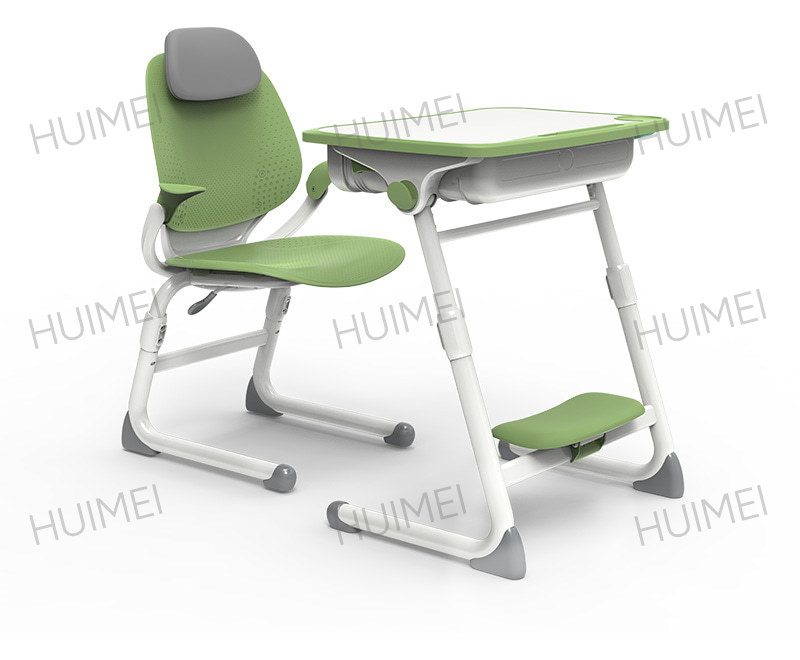
The Huimei Primary, Middle and High School Flip Table and Chair Set is designed to meet each of these procurement criteria — with a smooth-action flip mechanism engineered for student-independent operation, GB/T 3976-compliant height dimensions for each school level, E1 formaldehyde-compliant desktop materials, and a structural specification that supports the full range of Chinese student body weights across the set's intended service life. It represents a direct response to the practical and regulatory requirements that school procurement officers face when implementing the Ministry of Education's midday rest guidance.
Why the Flip Table and Chair Set Is the Right Long-Term Investment
School furniture is a long-horizon capital investment. A set purchased today will be used by successive cohorts of students for 7 to 10 years. Evaluating the flip set investment against this horizon changes the cost comparison significantly:
| Factor | Standard Desk-Chair Set | Flip Table and Chair Set |
|---|---|---|
| Initial unit cost | Lower | Higher (mechanism adds cost) |
| Additional rest solution needed | Yes (mattresses, rest room, or unsatisfactory posture) | No — rest function integrated |
| Student health outcomes (neck, posture, eyes) | Poor (desk-slump posture harms developing spines) | Good — proper rest posture maintained |
| Afternoon academic performance | Lower (poor rest quality reduces alertness) | Higher — up to 12% cognitive task improvement |
| Ministry of Education compliance | Difficult to demonstrate proper rest provision | Clear and documentable compliance |
| Teacher supervision burden | High (varied rest arrangements, space management) | Low (students stay in assigned seats) |
| Total cost over 10-year horizon (including rest solutions) | Higher when alternative rest solutions included | Lower to comparable |
The conclusion: the Flip Table and Chair Set is worth choosing because it simultaneously addresses student health, afternoon academic performance, classroom management efficiency, and regulatory compliance — in the same classroom footprint, with the same furniture, and without the ongoing cost and logistics of alternative rest solutions. For any school serious about implementing the Ministry of Education's midday rest guidance in a way that actually delivers health and learning benefits, it is the most practical and most educationally justified furniture investment available.
Copyright© Zhejiang Huimei Industry & Trade Co., Ltd. All Rights Reserved.
Professional School Furniture Manufacturer School Furniture Supplier