 English
 русский
 Français
 عربى
عربى Español
 Português
 简体中文
简体中文
Which is better, a bunk bed with a desk underneath or a regular bunk bed?
With the continuous improvement of university dormitory environments and the diversification of student living needs, "Multi Functional Combination Bed" are gradually becoming a core choice for dormitory life. Among them, bunk beds with desks underneath and regular bunk beds are the two most common types of dormitory beds, and many students and parents face the question of "which is better" when purchasing. In fact, both have their advantages, and the choice of which is more suitable depends on the dormitory space, the number of users, functional needs, and personal living habits.
Content
I. Comparison of Space Utilization and Layout Flexibility
The biggest advantage of the bunk bed with a desk underneath (also known as an "Multi Functional Combination Bed") lies in its "vertical space zoning" concept. It integrates the sleeping area (upper bunk) with the study and storage area (lower desk and cabinet), achieving an independent functional layout of "one person, one area." This design is particularly suitable for standard university dormitories with 4-6 people, providing each student with relatively private personal space while maintaining the overall brightness and openness of the dormitory. For dormitories with limited space, it is a model for improving space efficiency.
Standard bunk beds focus more on "combining basic sleeping functions." They accommodate two people by using two bunk beds, typically without integrated desks or large storage cabinets. The saved floor space can be used for shared desks, wardrobes, or other furniture. This layout is more flexible in dormitories with more people (e.g., 8-person rooms) and smaller spaces, but the individual functional areas are relatively weaker.
Summary: If you prioritize independent study and storage space, a Multi Functional Combination Bed is the preferred choice; if the dormitory is large and small, prioritizing basic sleeping space is necessary, and a traditional bunk bed may be more practical.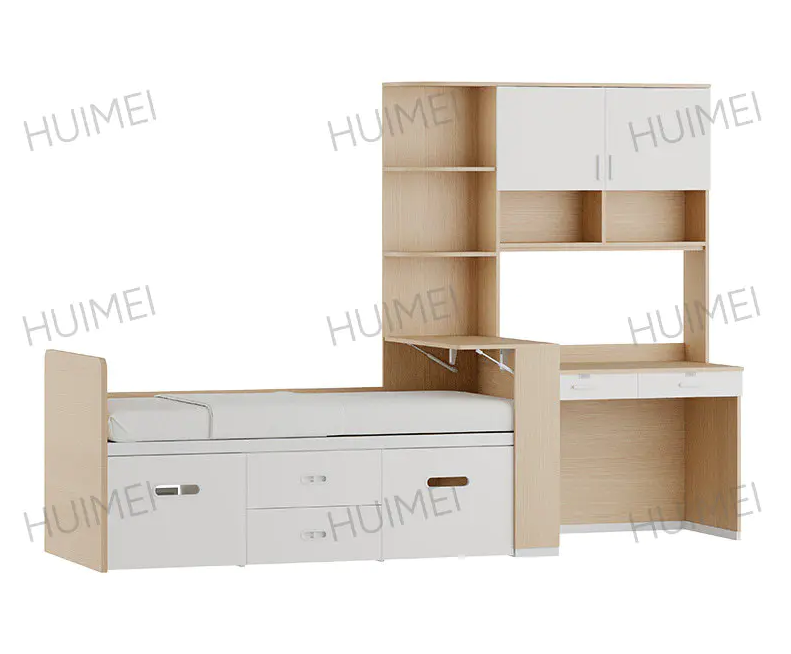
II. Functionality and Convenience Analysis
The core value of modern multi-functional dormitory beds lies in their integrated design. A high-quality bunk bed with a desk underneath typically includes:
- Integrated Study Area: Built-in desk, bookshelf, sockets, and USB ports to meet electronic learning needs.
- Powerful Storage System: Equipped with wardrobes, drawers, shoe cabinets, etc., solving dormitory storage problems.
- Privacy and Comfort Design: Includes bed curtain tracks, lamp placement, and cable management systems.
These features allow students to meet their basic living needs with just one bed without having to purchase a large amount of additional furniture.
In contrast, regular bunk beds offer a simpler function, primarily providing a sleeping area. Desks, wardrobes, etc., need to be added separately, potentially making the overall dormitory layout appear more fragmented. However, this also means greater flexibility in configuration, allowing for adjustments based on budget and preferences.
In summary: Bundled beds with desks underneath offer a "one-stop solution," suitable for students who want to quickly set up and prioritize a neat and uniform look; regular bunk beds are better suited for those with limited budgets or who enjoy DIY personalized arrangements.
III. Safety and Comfort Considerations
Safety is paramount when choosing a dormitory bed. Bundled beds with desks underneath typically use a single steel structure or sturdy solid wood construction, offering strong stability. Stepped stairs (or ladder cabinets) are safer and more convenient than vertical ladders, especially suitable for nighttime access. The integrated design also reduces the risk of bumps and knocks caused by too much independent furniture.
The safety focus for regular bunk beds lies in their structural stability and the height of the guardrails. When purchasing, pay special attention to the material thickness, the quality of the connectors, and whether the guardrails meet national standards (generally, the guardrail height should not be less than 30cm). The ladder design should be checked for slip resistance and a reasonable angle.
In terms of comfort, a bunk bed with a desk underneath offers a more spacious and well-lit study area, providing a better sense of psychological space. The lower bunk of a bunk bed often feels cramped, while the upper bunk may be more affected by lighting and air conditioning vents.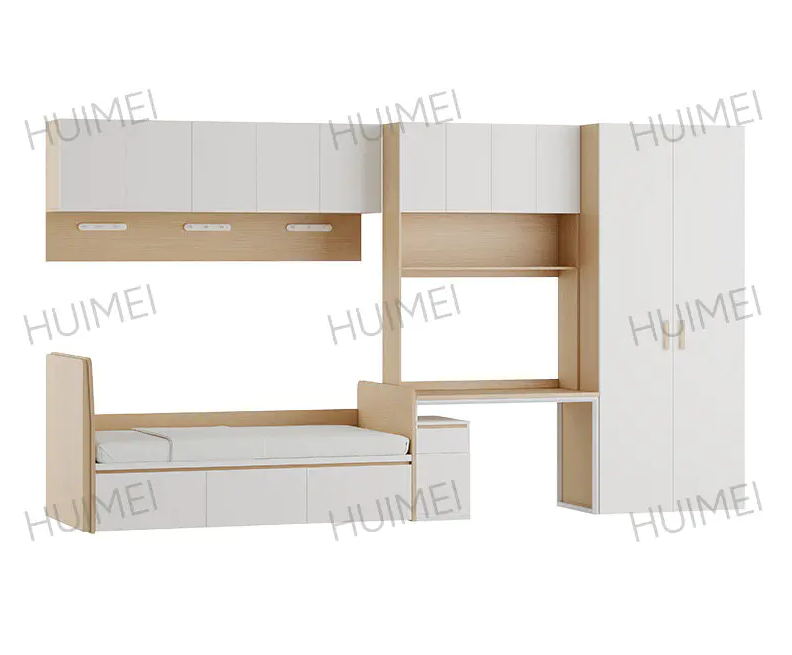
IV. Applicable Scenarios and Recommended Users
Recommended Scenarios for Multi-functional Dormitory Beds with Bunk Beds and Desks:
- Standard 4-6 person dormitories in universities
- Students seeking efficient integration of study and living
- Users requiring ample private storage space
- International schools, apartment-style dormitories, and other environments with high quality of life requirements
Recommended Scenarios for Regular Bunk Beds:
- Company dormitories with a large number of employees, military barracks
- Temporary, short-term accommodation spaces
- Situations with strict budget control, where furniture can be added gradually later
- Children's rooms or families requiring flexible room layouts
V. Key Points for Purchasing a High-Quality Multi-functional Dormitory Bed
Regardless of the type chosen, pay attention to the following when purchasing:
- Environmental friendliness of materials: Prioritize E0/E1 grade environmentally friendly boards or high-quality cold-rolled steel to ensure indoor air safety.
- Structural stability: Check the connections and support points, especially the load-bearing capacity and fixation of the upper bunk railing and stairs.
- Craftsmanship details: Observe whether the edges and corners are smooth, the coating is uniform, and the hardware is of high quality.
- Functional Rationality: Evaluate whether the storage space layout, socket locations, and wiring design meet actual usage habits.
- Brand and After-Sales Service: Choose a reputable dormitory bed manufacturer and clarify the warranty period and scope.
There is no absolute superiority or inferiority between bunk beds with desks underneath and regular bunk beds; it's simply a matter of suitability. For most contemporary students, Multi Functional Combination Beds integrating study, storage, and sleep are undoubtedly the best choice for improving the quality and efficiency of dormitory life. It's not just a piece of furniture, but a personal space that accompanies students through the crucial academic years. It is recommended to measure your dormitory dimensions in person before purchasing, clarify your needs and budget, and invest in a safe, comfortable, durable, and truly suitable dormitory bed to make dormitory life more comfortable, organized, and efficient.
Copyright© Zhejiang Huimei Industry & Trade Co., Ltd. All Rights Reserved.
Professional School Furniture Manufacturer School Furniture Supplier