 English
 русский
 Français
 عربى
عربى Español
 Português
 简体中文
简体中文
What is educational office furniture?
Educational office furniture refers to purpose-designed desks, chairs, storage units, tables, and collaborative workstations used in school administrative offices, faculty rooms, counseling suites, and other staff-facing spaces within educational institutions. Unlike standard commercial office furniture, educational office furniture must balance professional functionality with the durability, safety standards, and budget constraints specific to schools, colleges, and universities. It directly affects staff productivity, the quality of student-facing services, and the overall administrative efficiency of an institution.
Content
- 1 How Educational Office Furniture Differs from Standard Office Furniture
- 2 Core Categories of Educational Office Furniture
- 3 Key Design Principles for Educational Office Spaces
- 4 Educational Office Furniture by Institution Type
- 5 Materials and Finishes Commonly Used
- 6 Sustainability Considerations in Educational Furniture Procurement
- 7 Planning an Educational Office Furniture Fit-Out
How Educational Office Furniture Differs from Standard Office Furniture
While both types of furniture serve professional workspaces, educational office furniture is engineered to address specific institutional demands:
- Higher durability requirements: School offices typically operate for 200–220 days per year with heavy daily use, meaning furniture must sustain significantly more wear than a typical corporate office.
- Stricter safety standards: Furniture in educational environments must meet child and youth safety guidelines, including rounded edges, anti-tip mechanisms, and non-toxic finishes — even in adult staff areas that students may access.
- Flexibility for multi-use spaces: Many school offices serve multiple functions — reception, counseling, record storage, and conference — so furniture must reconfigure quickly.
- Budget-conscious design: Public educational institutions are often constrained by procurement budgets; furniture must deliver long service life at a competitive cost per unit.
- Compliance with education sector regulations: In many countries, school furniture must comply with government procurement specifications or sector-specific standards such as the UK's Building Bulletin 98 or ANSI/BIFMA standards in the United States.
Core Categories of Educational Office Furniture
Educational office furniture spans several product categories, each serving a distinct function within school administration and staff support areas.
Administrative Desks and Workstations
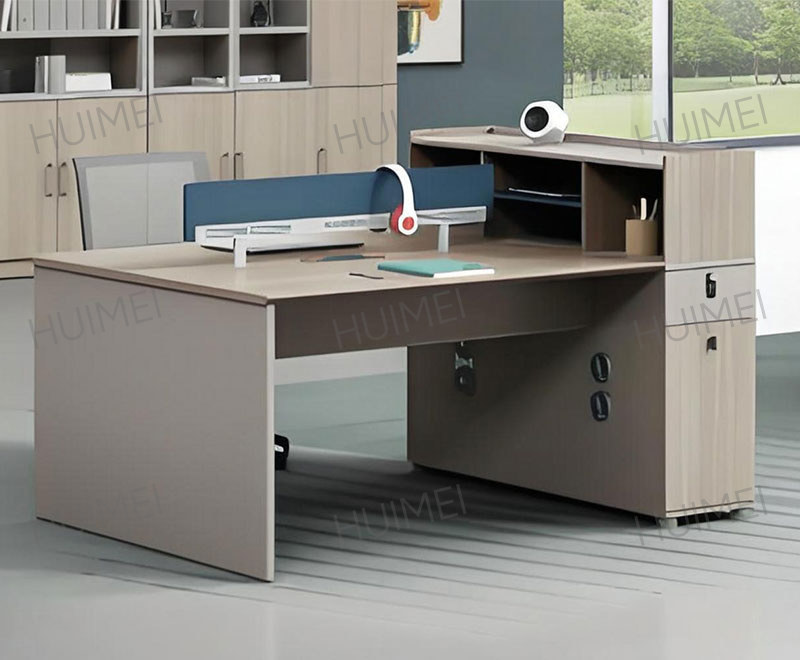
The administrative desk is the core unit of any school office. In reception and front-office settings, desks are typically L-shaped or U-shaped to allow staff to manage multiple tasks simultaneously — answering inquiries, processing paperwork, and monitoring entrances. Standard administrative desk dimensions range from 140 cm to 180 cm in width, with integrated cable management to accommodate computer equipment.
Height-adjustable (sit-stand) workstations are increasingly specified in educational offices, with research indicating that alternating between sitting and standing can reduce musculoskeletal discomfort by up to 54% over an eight-hour shift among administrative staff.
Ergonomic Task Chairs
Task chairs for educational office staff must provide sustained comfort across full working days. Key ergonomic features include lumbar support, adjustable seat height (typically 42–52 cm range), armrest height and width adjustment, and breathable mesh or foam upholstery. Chairs in reception areas that also serve student visitors may require a wider weight rating — commonly up to 120–150 kg — to accommodate diverse users.
Filing and Storage Cabinets
Schools generate significant volumes of physical records — student files, financial documents, HR records, and compliance paperwork. Educational office storage solutions include:
- Lateral filing cabinets (2–5 drawer) for high-volume document storage
- Lockable pedestal units that slide under desks to save floor space
- Tambour-door cupboards for secure storage of equipment and stationery
- Open shelving units for reference materials and frequently accessed resources
Steel filing cabinets with anti-tilt mechanisms — which prevent more than one drawer opening simultaneously — are a standard safety specification in educational institutions to prevent toppling injuries.
Reception and Visitor Seating
School reception areas serve students, parents, and external visitors daily. Visitor seating must be durable, easy to clean, and welcoming. Beam seating (linked chair units) is commonly specified for waiting areas because it prevents individual chairs from being moved or scattered, maintaining a tidy environment. Upholstered visitor chairs with wipe-clean fabric or vinyl are preferred in high-traffic school offices.
Meeting and Conference Tables
Staff meeting rooms, parent-teacher conference rooms, and senior leadership suites require appropriately scaled conference tables. Folding or modular tables that can be reconfigured for different group sizes — from a 4-person parent meeting to a 20-person staff briefing — offer maximum utility in schools where dedicated conference room space is limited.
Staff Room and Break Area Furniture
Teacher and staff break rooms benefit from informal seating — sofas, tub chairs, and café-height tables — that provide a restorative contrast to the formal office environment. Well-designed staff rooms have been linked to improved teacher retention and wellbeing, which in turn supports student outcomes.
Key Design Principles for Educational Office Spaces
Effective educational office furniture selection is guided by several core design principles that reflect both operational needs and user wellbeing.
Ergonomics and Staff Health
Administrative and support staff in schools frequently spend 6–8 hours per day at their workstations. Poor ergonomics directly contribute to musculoskeletal disorders, which are among the leading causes of sick leave in educational institutions. Specifying adjustable desks and chairs, monitor arms, and keyboard trays is a proactive investment in staff health.
Flexibility and Adaptability
Educational environments evolve — class sizes change, administrative teams grow or shrink, and new functions emerge. Modular office furniture systems that can be reconfigured without specialist installation reduce long-term costs and support institutional agility. Desks with standardized connection hardware can be added, removed, or rearranged in under 30 minutes per workstation.
Acoustic Management
Open-plan school offices can generate significant noise from phone calls, student interactions at reception, and administrative activity. Acoustic desk screens and upholstered privacy panels help reduce ambient noise levels, with well-positioned screens capable of reducing sound transmission by 5–15 dB in open environments.
Accessibility and Inclusion
Educational office furniture must accommodate staff and visitors with diverse physical needs. Reception counters should include a lowered section at 76 cm height for wheelchair users. Aisle widths of at least 90 cm between furniture runs are required for accessibility compliance under most building regulations.
Educational Office Furniture by Institution Type
Furniture requirements vary significantly across different types of educational institutions:
| Institution Type | Primary Office Spaces | Key Furniture Priorities | Typical Budget Focus |
|---|---|---|---|
| Primary School | Reception, head's office, staff room | Safety, durability, welcoming reception | Value for money |
| Secondary School | Admin hub, counseling rooms, SLT offices | Privacy, flexibility, ergonomics | Durability over premium aesthetics |
| Further Education College | Student services, faculty offices, HR | Modular systems, collaborative zones | Scalability |
| University | Departmental offices, research admin, registry | Aesthetic quality, sit-stand options, acoustics | Long-term investment, brand alignment |
Materials and Finishes Commonly Used
The choice of materials affects durability, maintenance requirements, appearance, and total cost of ownership over the furniture's service life.
- Melamine-faced chipboard (MFC): The most widely used desktop and carcass material in educational offices. Resistant to scratches and easy to clean, with a typical service life of 10–15 years under normal use.
- Steel frames and pedestals: Provide structural strength for desk frames and filing units. Powder-coated steel resists corrosion and is available in a wide range of colors to coordinate with institutional branding.
- High-pressure laminate (HPL): A premium surface material used on reception counters and high-traffic work surfaces. More impact- and abrasion-resistant than MFC, with a lifespan exceeding 20 years in commercial settings.
- Fabric and vinyl upholstery: Task chairs and visitor seating use either woven fabric (more comfortable, higher abrasion rating) or vinyl/faux leather (easier to wipe clean, preferred in high-traffic reception areas).
- Solid wood and veneers: Used in senior leadership offices and formal meeting rooms where a higher-quality aesthetic is required, though at a significantly higher cost per unit.
Sustainability Considerations in Educational Furniture Procurement
Many educational institutions are now required to demonstrate environmental responsibility in procurement decisions. Key sustainability criteria when selecting educational office furniture include:
- Certified sustainable timber: Desks and storage made from wood-based materials should carry FSC (Forest Stewardship Council) or PEFC certification to confirm responsible sourcing.
- Recycled content: Steel components with a high percentage of recycled content (many manufacturers use 30–100% recycled steel) reduce embodied carbon.
- Low-VOC finishes: Furniture in enclosed school offices should use low or zero volatile organic compound (VOC) finishes to maintain indoor air quality — particularly important for occupants spending extended hours in the space.
- End-of-life recyclability: Furniture designed for disassembly allows components to be separated and recycled at end of service life, reducing landfill contribution.
- Long warranty periods: Specifying furniture with 5–10 year warranties reflects a manufacturer's confidence in product longevity and reduces the environmental cost of premature replacement.
Planning an Educational Office Furniture Fit-Out
A structured procurement and installation process helps educational institutions maximize value and minimize disruption. The following steps outline a best-practice approach:
- Needs assessment: Survey current and projected staff numbers, workflow patterns, storage requirements, and accessibility needs before specifying any furniture.
- Space planning: Commission a scaled floor plan to test furniture layouts before ordering. Allow a minimum of 5–7 m² per workstation including circulation space in administrative offices.
- Ergonomic specification: Define minimum ergonomic standards for task chairs, desk heights, and monitor positioning to protect staff health and meet duty-of-care obligations.
- Supplier evaluation: Assess suppliers on product quality, lead times, installation capability, warranty terms, and sustainability credentials — not cost alone.
- Phased installation: Schedule delivery and installation during school holidays or off-peak periods to minimize disruption to administrative operations.
- Staff orientation: Provide brief training on adjusting ergonomic furniture features — studies show that over 60% of adjustable chair features go unused without user education.
Copyright© Zhejiang Huimei Industry & Trade Co., Ltd. All Rights Reserved.
Professional School Furniture Manufacturer School Furniture Supplier