 English
 русский
 Français
 عربى
عربى Español
 Português
 简体中文
简体中文
What Is a Flip Table and Chair Set for Sleeping?
A flip table and chair set for sleeping — also widely known as a student nap desk and chair set or foldable resting desk set — is a multifunctional piece of school furniture designed to serve two purposes within a single unit: a standard writing and study desk during class time, and a comfortable resting or napping surface during designated rest periods. The defining feature is a desktop surface that can be folded, flipped, or extended to create a flat or angled resting platform, while the chair simultaneously reclines or includes a built-in cushioned armrest that becomes a headrest when the student leans forward. These sets are especially prevalent in primary and secondary schools across East Asia, where a midday nap period of 20 to 40 minutes is a standard part of the school day, recognized for its positive impact on children's concentration, memory consolidation, and afternoon learning performance. The furniture allows students to rest at their own desk without requiring a separate bed or cot, making it the most space-efficient and cost-effective napping solution for school classrooms.
Content
- 1 How a Flip Table and Chair Set Works
- 2 Why Schools Use Flip Nap Desk Sets Instead of Other Rest Solutions
- 3 Key Design Features of Quality Flip Nap Desk and Chair Sets
- 4 Types of Flip Nap Desk and Chair Sets
- 5 Health and Educational Benefits of Midday Napping for Students
- 6 Size Standards and Age-Appropriate Selection
- 7 Environmental Safety and Material Standards
- 8 Color and Aesthetic Design: Supporting Learning Environments
- 9 Selecting the Right Flip Nap Desk Set: Key Considerations for Schools
- 10 Summary: A Smart Investment in Student Health and Learning
How a Flip Table and Chair Set Works
The mechanical ingenuity of a flip desk and chair set lies in how it transitions seamlessly between two functional configurations without requiring the student to move to a different location or use additional furniture.
The Desk Mechanism
In study mode, the desktop sits in its standard horizontal position at the correct writing height for the student's age group. When rest time begins, the desktop can be folded in one of several ways depending on the specific design:
- Fold-down sleeping surface: A hinged section of the desktop folds downward to create a larger, extended flat surface that spans in front of the student, supported by adjustable legs or the chair itself
- Flip-top napping board: The entire desktop flips over to reveal a softer, padded underside that serves as the resting surface — a clever dual-use design that eliminates the need for a separate pillow board
- Extension panel: A secondary panel stored beneath or beside the main desktop slides out or unfolds to create an extended platform large enough for the student to rest their head and upper body comfortably
The Chair Mechanism
The chair component of the set is equally important to rest comfort. Standard configurations include:
- Reclining backrest: The chair back reclines to a semi-horizontal position, allowing the student to lean back and rest rather than having to slouch forward onto the desk — reducing spinal stress during the nap period
- Fold-out arm cushion: A padded cushion stored in the chair's armrest or seat area folds out and elevates to provide a soft resting surface at head height when the student leans forward onto the desk
- Adjustable seat height: Many models include height-adjustable seats that allow the napping position to be optimized for children of different heights, ensuring that leaning forward onto the desk does not create uncomfortable neck angles
Why Schools Use Flip Nap Desk Sets Instead of Other Rest Solutions
Schools that implement midday rest policies face a practical challenge: providing a comfortable resting space for every student in a classroom environment that must also function as a full learning space for the remaining hours of the day. Flip table and chair sets solve this challenge more effectively than any alternative approach.
Space Efficiency
A standard classroom accommodating 40 to 45 students in a typical primary school configuration has limited floor area. Providing separate cots, mats, or sleeping pads for every student would require either a dedicated rest room — an expensive infrastructure investment — or so much floor space during nap time that the classroom becomes impractical to use for teaching immediately before and after the rest period. Flip desk sets require zero additional floor space: each student rests at their own assigned seat, and the transition from study mode to rest mode takes less than 30 seconds per student.
Hygiene and Individual Assignment
Each student rests on their own desk surface — a surface they use every day and that is cleaned as part of normal classroom maintenance. This individual assignment eliminates the hygiene concerns associated with shared sleeping mats or cots that are used by multiple students in rotation, which can harbor bacteria and require frequent laundering. During periods of heightened health awareness, the individual-use nature of flip desk napping surfaces is a significant sanitation advantage.
Supervision and Safety
When students rest at their assigned seats, the teacher or supervising adult can monitor all students from the front of the room without moving around the class. Students who need the toilet, feel unwell, or need attention are immediately visible and accessible. This supervision convenience is not possible with floor-based resting arrangements where students are scattered across a mat area.
Cost Effectiveness
The incremental cost of a flip nap desk set compared to a standard desk and chair set is relatively modest — typically 20% to 40% more than equivalent standard furniture — while eliminating the need for any separate rest infrastructure. A school equipping a 45-student classroom with flip nap furniture invests once in furniture that serves both the study and rest functions for the full service life of the furniture, which with quality construction is typically 8 to 15 years or more.
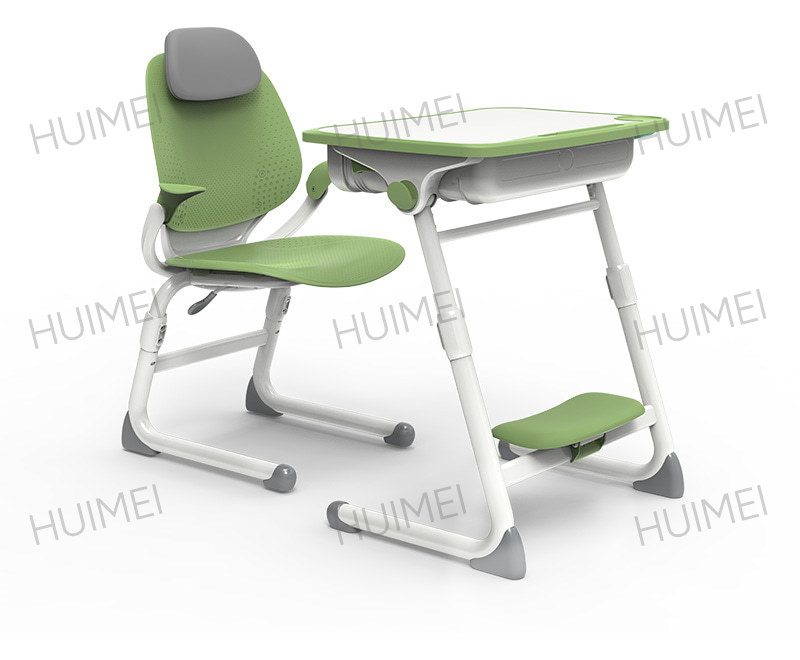
Key Design Features of Quality Flip Nap Desk and Chair Sets
Not all flip nap desk sets are equal in quality or functionality. Understanding the design features that distinguish high-quality sets helps schools and procurement officers make well-informed purchasing decisions.
Adjustable Height for Growing Students
Children grow rapidly throughout their primary and secondary school years. A desk that is correctly sized for a student in Grade 1 will be too small by Grade 4 or 5. Quality flip nap desk sets feature multiple height adjustment settings — typically 4 to 6 discrete height positions for both the desk surface and the chair seat — allowing the furniture to grow with the student across several school years and matching the height ranges specified in national furniture standards for different age groups.
Ergonomic Resting Position Design
The resting configuration of the desk must support the student's head, neck, and upper body in a position that does not cause musculoskeletal discomfort, restrict breathing, or create pressure on the arms during a 20 to 40 minute rest period. Design elements that support ergonomic resting include:
- A sufficiently large resting surface — typically at least 40 cm wide and 30 cm deep — to accommodate the student's head and crossed arms without hanging over the edge
- A slight forward tilt angle on the resting surface (approximately 5 to 10 degrees) that reduces neck flexion when the head rests sideways
- Soft padding or a removable cushion on the resting surface to prevent pressure discomfort on the cheek and forearm during prolonged contact
Smooth, Safe Folding Mechanism
The folding or flipping mechanism must operate smoothly with minimal force — children must be able to convert their desk independently — while incorporating anti-pinch and anti-slam safety features that prevent fingers from being trapped and prevent the desktop from falling suddenly. Quality flip mechanisms include damping systems that slow the fold-down movement and positive locking positions in both study and rest configurations that prevent unintentional state changes during use.
Durable, Child-Safe Materials
School furniture must withstand years of daily use by active children while meeting stringent safety standards. Key material requirements for flip nap desk sets include:
- Desktop surface: High-density particleboard or MDF with a melamine laminate surface — scratch-resistant, easy to clean, and available in light, fresh colors shown to support concentration in learning environments
- Frame: Steel tube frame with powder-coat or epoxy finish for corrosion resistance and durability; frame cross-sections typically 30 × 15 mm or larger to provide adequate structural rigidity under combined study and napping loads
- Seat and backrest: High-density polyethylene (HDPE) or polypropylene shell seats with smooth, rounded edges and no sharp protrusions; seat cushions where provided use high-resilience foam that retains its shape through years of use
- Environmental standards: All wood-based components should meet E1 or E0 formaldehyde emission standards (total formaldehyde content not exceeding 9 mg per 100 g of dry board for E1), ensuring that the furniture does not contribute to indoor air quality problems in classrooms
Storage Integration
Many flip nap desk sets incorporate a storage basket, shelf, or bag hook beneath the desktop to keep students' books, bags, and materials organized and off the floor during both study and rest periods. This storage integration is especially important during rest periods, when students' belongings need to be stowed without being placed on the floor where they could become a trip hazard or be accidentally stepped on.
Types of Flip Nap Desk and Chair Sets
The market offers several distinct design approaches to the flip nap desk and chair concept, each with different mechanisms, comfort levels, and classroom footprints.
| Type | Nap Mechanism | Rest Comfort Level | Best For |
|---|---|---|---|
| Flip-top reversible desktop | Desktop flips to reveal padded underside | Good (padded surface) | Primary school, Grades 1–6 |
| Fold-down extension panel | Secondary panel folds out to extend surface | Moderate (hard surface) | Secondary school, older students |
| Reclining chair with arm cushion | Chair reclines; arm cushion elevates for head | Good (upright rest posture) | Middle and high school |
| Integrated cushion set | Built-in removable cushion on desk and seat | Excellent (maximum softness) | Kindergarten and early primary |
| Adjustable tilt-top with full recline | Desktop tilts; chair fully reclines to near-horizontal | Excellent (near-lying position) | Premium classrooms, special education |
Health and Educational Benefits of Midday Napping for Students
The design and adoption of flip nap desk sets is grounded in well-documented research on the benefits of short daytime rest periods for school-age children. Understanding these benefits explains why schools invest in specialized napping furniture rather than treating rest periods as unnecessary interruptions to the school day.
Cognitive Performance and Memory Consolidation
Research published in peer-reviewed journals on sleep science and pediatric development consistently shows that a short midday nap of 20 to 30 minutes improves children's alertness, working memory, and information processing speed in the afternoon learning session. During sleep — even a brief nap — the brain undergoes memory consolidation processes that transfer information from short-term to long-term memory. Students who nap after morning lessons retain and apply that morning's learning more effectively in afternoon sessions than students who do not rest. This neurological benefit makes midday napping not a luxury but an educational investment.
Physical Health and Growth
School-age children require 9 to 11 hours of sleep per day according to pediatric health guidelines, but many children in urban environments with long commutes, homework loads, and extracurricular activities do not consistently achieve this total from nighttime sleep alone. A midday nap supplements total daily sleep and supports the growth hormone secretion that occurs during sleep — an important consideration given that physical growth is most rapid during primary school years. Adequate rest also supports immune function, emotional regulation, and the physical energy needed for afternoon physical education and play.
Emotional Regulation and Behavior
Sleep-deprived children show increased rates of irritability, impulsive behavior, difficulty concentrating, and reduced emotional resilience. A structured midday rest period reduces the behavioral disruptions associated with afternoon fatigue — benefiting both the individual child and the class environment for afternoon learning. Teachers in schools that implement midday nap periods consistently report improved student behavior, reduced conflict between students, and better classroom management outcomes in afternoon sessions compared to schools without a rest period.
Eye Health and Postural Rest
A midday rest period also provides relief from sustained near-work visual demand — reading, writing, and screen use — that contributes to visual fatigue and, in growing children, is associated with myopia (nearsightedness) progression. Closing the eyes for 20 to 30 minutes at midday reduces the total daily near-work visual load and allows the extraocular muscles responsible for accommodation to relax. Similarly, a rest period allows the postural muscles supporting upright seated posture to relax briefly, reducing the cumulative strain from prolonged sitting that contributes to musculoskeletal discomfort in school-age children.
Size Standards and Age-Appropriate Selection
Flip nap desk and chair sets — like all school furniture — must be matched to the physical dimensions of the students who will use them. Using furniture that is too large or too small for a student's size creates ergonomic problems during both study and nap use that can contribute to musculoskeletal strain and reduce the effectiveness of the rest period.
| Furniture Size Grade | Student Height Range | Desk Height | Seat Height | Typical School Year |
|---|---|---|---|---|
| Size 2 | 119–126 cm | 52 cm | 30 cm | Early primary (Grades 1–2) |
| Size 3 | 127–134 cm | 56 cm | 33 cm | Mid primary (Grades 2–4) |
| Size 4 | 135–142 cm | 60 cm | 36 cm | Upper primary (Grades 4–6) |
| Size 5 | 143–150 cm | 64 cm | 38 cm | Junior secondary (Grades 7–8) |
| Size 6 | 151–160 cm | 67 cm | 40 cm | Middle secondary (Grades 8–10) |
| Size 7 | 161 cm and above | 71 cm | 43 cm | Upper secondary (Grades 10–12) |
Schools with students spanning multiple height ranges in the same classroom — which is common in mixed-grade environments or classrooms where student growth rates vary significantly — benefit from selecting height-adjustable flip nap desk sets that can be configured to the correct size for each individual student, rather than purchasing fixed-size sets for the average height of the class.
Environmental Safety and Material Standards
Given that children spend a significant portion of every school day in close proximity to their desk and chair furniture — and rest their faces directly on the desk surface during nap time — the environmental safety and material quality of flip nap desk sets is especially critical.
- Formaldehyde emission control: All engineered wood components must meet E1 or E0 emission standards. E0 standard limits formaldehyde emissions to no more than 0.5 mg/L in the perforator method — the strictest widely adopted standard for classroom furniture — significantly reducing the risk of formaldehyde-related irritation in enclosed classroom environments.
- Heavy metal content in surface coatings: Paints, lacquers, and powder coatings used on metal frame components must comply with limits on lead, cadmium, chromium, and other heavy metals that children could be exposed to through skin contact or accidental ingestion from hand-to-mouth behavior.
- Cushion material safety: Foam and fabric used in seat cushions, armrest cushions, and nap surface cushions must be certified free from harmful chemicals including azo dyes, phthalate plasticizers, and flame retardant compounds that are regulated or banned in children's products under standards such as OEKO-TEX Standard 100 or equivalent national certifications.
- Edge and corner safety: All exposed edges on desktop surfaces, seat shells, and metal frame components must be rounded, chamfered, or capped to eliminate sharp edges and corners that could cause injury during normal use and the frequent physical activity of school-age children moving around the classroom.
- Stability under dynamic loads: Furniture must meet stability tests that verify the set does not tip over when subjected to the off-center loads and lateral forces that occur when active children lean, push, or pull on the furniture during normal classroom use. Standards typically require that a desk and chair set resist tipping under a 300 N lateral force applied at the highest point of the furniture.
Color and Aesthetic Design: Supporting Learning Environments
The visual design of classroom furniture has a measurable influence on the learning and rest environment. Research in environmental psychology and educational design consistently demonstrates that light, fresh color palettes in classroom spaces support concentration, reduce visual fatigue, and create a calming atmosphere conducive to both focused study and restful napping.
Contemporary flip nap desk and chair sets for primary and secondary schools are available in a range of color options beyond the institutional beige and grey of earlier school furniture generations. Popular choices include:
- Light wood grain textures: Pale maple, birch, and oak laminate finishes on desktop surfaces create a natural, warm visual environment that reduces eye strain compared to high-gloss or very bright white surfaces
- Soft muted tones: Sage green, light blue, pale yellow, and soft grey chair shells and frame powder coatings that create a visually cohesive classroom palette without the visual stimulation that saturated primary colors create in the classroom
- Two-tone combinations: Desktop surfaces in light wood tones paired with chair shells in a complementary muted color, creating a differentiated but harmonious visual scheme that gives classrooms a designed, purposeful aesthetic
- Custom school colors: Many manufacturers offer customization options that allow schools to specify furniture colors matching their school color scheme, contributing to a consistent institutional identity throughout the school's learning spaces
Selecting the Right Flip Nap Desk Set: Key Considerations for Schools
When procuring flip nap desk and chair sets for a school, administrators and procurement officers should evaluate options against the following criteria to ensure the best outcome for students, teachers, and the institution's long-term investment.
- Age and height appropriateness. Confirm that the size options available match the height ranges of the students who will use the furniture, and prefer adjustable models that can serve multiple grade levels across the furniture's service life.
- Nap mechanism ease and reliability. Test the folding or flipping mechanism with the age group of students who will use it — younger primary students need simpler, more robust mechanisms that they can operate independently. Verify that the mechanism includes anti-pinch protection and positive locking in both positions.
- Material and emission certifications. Request documentation of formaldehyde emission test results (E1 or E0 standard), surface coating heavy metal compliance certificates, and foam/fabric chemical safety certifications for all sets under consideration.
- Structural durability testing. Request evidence of compliance with the relevant national or international standard for school furniture strength and durability testing — such as GB/T 3976 in China or EN 1729 in Europe — which certifies that the furniture has passed standardized load, impact, and stability tests.
- Classroom layout compatibility. Measure the classroom floor area and aisle widths against the footprint of the desk set in both study and nap configurations (some folding mechanisms temporarily increase the desk's footprint during the transition). Ensure that the nap configuration does not obstruct aisles needed for fire evacuation or teacher circulation.
- Supplier warranty and after-sales support. Confirm the warranty period — quality school furniture should carry a minimum 2 to 5 year warranty — and verify that replacement parts (seat shells, cushions, folding mechanism components) are available from the supplier throughout the expected service life of the furniture.
Summary: A Smart Investment in Student Health and Learning
A flip table and chair set for sleeping is far more than a simple piece of furniture — it is a carefully engineered educational tool that supports the physical health, cognitive performance, and emotional wellbeing of school-age children by enabling the integration of restorative midday napping into the school day without sacrificing classroom space or learning time. By combining a full-function study desk with a comfortable, hygienic, and space-efficient rest surface in a single adjustable piece of furniture, flip nap desk sets address one of the most practical challenges in school design: giving children what they biologically need — adequate rest — within the constraints of a classroom environment built primarily for learning. Choosing high-quality, properly sized, environmentally safe, and ergonomically designed flip nap desk sets is an investment that pays dividends in student health, afternoon learning performance, teacher effectiveness, and the long-term reputation of the school as an institution that genuinely prioritizes the whole-child development of its students.
Copyright© Zhejiang Huimei Industry & Trade Co., Ltd. All Rights Reserved.
Professional School Furniture Manufacturer School Furniture Supplier