 English
 русский
 Français
 عربى
عربى Español
 Português
 简体中文
简体中文
What are the three types of filing cabinets?
In modern office environments, filing cabinets are essential office furniture. They not only help companies manage documents and materials but also improve office efficiency. So, what are the three types of filing cabinets? Based on usage scenarios and structural design, filing cabinets can be mainly divided into three categories: steel filing cabinets, wooden filing cabinets, and intelligent filing cabinets. Each type has its unique advantages and application scenarios.
Content
Steel Filing Cabinets: A Sturdy and Durable Classic Choice
Steel filing cabinets are the most common type of filing cabinet, widely popular for their durability and security.
Material and Structure
Typically made of cold-rolled steel plate, with a thickness between 0.6-1.0 mm, and a powder-coated surface for rust and scratch resistance.
Applicable Scenarios
Suitable for archives, offices, and enterprises, especially suitable for storing important documents for long-term preservation.
Security
Equipped with multi-point locks or electronic locks to ensure data security. For example, a steel filing cabinet purchased by a medium-sized enterprise can withstand the weight of more than 50 kg of documents per shelf, ensuring no deformation even after long-term use.
Steel filing cabinets, due to their outstanding fire resistance and moisture resistance, are commonly used in government agencies, financial institutions, and other organizations with high document security requirements.
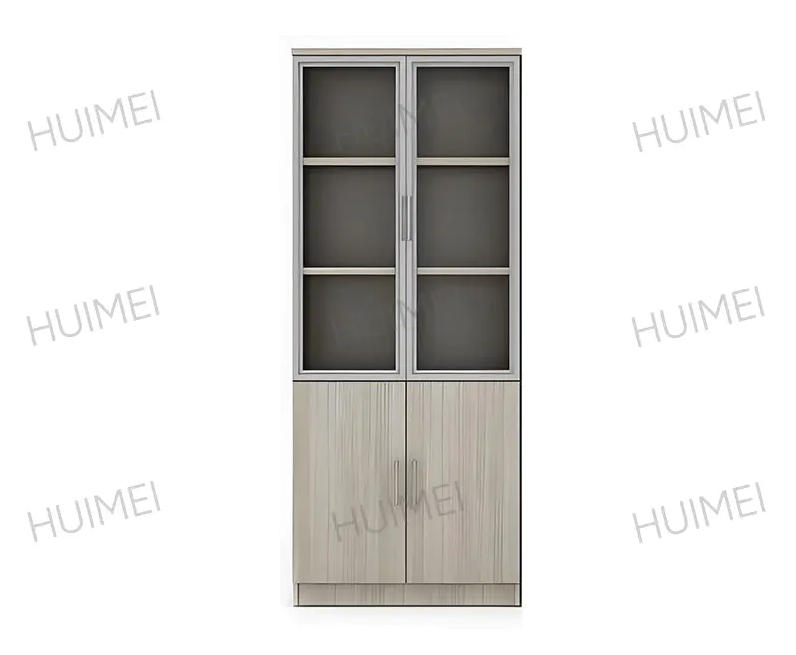
Wooden Filing Cabinets: Beautiful, Practical, and Decorative
Wooden filing cabinets are primarily made of solid wood or engineered wood, combining storage functionality with aesthetic appeal.
Material Advantages
Solid wood filing cabinets have a natural grain and a high-end feel; engineered wood filing cabinets are moderately priced and can be mass-produced.
Office Style Matching
Wooden filing cabinets can be coordinated with desks, bookshelves, and other furniture to enhance the overall aesthetics of the office.
Capacity and Flexibility
Generally, each shelf can hold 30-40 kg of documents, and drawer dividers can be added for easy categorization and management. For example, oak filing cabinets purchased by high-end companies can hold 40 kg per shelf and feature smooth-slip, low-noise drawers.
Wooden filing cabinets are suitable for high-end offices, law firms, and design companies, meeting document management needs while enhancing the style of the office space.
Smart Filing Cabinets: A New Trend in Digital Management
With the development of information-based office systems, smart filing cabinets are gradually becoming a new choice for enterprises.
Features
Enables digital storage and retrieval of documents via electronic locks, fingerprint recognition, or QR code management.
Efficiency Improvement
Supports automatic generation of document borrowing records, reducing manual registration time and improving management efficiency. For example, a technology company introduced a smart filing cabinet that can manage 500 filing cabinet units simultaneously; employees can unlock them using fingerprints, saving approximately 30% on manual management costs.
Security
Electronic access control and tamper-proof record functions effectively protect important corporate data.
Smart filing cabinets are particularly suitable for large enterprises, shared office spaces, and record management centers, achieving the dual goals of digital office operations and secure management.
The three main types of filing cabinets—steel, wood, and smart—each have their advantages. Steel filing cabinets are known for their durability and security; wooden filing cabinets combine aesthetics and practicality; smart filing cabinets meet the needs of modern digital offices. When choosing a filing cabinet, companies should comprehensively consider their actual office environment, document storage volume, and security requirements to maximize its management value.
Copyright© Zhejiang Huimei Industry & Trade Co., Ltd. All Rights Reserved.
Professional School Furniture Manufacturer School Furniture Supplier