 English
 русский
 Français
 عربى
عربى Español
 Português
 简体中文
简体中文
What are the advantages of a flip-up table and chair set?
Flip-up table and chair sets offer a superior combination of space efficiency, rapid classroom reconfiguration, ergonomic adaptability, improved safety, and long-term durability — making them one of the most practical and widely adopted furniture solutions for modern primary and secondary school classrooms. Compared to conventional fixed-seat or separate desk-and-chair arrangements, flip-up designs directly address the spatial, functional, and health-related demands of today's learning environments.
Students spend an average of 6 to 8 hours per day seated in classroom furniture during their school years — making the quality, design, and functionality of desks and chairs one of the most consequential factors in a child's physical development and academic engagement. Flip-up table and chair sets were developed specifically to respond to this reality, delivering measurable advantages across space management, posture support, safety, and classroom versatility.
Content
- 1 What Is a Flip-Up Table and Chair Set?
- 2 Space Efficiency: More Room for Learning and Movement
- 3 Rapid Classroom Reconfiguration for Multi-Mode Teaching
- 4 Ergonomic Benefits That Support Healthy Physical Development
- 5 Enhanced Safety Features Compared to Conventional Furniture
- 6 Durability and Structural Longevity Under Intensive Daily Use
- 7 Ease of Cleaning and Hygiene Maintenance
- 8 Comparison: Flip-Up Sets vs. Conventional Classroom Furniture
- 9 Design Aesthetics That Support a Focused Learning Environment
- 10 Storage Integration and Classroom Organization
- 11 Suitability Across Different Teaching Scenarios and Grade Levels
- 12 Environmental and Quality Standards Compliance
- 13 Why Manufacturer Expertise Matters in School Furniture Selection
- 14 Key Advantages of Flip-Up Table and Chair Sets at a Glance
- 15 Conclusion
What Is a Flip-Up Table and Chair Set?
A flip-up table and chair set is an integrated classroom furniture unit in which the seat — and in some configurations the writing surface — can be folded upward or to the side when not in use. The chair seat pivots on a hinge mechanism attached to the seat support structure, allowing it to flip vertically against the backrest or desk frame when a student stands or leaves. This design is most commonly seen in tiered lecture halls, auditoriums, and modern open-plan classrooms, but it has gained widespread adoption in standard primary and secondary school settings due to its practical advantages.
Flip-up sets are typically available in integrated desk-chair units — where the writing surface is directly attached to the chair frame — or as row seating systems where a shared writing tablet folds down from a fixed position. Both configurations share the core advantage of recovering floor space when not in use and enabling more fluid movement in and out of the seating arrangement.
Space Efficiency: More Room for Learning and Movement
The most immediately quantifiable advantage of flip-up table and chair sets is their dramatic impact on usable floor space. When seats are in the flipped-up position, the aisle width available between rows increases substantially — typically by 40 to 60 percent compared to the same space occupied by conventional fixed-seat furniture.
In a standard classroom of 60 to 80 square meters accommodating 40 to 45 students, this recovered space has meaningful practical consequences:
- Students can enter and exit their seats without requiring adjacent students to stand or move
- Teachers can move freely between rows during instruction and assessment activities
- Emergency evacuation pathways remain clear, improving compliance with fire and safety regulations
- The same room can serve as both a seated classroom and a standing activity space without moving furniture
- Higher seating capacity can be achieved within the same footprint compared to conventional furniture arrangements
For schools operating in constrained urban environments where expansion of physical space is not feasible, the space efficiency of flip-up furniture provides a practical and cost-effective alternative to facility extension. A classroom that previously accommodated 38 students with conventional fixed furniture may comfortably seat 42 to 45 students with a flip-up configuration while maintaining adequate aisle clearance per student.
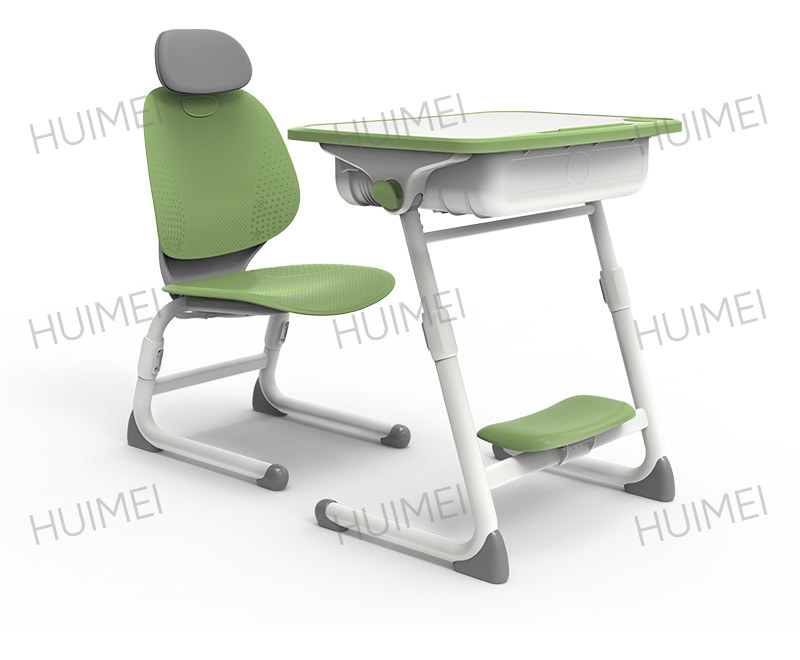
Rapid Classroom Reconfiguration for Multi-Mode Teaching
Modern pedagogy increasingly demands that classroom spaces be adaptable to multiple learning formats within a single school day — shifting between direct instruction, group discussion, project work, presentations, and assessment activities. Flip-up table and chair sets support this flexibility by enabling rapid reconfiguration of the physical learning environment without the time and effort of moving heavy furniture.
When all seats in a flip-up classroom are raised, the room transforms from a seated learning space into an open activity area within under 60 seconds — a transition that would take 5 to 10 minutes with conventional movable furniture. This capability directly enables:
- Physical education or movement breaks within the classroom without relocating to a separate facility
- Standing presentations or demonstrations where students gather around a central display or exhibit
- Multipurpose room use — the same space can function as a classroom in the morning and a meeting room, examination hall, or event space in the afternoon
- Cleaning and maintenance operations that are significantly faster and more thorough when floor space is unobstructed
Research in educational environment design consistently shows that students in flexible learning spaces demonstrate higher engagement and participation rates compared to those in static conventional classrooms, making the investment in adaptable furniture a direct contributor to educational outcomes.
Ergonomic Benefits That Support Healthy Physical Development
The physical health implications of classroom furniture quality are well-documented. Studies published in ergonomics and pediatric health journals have found that up to 60% of school-age children report back pain or musculoskeletal discomfort that is partially attributable to poorly designed or incorrectly sized school furniture. Flip-up table and chair sets address this concern through several ergonomic design features that fixed conventional furniture typically cannot provide.
Height-Adjustable Configurations
Many flip-up desk and chair sets for primary and secondary schools are produced in multiple height configurations — aligned with national education standards such as China's GB/T 3976 standard, which defines six size grades (Size 1 through Size 6) based on student height ranges from 110cm to over 180cm. Schools can select the appropriate size grade for each classroom based on the age and height distribution of their student population, ensuring that desk height, seat height, and backrest position are properly proportioned for each child.
Correct furniture sizing reduces the incidence of slouching, anterior neck flexion, and asymmetric sitting postures — all of which contribute to musculoskeletal strain and, over years of exposure, to spinal curvature abnormalities including kyphosis and scoliosis in developing students.
Contoured Seat and Backrest Design
The flip-up mechanism in well-designed sets does not compromise the ergonomic quality of the seated position. High-quality flip-up chairs incorporate contoured seat pans that follow the natural curve of the student's pelvis and thighs, and backrests shaped to support the lumbar region. These features maintain a natural spinal S-curve during seated work, distributing body weight evenly and reducing pressure on the intervertebral discs.
Correct Desk-to-Chair Height Relationship
In integrated flip-up desk-chair units, the desk surface height relative to the seat height is fixed by design — eliminating the common problem seen with separate desks and chairs where mismatched heights force students to work with raised shoulders, extended arms, or a forward-tilted head. A properly designed flip-up unit maintains the ideal desk-to-seat height differential of 25 to 30cm, enabling neutral wrist position, relaxed shoulders, and correct visual distance from written or printed materials.
Enhanced Safety Features Compared to Conventional Furniture
Safety is a primary consideration in school furniture selection, and flip-up table and chair sets offer several structural safety advantages over conventional designs that are particularly relevant in the school environment.
Elimination of Tipping and Falling Hazards
Conventional separate chairs are frequently involved in classroom accidents when children lean back, stand on the chair legs, or tip sideways. Integrated flip-up desk-chair units are anchored to the desk frame or floor-mounted rail systems, significantly reducing the risk of chair-related tipping accidents. In high-density seating arrangements, this fixed integration also prevents chairs from being positioned in aisle spaces where they become trip hazards.
Smooth, Child-Safe Flip Mechanism
Quality flip-up mechanisms in school furniture use damped or spring-assisted hinges that control the speed at which the seat returns to the flipped-up position. This damping prevents the seat from snapping up suddenly and forcefully — a potential pinch or impact hazard — while also preventing it from falling back too slowly and striking a standing student. The hinge mechanism is fully enclosed within the seat frame to eliminate exposed pinch points that could catch fingers or clothing.
Rounded Edges and Non-Toxic Surface Treatments
Leading flip-up desk and chair sets for school use are manufactured with fully rounded or chamfered edges on all exposed surfaces — desktops, frame corners, footrests, and backrest edges — to eliminate sharp contact points that could cause cuts or bruising. Surface coatings and paint treatments must comply with national standards for formaldehyde emission and heavy metal content, ensuring that prolonged daily contact with desk and chair surfaces poses no chemical health risk to children.
Durability and Structural Longevity Under Intensive Daily Use
School furniture operates under demanding conditions — supporting students of varying weights and activity levels through 200 or more school days per year, subject to repeated impact, vibration, and mechanical stress. The durability of a flip-up set's hinge mechanism and frame construction is therefore a critical determinant of its total cost of ownership and service reliability.
High-quality flip-up mechanisms are engineered to withstand a minimum of 100,000 flip cycles — equivalent to approximately 30 years of daily classroom use at 10 seat operations per day — without significant degradation of the hinge spring force or damping resistance. Frame construction using powder-coated steel tubing with wall thickness of 1.5 to 2.0mm provides the structural integrity to resist deformation under the combined static and dynamic loads of school use.
The desktop surfaces in premium flip-up sets use high-pressure laminate (HPL) or melamine-faced particleboard with surface hardness sufficient to resist scratching from writing instruments, abrasion from textbooks, and the impact of dropped items. Properly manufactured laminate desk surfaces maintain their appearance and structural integrity with minimal maintenance for 10 to 15 years of intensive use.
Ease of Cleaning and Hygiene Maintenance
Classroom hygiene has become an increasingly prominent consideration in school facility management, particularly following the heightened awareness of infection control in shared spaces. Flip-up table and chair sets offer a significant practical advantage in cleaning and disinfection operations compared to conventional furniture.
When seats are raised to the flip-up position, the floor area beneath and around the furniture is fully accessible to mop heads, automated floor cleaning equipment, and disinfection spray systems without the need to move any furniture. This reduces daily cleaning time for a standard 45-seat classroom by an estimated 15 to 20 minutes compared to cleaning around conventional separate chairs, while also enabling more thorough disinfection of floor surfaces that are otherwise partially or fully obstructed.
The smooth, non-porous surfaces of quality flip-up desk tops and seat pans also support effective disinfection with standard cleaning solutions, and their simple geometry — without the complex angles and recesses found in some conventional chair designs — reduces the areas where dust, food debris, and pathogens can accumulate between cleanings.
Comparison: Flip-Up Sets vs. Conventional Classroom Furniture
| Feature | Flip-Up Table and Chair Set | Conventional Separate Desk and Chair |
|---|---|---|
| Aisle clearance when not in use | 40–60% wider | Fixed, obstructed by chair |
| Room reconfiguration time | Under 60 seconds | 5–10 minutes |
| Chair tipping risk | Low (frame-anchored) | Higher (freestanding) |
| Desk-to-chair height alignment | Fixed optimal ratio by design | Variable, risk of mismatch |
| Floor cleaning efficiency | Full floor access when flipped up | Partial; chairs must be lifted |
| Seating capacity per sq. meter | Higher (space-efficient design) | Lower (chair footprint always present) |
| Multi-use room capability | High | Low without furniture removal |
| Posture consistency | Ensured by integrated design | Depends on student behavior |
Design Aesthetics That Support a Focused Learning Environment
The visual environment of a classroom has a measurable impact on student attention, mood, and cognitive performance. Research in environmental psychology indicates that visual clutter, overly stimulating colors, and chaotic spatial arrangements increase cognitive load and reduce the mental bandwidth available for learning tasks. Conversely, clean, orderly, visually calm environments support sustained attention and reduce anxiety in young learners.
Well-designed flip-up table and chair sets contribute positively to the classroom visual environment in several ways:
- Uniform, organized appearance: Integrated desk-chair units create consistent row alignments that produce a visually orderly classroom without the scattered, irregular positioning common with separate movable chairs
- Light color and texture options: Modern flip-up sets are available in fresh, light-toned wood grain finishes and soft neutral colors that contribute to a calm, inviting learning atmosphere without visual overstimulation
- Clean spatial impression when seats are raised: A room full of raised flip-up seats has a visually open, organized appearance that reinforces the sense of purposeful order in the learning environment
- Concise, uncluttered forms: Contemporary flip-up design philosophy prioritizes simple, geometric forms without unnecessary decorative complexity, allowing the furniture to recede visually and keep the student's focus on the learning activity rather than the furniture itself
Storage Integration and Classroom Organization
Many flip-up table and chair sets designed for school use incorporate integrated storage features that further enhance their practical value in the classroom. The desk frame structure naturally creates opportunities for storage solutions that keep learning materials organized and accessible without requiring separate furniture pieces.
Common integrated storage features in school flip-up sets include:
- Under-desk book baskets or wire shelves attached to the front leg frame, providing a dedicated storage location for textbooks, notebooks, and learning materials that keeps desktop surfaces clear for active work
- Integrated hook points on the desk frame for hanging school bags, reducing floor clutter and the tripping hazards associated with bags placed in aisles
- Pencil groove or tray along the desktop edge preventing writing instruments from rolling off and creating floor debris or distraction
- Desktop surface area optimization through the integrated design — because the desk surface dimensions are matched to the chair width, the usable area per student is fully utilized without the wasted margin that occurs when separate desks and chairs are misaligned in position
Suitability Across Different Teaching Scenarios and Grade Levels
One of the significant practical advantages of modern flip-up table and chair sets is their availability in a range of configurations suited to different teaching scenarios, grade levels, and classroom layouts — eliminating the need to specify fundamentally different furniture systems for different parts of the school campus.
Standard Classroom Settings (Primary and Lower Secondary)
For standard rows-and-columns classroom layouts, flip-up integrated desk-chair units in Size 3 to Size 4 configurations (suited to students aged 7 to 13, height 130–160cm) deliver the full range of space, safety, and ergonomic advantages. The standardized sizing and consistent arrangement facilitate clear sightlines to the board and teacher for all students regardless of seating position.
Lecture Halls and Large-Group Instruction Spaces
In tiered lecture rooms accommodating 60 to 120 students, flip-up row seating with folding writing tablets is the standard solution. The flip-up mechanism in this context is essential — without it, the narrow row spacing required for efficient use of a tiered space would make entry and exit from inner seats virtually impossible. Flip-up seats allow comfortable passage even where row-to-row depth is as small as 800mm.
Examination and Assessment Rooms
For examination settings requiring maximum desk spacing and clear visibility for invigilators, flip-up sets allow rapid reconfiguration from standard classroom layout to examination layout — separating desks by removing alternate rows or repositioning units — while ensuring that all seats remain properly positioned at their desks without the drift that occurs with separate chair sets over time.
Applicable Size Grades by Student Age and Height
| Size Grade | Student Height Range (cm) | Desk Height (mm) | Seat Height (mm) | Typical Age Range |
|---|---|---|---|---|
| Size 1 | 110 – 119 | 460 | 260 | 6 – 7 years |
| Size 2 | 120 – 129 | 490 | 290 | 7 – 9 years |
| Size 3 | 130 – 139 | 520 | 320 | 9 – 11 years |
| Size 4 | 140 – 159 | 550 | 340 | 11 – 14 years |
| Size 5 | 160 – 179 | 580 | 380 | 14 – 17 years |
| Size 6 | 180 and above | 610 | 410 | 17+ years |
Environmental and Quality Standards Compliance
School furniture operates in an environment where children are in sustained, close physical contact with all surfaces for many hours daily. Environmental safety certification is not a marketing distinction — it is a fundamental requirement that protects children from chemical exposure through skin contact, inhalation of off-gassed compounds, and ingestion from contact with surfaces.
Key environmental and quality standards applicable to flip-up school furniture include:
- GB 28007 (China): Mandatory safety standard for children's furniture, covering structural stability, surface chemical emissions, sharp edge restrictions, and mechanical hazard limits
- GB 18580: Formaldehyde emission limits for wood-based panel materials used in furniture, with Class E1 requiring formaldehyde content of no more than 0.124 mg/m³
- GB/T 3976: Dimensional standard for school furniture size grades, ensuring age-appropriate ergonomic proportions
- ISO 9001:2015: Quality management system certification ensuring consistent manufacturing process control and product traceability
- European EN 1729: Standard for chairs and tables used in educational institutions, specifying functional dimensions and safety requirements aligned with ergonomic principles
Procurement of flip-up school furniture should always require documentary evidence of compliance with these standards — including third-party test reports from accredited laboratories — rather than relying solely on manufacturer declarations.
Why Manufacturer Expertise Matters in School Furniture Selection
The advantages of flip-up table and chair sets are only fully realized when the products are designed and manufactured to high standards of engineering precision, material quality, and production consistency. The difference between a high-quality flip-up set and a substandard one lies not in the concept — which is sound in any implementation — but in the execution: the quality of the hinge mechanism, the accuracy of ergonomic dimensions, the durability of surface treatments, and the structural integrity of the frame under years of intensive use.
Huimei is a school furniture manufacturer that brings international first-class design capability and the technology foundation of an industry standard setter to the production of primary and secondary school furniture, including flip-up table and chair sets. The company operates the world's leading automated production lines for all categories of components — steel parts, wooden parts, and painted parts — enabling manufacturing precision and consistency that handcraft or semi-automated production cannot match.
Aimed squarely at the learning space needs of modern classrooms, Huimei's flip-up desk and chair designs combine fresh, elegant light-color wood grain textures with clean, concise furniture forms that minimize visual distraction and help students focus on learning. The full product range spans multiple size grades and model configurations suited to different teaching scenarios in primary and secondary schools — from standard classroom settings to lecture spaces and examination halls — providing schools with a cohesive, architecturally consistent furniture system rather than a collection of mismatched pieces.
Huimei's products have achieved broad market recognition for quality, environmental compliance, and safety — validating the company's approach of combining advanced manufacturing capability with thoughtful, child-focused design in every product category it produces.
Key Advantages of Flip-Up Table and Chair Sets at a Glance
For school administrators, procurement officers, and facility planners evaluating flip-up table and chair sets, the following summary consolidates the principal advantages and their measurable impacts:
| Advantage Category | Specific Benefit | Measurable Impact |
|---|---|---|
| Space efficiency | Aisle clearance when seat is raised | 40–60% wider aisles; higher seating density |
| Reconfiguration speed | Room transforms without moving furniture | Under 60 seconds vs. 5–10 minutes |
| Ergonomic health | Correct desk-to-seat ratio by design | Reduced musculoskeletal strain; better posture |
| Safety | Anchored seat; damped hinge; rounded edges | Reduced tipping accidents; no pinch hazards |
| Durability | 100,000+ flip cycles; steel frame construction | 10–15+ years service life |
| Hygiene | Full floor access for cleaning | 15–20 min saved per classroom per day |
| Learning environment | Orderly, visually calm classroom appearance | Supports student focus and engagement |
| Versatility | Multiple size grades and configurations | Single furniture system for all grade levels |
Conclusion
Flip-up table and chair sets represent a well-engineered response to the real-world demands of modern school environments — delivering measurable improvements in space efficiency, classroom flexibility, ergonomic health support, safety, durability, and hygiene management compared to conventional separate desk and chair arrangements. For schools seeking to optimize their learning environments within existing physical spaces, support healthy posture development in their students, and equip classrooms for multi-mode teaching, the flip-up table and chair set is not merely a preference — it is a practically superior choice supported by clear functional and health evidence.
The full realization of these advantages depends on the quality of the product selected. Manufacturers with proven design expertise, certified manufacturing processes, and comprehensive size range coverage — such as Huimei, with its world-leading automated production lines and internationally recognized design standards — are best positioned to deliver flip-up school furniture that performs as intended across the full span of its service life.
Copyright© Zhejiang Huimei Industry & Trade Co., Ltd. All Rights Reserved.
Professional School Furniture Manufacturer School Furniture Supplier