 English
 русский
 Français
 عربى
 Español
 Português
 简体中文

Preschool Activity Tables: A Practical Guide to Height, Shape and Safety
A three-year-old walking up to a table built for a six-year-old will climb it, lean on it, or give up and sit on the floor. That single mismatch is the most common complaint we hear about early years rooms, and it has nothing to do with how the table looks.
The short answer: choose the table height from the age of the children, not from the furniture already in the room. Once the height is right, check four things in order: edge radius, surface cleanability, stability when a child leans on the edge, and what happens when the room switches from art to snack to quiet time. Shape, colour and finish come last, because they are the easiest things to change and the least likely to cause an accident.
Content
Table Height Comes First
Preschool activity tables live in a narrow band of heights. For children aged three to five, the working surface usually sits between 460 mm and 530 mm, with chair seat heights of 260 mm to 310 mm. Lower than that, children cannot rest their forearms on the table while drawing. Higher than that, they lean forward with their shoulders raised, and the chairs no longer match the table.
In Europe the reference is the EN 1729 size mark system, which pairs a table height with a chair seat height for each size. Buyers in the United States often specify educational furniture against ANSI/BIFMA X6.5. Both point to the same habit: order by size mark, not by the word preschool.
| Age band (reference) | Size mark | Table top height | Chair seat height |
|---|---|---|---|
| 2 to 3 years | 00 | 400 mm | 210 mm |
| 3 to 4 years | 0 | 460 mm | 260 mm |
| 4 to 5 years | 1 | 530 mm | 310 mm |
| 6 to 7 years | 2 | 590 mm | 350 mm |
Two details matter as much as the height itself. Tolerance comes first: a top specified at 510 mm that arrives at 540 mm is a different product, so write a tolerance into the order, usually within 5 mm, measured with the legs locked at their highest and lowest positions. Adjustment comes second. A table with a 400 mm to 530 mm range can follow a group from nursery into early primary and can be reset when the room is reassigned.
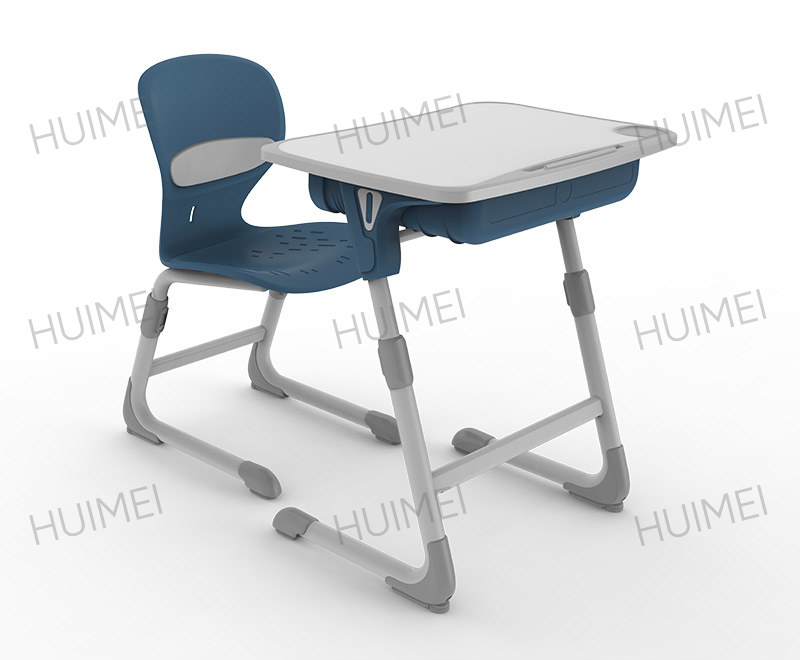 Height-Adjustable Steel-Wood Classroom Desk and Chair SetA height-adjustable steel-wood desk and chair set with multiple chair sizes, allowing primary and secondary classrooms to match students as they grow.View Product →
Shape, Capacity and Clearance
Capacity is a floor plan decision as much as a furniture decision. The sizes we use most often:
- Rectangular 1200 mm x 600 mm: two children along one long side, three at a squeeze, four if two sit at the ends.
- Rectangular 1200 mm x 800 mm: four children, one per side, and the most flexible shape for mixed activities.
- Round 900 mm: four children, with no head of the table, which suits free play.
- Kidney or crescent: one adult and two to three children, with the adult able to reach every child without leaning across the top.
Allow 900 mm between table edges so children can push chairs back, and keep 1200 mm on the main route through the room. If a child uses a walker or a wheelchair, plan one table with a 900 mm clear approach.
Then check what happens when a child leans on the edge. Press 20 kg to 25 kg onto the overhanging edge and watch the opposite legs. If they lift, the base is too light or too narrow for the way children actually use furniture.
Edges and Surfaces That Survive Cleaning
Preschool tables are wiped several times a day, and that is what fails first. A high pressure laminate top of at least 0.8 mm bonded to an 18 mm core holds up well. A thin melamine paper over particleboard does not, and once water reaches an unsealed edge the core swells and the surface lifts.
- Edge radius of 10 mm or more on every corner and edge a child can reach.
- Edge banding of 2 mm PVC or solid wood, glued and trimmed flush. Thin 0.4 mm tape peels within a term.
- Core of 18 mm plywood or moisture resistant particleboard with water resistant glue, sealed underneath.
- Powder coated steel frames with at least 1.2 mm wall thickness, checked for chips at the joints.
- Recessed, capped fasteners that small fingers cannot reach from under the top.
For indoor air quality, ask for documents rather than promises: GREENGUARD Gold, the CDPH Standard Method v1.2, or a formaldehyde class of E1 or better for the board. In the United States, coatings also need to meet lead and phthalate limits for children's products.
Test the finish with the products your staff really use. If they clean with 70 percent alcohol or a 1,000 ppm chlorine solution, check the surface against those, not against water. Light matte tops in a mid tone work best: dark tops show scratches, and gloss tops throw glare back into children's eyes.
Stability, Folding Parts and Pinch Points
Adjustable and folding tables bring mechanisms into a room full of small hands. Four points cover most of the risk:
- The height release should need two deliberate actions or a tool, so a child cannot drop the table.
- Hinges and locks should have no gap between 5 mm and 12 mm, the range where fingers get trapped.
- Casters, if fitted, should lock on at least two wheels and still hold when the table is pushed with a load on top.
- Feet should be non marking and adjustable, so the table does not rock on a floor that is 5 mm out of level.
Nesting and stacking tables suit small rooms but trade weight for stability. A 1200 mm x 600 mm table under about 15 kg can be moved by one adult, which is the point. If it also shifts when a child leans on the edge, the weight saving has gone too far.
Layout and Storage in a Room That Changes All Day
A preschool room hosts art, snack, story, table toys and quiet time in the same space, so tables move constantly. Treat weight, wheels and storage as part of the specification. Plan four to six activity zones with two to four children at each table, and keep the rest of the floor open.
A mobile cart or trolley for paper, brushes, trays and tabletop materials keeps the work surfaces clear and shortens setup time between activities.
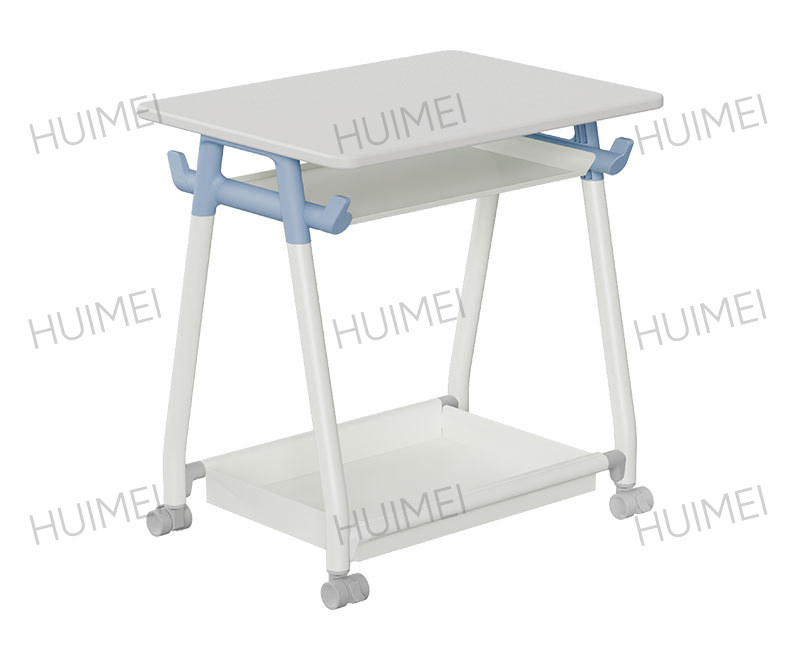 Mobile Small Table, Cart, and Storage RackA movable table, cart, and storage rack for teaching materials and student work, supporting flexible classroom layouts and quick setup for hands-on activities.View Product →
A Specification Checklist for the Purchase Order
Seven lines remove most of the argument before delivery:
- Height and size mark, with a stated tolerance, checked at the highest and lowest leg positions.
- Top construction: laminate thickness, core thickness and material, edge radius, banding thickness.
- Static load and stability figures, not a description of the frame.
- The list of cleaners and disinfectants the surface must survive.
- Adjustment range and locking method, plus spare clips, glides and casters.
- Emission and safety documents for the market you are buying for.
- Packing that survives container handling, with a stated spare parts allowance.
Most problems are small and predictable: nominal dimensions drifting 20 mm to 30 mm across a batch, colour varying from one container to the next, hardware that cannot be replaced two years later, and delivery arriving the week after term starts. All four are avoidable with a written specification and an approved sample.
Pairing Tables With Seating, and Where Huimei Fits
A table is only half of a working pair. Seat height, seat depth and back angle all have to match the table, or the child ends up with feet dangling or knees pressed against the underside. If you are replacing chairs at the same time, our guide to selecting classroom desks and chairs covers the pairing rules, and the same arithmetic applies to early years furniture.
Huimei manufactures teaching furniture, library and reading furniture, dormitory furniture, dining furniture and educational office furniture for schools and education buyers. For preschool rooms, the practical starting point is an adjustable table platform that can be reset as groups change, supported by mobile storage so one room can serve several activities in a day.
Buying activity tables for a preschool comes down to a short sequence: height from the age band, tolerance in writing, edges that survive cleaning, stability under a leaning child, and storage that keeps the room usable. Get those five right, and the colour of the top will be the least interesting decision in the project.
Send us the age range, room dimensions and the number of children per table, and we can return a layout and specification for review. Contact our team with your floor plan to begin.
Copyright© Zhejiang Huimei Industry & Trade Co., Ltd. All Rights Reserved.
Professional School Furniture Manufacturer School Furniture Supplier