 English
 русский
 Français
 عربى
عربى Español
 Português
 简体中文
简体中文
Practical Custom Office Chair Guide for Schools and Institutional Buyers
A school facilities team tested 14 stock office chairs in three administrative offices. Within a week, users rejected nine because the seat pan was too deep, the armrests blocked keyboard access, or the backrest pressed into the shoulder blades. The five that remained worked only because those users happened to match the fixed dimensions. That is the practical case for a custom office chair: it aligns seat geometry, adjustment range, materials, and serviceability with the people who actually use the chair.
For schools, colleges, and institutions, the goal is rarely one perfect chair. The goal is a repeatable specification that works across staff offices, shared workrooms, libraries, and administrative suites. Customization should focus first on fit and durability, then on finish and branding. A clear specification can reduce returns, lower replacement costs, and make procurement easier to defend. Share your chair specification with the supplier early, because late changes to foam, frame, or upholstery usually add cost and delay.
Content
- 1 What Makes a Custom Office Chair Different from a Stock Chair
- 2 Key Specifications to Lock Down Before Ordering
- 3 Ergonomic Fit for Shared and Rotating Users
- 4 Materials, Durability, and Testing
- 5 Procurement Risks and Cost Drivers
- 6 How to Run a Custom Office Chair Pilot
- 7 Common Mistakes to Avoid
- 8 Next Steps for Your Chair Program
What Makes a Custom Office Chair Different from a Stock Chair
Stock chairs are built around average dimensions, common mechanisms, and limited color choices. A custom office chair is built around a defined user group, a defined space, and a defined maintenance plan. That does not always require fully bespoke tooling. In many institutional projects, customization means selecting seat height range, seat depth, back height, armrest type, upholstery grade, caster type, and frame finish from an existing platform.
Three specifications create most of the difference between a chair that lasts and one that becomes a storage-room problem.
- Adjustment range: seat height, seat depth, back angle, and armrest height should overlap the measurements of the actual user group.
- Construction: steel frame gauge, foam density, plywood thickness, and mechanism class determine how the chair handles daily rotation.
- Serviceability: replaceable casters, gas lifts, arm caps, and upholstery panels extend service life and reduce waste.
| Specification area | Stock chair approach | Custom office chair approach | Institutional impact |
|---|---|---|---|
| Seat height | One or two ranges | Matched to user percentiles | Fewer footrests and complaints |
| Seat depth | Fixed or limited | Shorter or deeper pan options | Less pressure behind the knees |
| Upholstery | Standard colors | Cleanable, durable fabrics | Better appearance retention |
| Mechanism | Basic tilt or fixed | Task, synchro, or multi-lock | More users can work comfortably |
| Parts | Often non-specific | Documented spare parts list | Faster repairs and lower downtime |
Before requesting a quote, write a one-page chair brief. Include room types, number of users, average daily hours, storage conditions, cleaning methods, and expected service life. That brief gives the manufacturer a clear target and protects the project from vague terms such as "ergonomic" or "heavy duty." A supplier with technical manufacturing and quality control capabilities can then translate the brief into samples, test reports, and a consistent production specification.
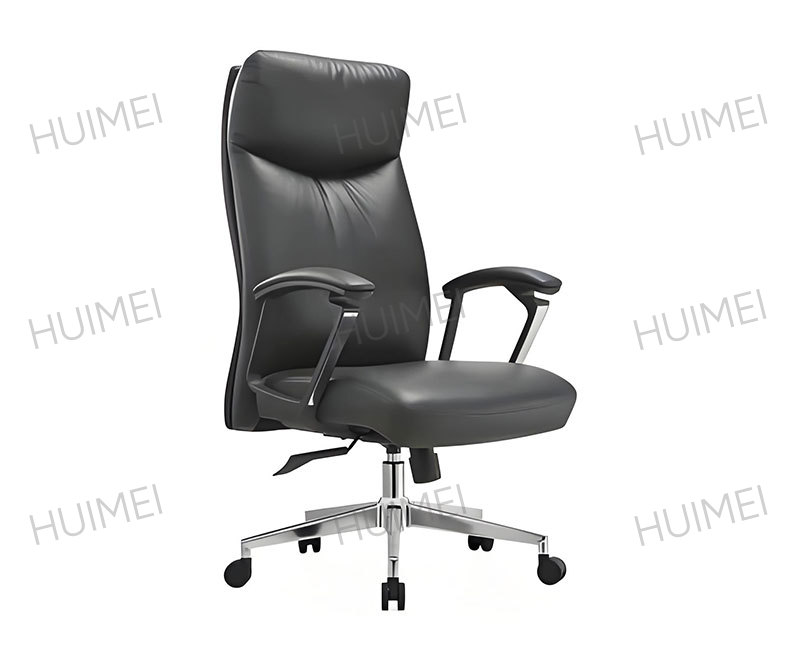 Classroom Chair Boss Chair Office Chair Ergonomic Office Chair Office Rotating Chair with 1. Fabric: Made of high-quality western leather. 2. Sponge: High quality high-density sponge that meets national flame retardant standards. 3. Caster: Guangdong five-s...View Product →
Key Specifications to Lock Down Before Ordering
Custom office chair projects fail most often at the specification stage, not during production. If the seat height range does not fit the shortest and tallest users, even a high-quality chair will be uncomfortable. If the upholstery cannot be cleaned with approved chemicals, the fabric may fail within a year. If the casters are wrong for the floor, the chair may scratch tile or roll poorly on carpet. Use measurable requirements rather than adjectives.
- Seat height range: confirm the lowest and highest seat height with the gas lift installed, not just the cylinder stroke.
- Seat depth and width: support the thighs without pressure behind the knees, and allow clearance for outerwear in cold months.
- Back height and lumbar support: define the lumbar zone and whether the back should be fixed, height-adjustable, or angle-adjustable.
- Armrests: choose fixed, height-adjustable, width-adjustable, or flip-up; flip-up models help in shared rooms and computer labs.
- Mechanism: specify tilt tension, tilt lock, back angle, and whether the seat pan slides.
- Weight rating: add a safety margin above the heaviest expected user and account for backpacks, coats, and equipment.
- Upholstery: choose test-backed fabric or easy-clean vinyl, and confirm abrasion cycles, colorfastness, and cleaning instructions.
- Casters: match hard floors, low-pile carpet, or mixed surfaces, and consider braked casters for labs and maker spaces.
The horizontal bar chart below shows how a typical institutional specification prioritizes chair features. The longest bars represent the features that most often determine whether a chair is accepted or rejected by users. Adjustability and durability usually outrank color because they affect daily comfort and repair frequency. Serviceability is also high because schools rarely replace an entire chair when one component fails. Cost remains important, but it should be evaluated over the service life rather than at the point of purchase. A slightly higher unit price can be justified when parts are replaceable and the chair fits more users.
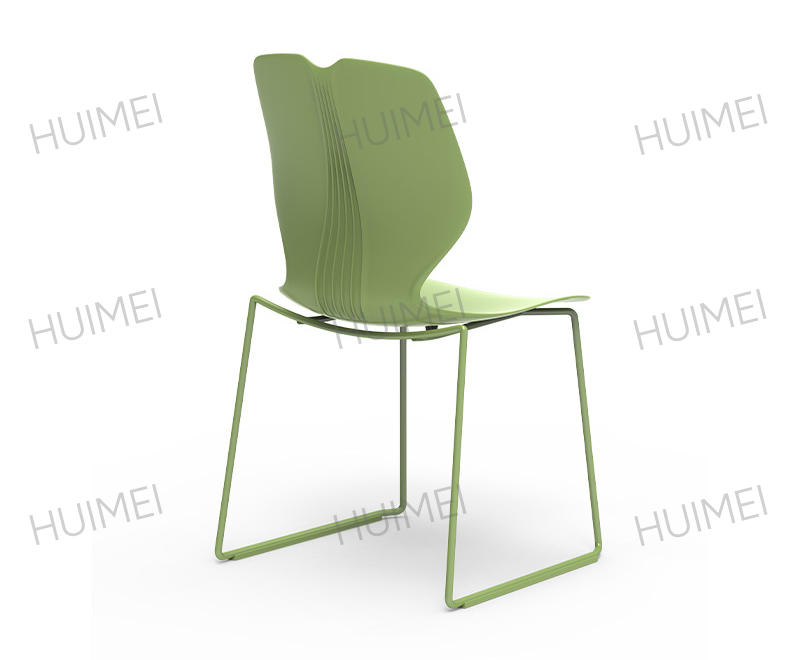 Ergonomic Fixed Chair Ergonomic Office Chair Ergonomic Lift Chair with Wheels Rest Chair1. Comfortable curved backrest:View Product →
Unlike a personal office, a school or institutional chair may be used by different people on different shifts. A custom office chair should fit a range of users, not one average user. The common target is to cover approximately the 5th percentile female through the 95th percentile male for the project population. That range affects seat height, seat depth, back height, and armrest adjustability.
For shared workstations, prioritize quick adjustments. A height-adjustable armrest with clear markings helps users return the chair to a neutral setting. A seat slider allows shorter and taller users to share the same chair. A synchro-tilt mechanism with tension control supports reclining without forcing the user to fight the spring. If the chair will be used in a library or study area, a quieter mechanism and soft casters may matter as much as lumbar support.
The radar chart compares a typical stock chair with a custom specification across five practical dimensions. The custom chair is evaluated higher on adjustability because it covers more user measurements. It also scores higher on durability and serviceability when the frame, foam, and parts are specified for institutional use. Comfort improves when the seat pan, back angle, and armrests match the task. Sustainability improves when parts can be replaced instead of discarding the whole chair. Cost is shown as a tradeoff, because customization usually raises the initial unit price but can lower total cost over a longer service life.
Materials, Durability, and Testing
In institutional settings, upholstery and foam often fail before the frame. A chair may look intact while the seat foam has collapsed, the fabric has stretched, or the mechanism has developed play. Custom office chair specifications should therefore define measurable material requirements and test methods.
Start with foam density and compression. Lower-density foam feels soft at first but loses height quickly under daily use. Higher-density molded foam costs more, yet it holds its shape and reduces early replacement. For steel frames, confirm tube thickness and welding quality. For wood components, ask about plywood thickness, glue type, and moisture resistance. For upholstery, request abrasion test results, colorfastness to rubbing, and cleaning instructions that match the school's chemicals. Mechanisms and casters should be tested to relevant furniture performance standards, and the supplier should provide a spare parts list.
The column chart below shows a simplified relationship between foam density and expected service life in a shared office chair. The values are planning estimates, not guarantees, because use hours, user weight, and maintenance also affect durability. A low-density seat may be acceptable for occasional meeting rooms but is a poor choice for dispatch desks or staff offices used all day. A mid-density foam is often the practical baseline for schools and institutions. High-density foam costs more upfront but can extend the replacement cycle and reduce downtime. The best decision uses test data and a sample chair trial, not the chart alone.
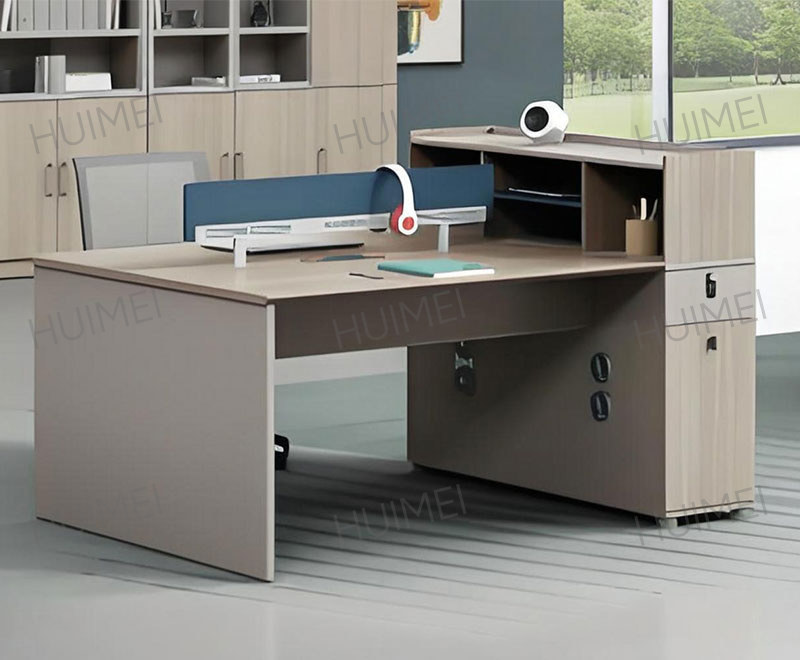 Educational Office Furniture ManufacturerTeaching Furniture Classroom Desk and ChairsView Product →
Procurement Risks and Cost Drivers
Custom office chair pricing is driven by more than the chair itself. Tooling, fabric minimums, sample rounds, testing, packaging, shipping, and spare parts all affect total cost. A supplier may quote a low unit price but require a very high order quantity, or include a mechanism that cannot be serviced locally. For institutions, the safer approach is to compare total cost of ownership over five to ten years.
Ask for a clear breakdown: unit price, sample cost, tooling cost, freight, installation, warranty, and replacement part prices. Confirm lead times for samples, production, and delivery. Clarify whether the price includes assembly, trash removal, and user training. If the project uses public funds, check documentation requirements early, including test reports, material declarations, and country-of-origin information. A custom chair program should also include a pilot order before full rollout.
The line chart below shows a typical unit cost curve as order quantity increases. At very low quantities, setup and material minimums are spread over few chairs, so the unit cost is highest. As quantity rises, the cost falls quickly because tooling and freight are shared. After a certain point, the curve flattens because material and labor remain the dominant costs. This pattern helps procurement teams decide whether to consolidate multiple departments into one order. It also shows why a small pilot order may cost more per chair than the final production run.
How to Run a Custom Office Chair Pilot
A pilot protects the institution from buying hundreds of chairs that miss the mark. Keep the pilot small but representative: include the shortest and tallest users, the heaviest users, and people who sit for different lengths of time. Use the same floor surfaces and work tasks as the final installation.
- Define the user group and collect basic measurements: seated height, popliteal height, and seated depth.
- Write a chair brief with must-have and nice-to-have requirements.
- Request two or three sample chairs with different mechanisms, foams, or armrests.
- Run a two-week trial and record comfort, adjustability, noise, cleaning, and defects.
- Inspect the samples for sharp edges, weld quality, stitching, caster movement, and mechanism play.
- Approve a golden sample and keep it as the production reference.
- Confirm spare parts, warranty terms, and replacement procedures before releasing the full order.
During the pilot, ask users to adjust the chair from scratch each day. That reveals whether the controls are intuitive and whether the adjustment range is truly usable. Check whether the upholstery shows marks after normal cleaning. Roll the chair across door thresholds and carpet edges. If a chair fails in the pilot, it is much cheaper to fix than after delivery.
Common Mistakes to Avoid
One common mistake is treating a custom office chair as a color-matching exercise. Color matters, but fit and durability matter more. Another mistake is specifying a single chair for every space. A reception area, a library help desk, and a faculty office may need different armrests, casters, and mechanisms. A third mistake is ignoring maintenance. If the institution cannot replace a gas lift or caster, a small failure can take a chair out of service for months.
Other risks include unclear test requirements, unrealistic lead times, and no golden sample. Buyers should also avoid assuming that a higher price automatically means better quality. Ask for the specific foam density, steel thickness, upholstery test results, and warranty terms. A supplier that can explain these details clearly is usually easier to work with during production and after-sales service.
Next Steps for Your Chair Program
Start with a short specification, not a long wish list. Measure the users, define the tasks, and set minimum durability requirements. Request samples, run a pilot, and document what users say. Then finalize the golden sample, spare parts list, and delivery schedule. This process turns a custom office chair purchase from a one-time transaction into a maintainable furniture standard.
If you are planning chairs for classrooms, offices, libraries, or administrative spaces, involve the manufacturer early. A practical review of dimensions, materials, and order quantities can prevent costly changes later. The best custom chair is the one that fits the people who use it, survives the environment, and can be repaired without replacing the whole seat.
Copyright© Zhejiang Huimei Industry & Trade Co., Ltd. All Rights Reserved.
Professional School Furniture Manufacturer School Furniture Supplier