 English
 русский
 Français
 عربى
عربى Español
 Português
 简体中文
简体中文
Kidney Tables for Classroom: Sizing, Placement, Cost, and Buying Guide
Picture a small group of students reading while their teacher leans in to hear each child. On a straight rectangular table the teacher must stretch across the far corner to see every face; on a kidney table the teacher sits inside the curve and keeps all students in view at once. This shape is not a design trend. It is a practical small-group teaching station used in reading intervention, math workshops, and one-on-one assessment. This guide explains what kidney tables for classroom settings are used for, which sizes and heights work best, where to place one, and what to check before ordering.
Content
- 1 Why the Kidney Shape Works in a Classroom
- 2 Daily Uses for Kidney Tables in a Classroom
- 3 Choosing the Right Size for Your Classroom
- 4 Fixed vs. Adjustable Height Kidney Tables
- 5 Placing a Kidney Table in a Busy Classroom
- 6 Tabletop Materials and Durability
- 7 Chairs and Seating Around a Kidney Table
- 8 A Quick Checklist Before You Order
- 9 Frequently Asked Questions About Kidney Tables for Classroom Use
Why the Kidney Shape Works in a Classroom
Teachers choose a kidney table because the curved front creates a continuous line of sight. When the instructor sits on the inner curve, the distance from teacher to each student is nearly the same, which keeps every child in view and within reach. The outer arc gives each student a defined workspace, so elbows stay clear of neighbors. Unlike a circular table, the kidney shape still has a relatively straight back, so it can be placed flush against a wall when the room is tight. The shape also supports collaboration because students naturally face one another as they share materials.
The radar chart compares kidney, rectangular, and round tables on five criteria. Rectangular tables score high for wall fit and space efficiency, but teacher visibility suffers at the far end. Round tables improve conversation flow, yet they waste corner space and do not tuck against a wall. The kidney table keeps the best of both worlds. It leads in teacher visibility, small group interaction, and personal student space, which makes it the most balanced choice for small group teaching.
Daily Uses for Kidney Tables in a Classroom
Kidney tables are most common in elementary classrooms, but they appear in middle schools, reading specialist offices, and adult learning centers. The shape suits any situation where an adult works with a small group, because the table does not put a barrier between the teacher and the students. Day to day, the same table can serve several routines:
- Guided reading: the teacher sits at the curve and listens to each student read from the same leveled text.
- Small group math: students spread out manipulatives while the teacher watches their process and steps in when a child stalls.
- Assessments and conferences: with the student at one side and the teacher around the curve, it is easy to look at a writing sample together.
- Phonics and word study: sorting cards and letter tiles stay inside the group's shared space instead of sliding across a long table.
- Art and hands-on tasks: the curved edge supports a comfortable working reach for children on both sides.
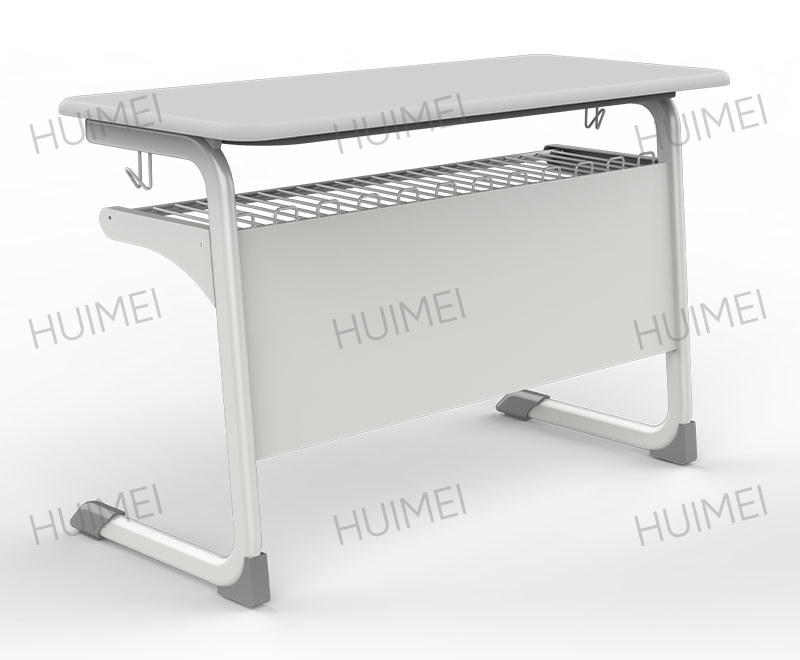 Kidney-Shaped Multi-Use Reading and Study Desk for Small GroupsThis kidney-shaped work table suits guided reading, small-group instruction, or shared study areas. Its curved design lets a teacher sit close to students, while measured options help you match size to classroom space and expected group count.View Product →
Choosing the Right Size for Your Classroom
Choosing the right size starts with how many students you expect at the table and how much floor space you have. Kidney tables are usually measured by depth by length, with depth commonly 36 or 48 inches. The longer the outer curve, the more children can sit side by side without touching elbows. A table that is too large will dominate a small reading corner, while a table that is too small will limit the number of students you can serve in one session.
| Table Size | Seating Capacity | Best For |
|---|---|---|
| 36 x 48 inches | 2-3 students | Small intervention corners, kindergarten, first grade |
| 36 x 60 inches | 3-4 students | Tight classrooms and one-to-one tutoring |
| 48 x 72 inches | 4-6 students | Most elementary classrooms |
| 48 x 96 inches | 6-8 students | Larger reading centers and co-teaching spaces |
Most classrooms choose a 48 by 72 inch kidney table, which seats four to six students without crowding. If the room is small, a 36 by 48 inch table still works for two or three students and leaves space for shelving. The table depth also matters: 36 inches is enough for a workbook and a book, while 48 inches spreads out manipulatives and laptop materials. Always measure the area before ordering and leave at least three feet of walking room behind the chairs. This keeps the table functional even during transitions between activities.
The horizontal bar chart shows how much seating increases as the table gets longer. A 48 by 60 inch table fits about four students, a 48 by 72 inch table fits six, and a 48 by 96 inch table fits eight. The extra length gives each student roughly 24 inches of shoulder space, which is enough for a book or small laptop but not for sprawling supplies. If your schedule calls for six students in every group, order at least the 72 inch length. If you plan to seat eight, make sure the room can handle the footprint and that chairs do not block the main aisle.
Fixed vs. Adjustable Height Kidney Tables
Kidney tables used to be sold in one height, and teachers simply put them on blocks or cut the legs. A better approach is to match the tabletop height to the students who will use it. A table that is too low makes students hunch forward, while a table that is too high raises their shoulders and reduces writing comfort. Fixed height models are inexpensive and are fine when a table stays in one grade level. Adjustable height kidney tables solve a long-term problem: they allow the same table to serve children across primary or middle school without being rebuilt.
The line chart plots recommended tabletop heights from kindergarten through high school. The recommended height starts near 22 inches and rises to about 30 inches by seventh grade. Between second and sixth grade, the difference is around eight inches, which is too large for a fixed height table to cover comfortably. A height-adjustable model can follow this curve in a multi-grade room or a reading intervention space used by different classes. That is why adjustable kidney tables are popular with schools that expect years of service from one purchase.
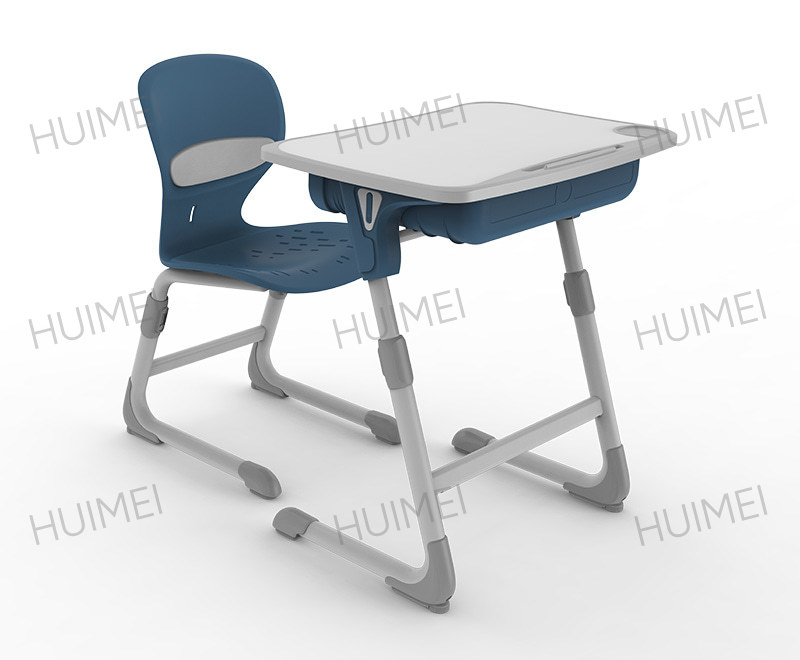 Height-Adjustable Steel-Wood Desk and Chair Set for Grades K-12This adjustable desk and chair set adapts to the recommended height range for elementary through junior high students, accommodating multi-grade rooms. Ergonomic edges, anti-slip slots, and sturdy reinforcement support long-term classroom use.View Product →
Placing a Kidney Table in a Busy Classroom
Placement matters almost as much as size. If the classroom doubles as a library or a resource room, the kidney table should sit in a zone that is visible from the doorway but does not block the main path. A back against the wall saves floor space while keeping the curved side open for the teacher. Leave at least 36 inches behind the chairs for movement. Put the table near a whiteboard or anchor chart, because small group lessons often need quick visual prompts. The lighting should come from the side so students do not squint at their books.
- Place the table against a wall when the room is narrow, but keep the teacher side open.
- Keep the table out of the main traffic path so students can reach their seats without squeezing through.
- Store frequently used materials within the teacher's reach at the inside curve.
- Position the table so the teacher can see the rest of the classroom while working with a group.
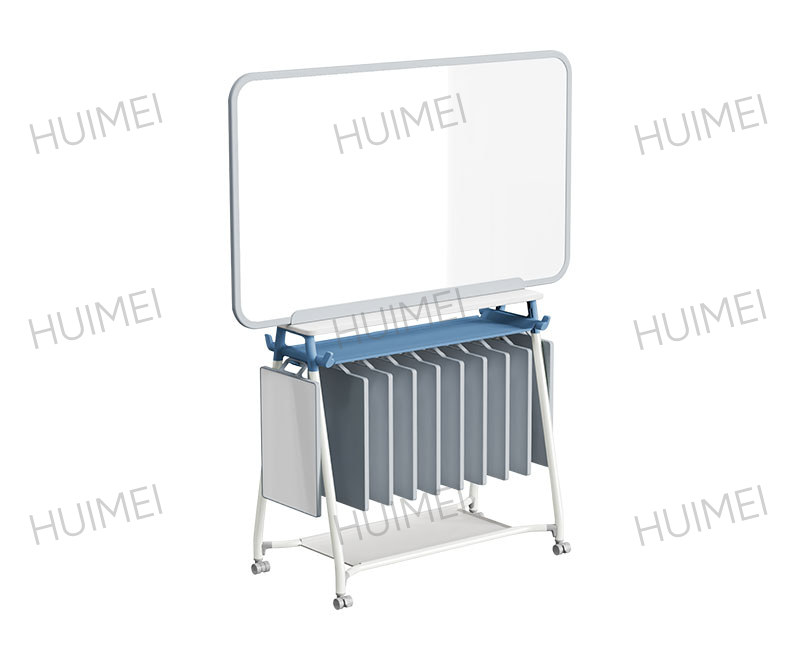 Wall-Mounted Whiteboard with Double-Sided Magnetic Writing SurfaceA practical whiteboard for classrooms or offices, with a dual-sided surface and sturdy support. Ideal near small-group tables, this wall-mounted board provides quick visual prompts for lessons without taking up valuable floor space.View Product →
Tabletop Materials and Durability
Kidney shaped tables are made with several surface materials, and the choice affects cleaning time and long-term appearance. Melamine is the most common classroom finish because it is smooth, low cost, and easy to wipe. High pressure laminate resists heat and scratches better than melamine, making it a good choice for art and STEM rooms. Steel or enamel tables handle heavy use and disinfecting, but they can feel cold and noisy. Birch plywood looks warm and can be refinished, though it needs more care to prevent stains.
The chart compares four materials on two practical scales: durability and ease of maintenance. Melamine gives the lowest durability rating but still rates well for daily wiping. Laminate performs slightly better in both areas and is a safe middle ground. Steel leads in both durability and cleaning, which is why it appears in labs and high-traffic rooms. Plywood is durable but softer than laminate or steel, so it needs periodic refinishing. For most classrooms, melamine and laminate offer the best balance of price, weight, and day-to-day care.
Chairs and Seating Around a Kidney Table
Chairs are part of the kidney table package, and they should match the table height with the child seated. A good rule is that the child's feet rest flat on the floor and the knees sit at about a 90 degree angle. Stacking chairs are practical because they clear out of the way when the table is used as a work surface. In early childhood rooms, small chairs with a seat height around 10 to 12 inches match a 21 to 23 inch table. In middle school, a 15 to 16 inch seat height works with a 29 to 31 inch table.
- Choose stackable chairs so the kidney table can be cleared quickly for other activities.
- Match the top seat height to the table height, leaving enough leg room under the skirt.
- Use chairs without wheels so students stay stable while the teacher reaches across the curve.
- Add small castors only for teacher seating if the teacher needs to slide between groups.
A Quick Checklist Before You Order
Before placing an order, walk through your classroom with a tape measure, write down the maximum number of students per group, and confirm whether you want a fixed or adjustable height. Compare the material sample with the cleaning products used by the janitorial team. Decide whether the table will live against a wall or in the center of the room, because that changes the ideal depth and leg room. If you are replacing the whole room, combine the kidney table with a consistent classroom desk and chair range to keep the visual style unified. For a broader view of furniture selection, read our guide to selecting classroom desks and chairs so that the kidney table fits with the rest of your layout.
Frequently Asked Questions About Kidney Tables for Classroom Use
What is a standard kidney table size?
The most common standard size is 48 inches deep by 72 inches long, which seats four to six students. Smaller 36 by 48 inch tables are used in kindergarten rooms and intervention corners, while 48 by 96 inch tables support larger reading groups and co-teaching spaces.
What is a kidney table used for in a classroom?
It is a small group teaching table. Teachers use it for guided reading, math workshops, assessments, phonics practice, and hands-on activities where the instructor needs close access to every student.
How many kids fit at a kidney table?
Most kidney tables hold between three and six students. A larger 96 inch table can seat up to eight, but the room must be wide enough to leave clear walkways behind the chairs.
Should I buy an adjustable height kidney table?
If the table will stay in one grade level, a fixed height model is more economical. If the table will move between grade levels, or serve an intervention room with mixed ages, an adjustable height model protects the school's investment by adapting to students over several years.
A kidney table for classroom use works because it puts the teacher and students in the right position for small group learning. The shape, when matched with the correct size, height, and surface, becomes a layout that a teacher will use every day. Start with the number of students and the floor space you have, then choose a material that fits your cleaning routine. Whether you need a single reading table or a complete classroom package, a manufacturer with a full educational furniture range can help you align the kidney table with the rest of the school. Measure carefully, compare the real product specifications, and test the height before you commit to a large order.
Copyright© Zhejiang Huimei Industry & Trade Co., Ltd. All Rights Reserved.
Professional School Furniture Manufacturer School Furniture Supplier