 English
 русский
 Français
 عربى
عربى Español
 Português
 简体中文
简体中文
How to Relieve Neck Pressure by Adjusting Office Chair Height?
In modern workplaces, prolonged sitting has become the norm. Many office workers frequently experience neck stiffness, shoulder pain, and even dizziness. This is often closely related to improper adjustment of the furniture they spend the most time with—the office chair.
Content
- 1 I. Why Does Office Chair Height Directly Affect Neck Health?
- 2 II. Four Steps to Relieve Neck Pressure with Office Chair Adjustments
- 3 1. Establish Healthy Foot Support
- 4 2. Find the Parallel Line Between Your Elbow and the Desk
- 5 3. Eye Alignment: The Crucial "Last Mile"
- 6 4. Activate the Headrest and Lumbar Support Functions
- 7 III. What Adjustment Dimensions Should You Pay Attention to When Purchasing an Office Chair?
I. Why Does Office Chair Height Directly Affect Neck Health?
When your office chair height is improperly set, your body will automatically seek compensating postures.
Chair too low: Your elbows will be higher than the desk, causing you to shrug your shoulders, which in turn leads to continuous tension in the trapezius and neck muscles.
Chair too high: To see the screen clearly, you will unconsciously lean forward or "protrude" (smartphone neck symptoms), which puts 3-5 times more pressure on the cervical spine than in a normal posture.
II. Four Steps to Relieve Neck Pressure with Office Chair Adjustments
To protect your cervical spine by adjusting your office chair, please follow these steps:
1. Establish Healthy Foot Support
First, adjust the gas spring of your office chair so that your feet are flat on the ground, with your thighs and calves forming a 90-degree angle. If your feet are dangling after adjusting the chair, it is recommended to use a footrest. Stable lower limb support is the foundation for relieving upper limb pressure.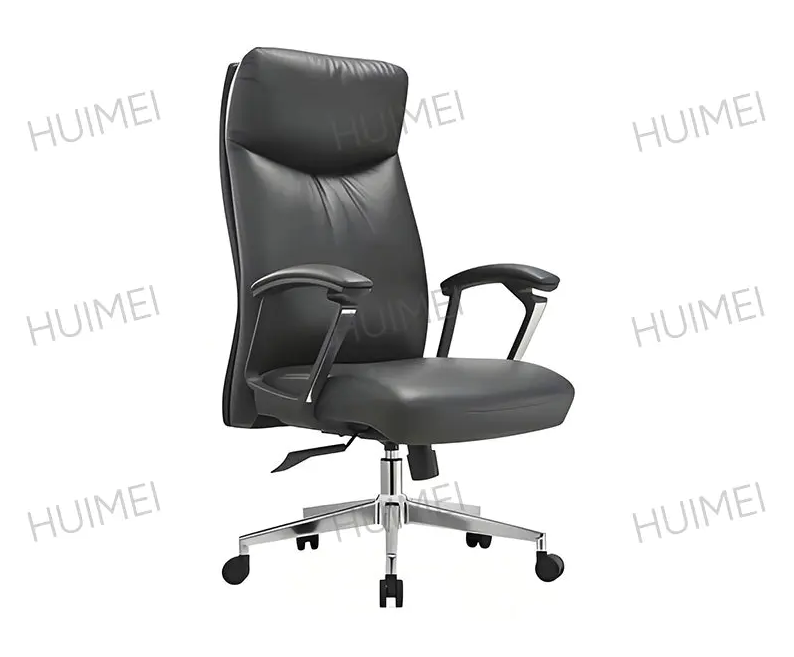
2. Find the Parallel Line Between Your Elbow and the Desk
Adjust the height of your office chair until your elbows hang naturally while typing, and your forearms are almost parallel to the desk. This avoids straining your shoulders to reach the keyboard, thus relaxing the muscles connecting to your neck.
3. Eye Alignment: The Crucial "Last Mile"
This is the core of relieving neck pressure. When you are sitting in a height-adjusted office chair, the top third of the monitor should be at eye level. If the chair height is appropriate but the screen is too low, use a monitor stand instead of tilting your head down to adjust to the screen.
4. Activate the Headrest and Lumbar Support Functions
A high-quality ergonomic office chair usually comes with an adjustable headrest. Ensure the headrest supports the natural curve of the cervical spine, not the back of the head. Combined with lumbar support, this maintains the S-curve of the spine and prevents compensatory forward head posture caused by lumbar collapse.
III. What Adjustment Dimensions Should You Pay Attention to When Purchasing an Office Chair?
If you are preparing to replace your office chair, to completely eliminate neck pain, please pay attention to the following parameters:
3D/4D Armrests: Adjustable forward, backward, left, right, and up/down, providing all-around support for the arms.
Dynamic Backrest: Provides continuous support with slight body movements, preventing prolonged fixed postures.
Breathable Material: High-elasticity mesh office chairs offer better comfort and even pressure distribution.
Adjusting the height of your office chair is not just about comfort; it's a long-term health investment. Through simple physical adjustments, you can significantly reduce the risk of cervical spondylosis and improve work efficiency.
Copyright© Zhejiang Huimei Industry & Trade Co., Ltd. All Rights Reserved.
Professional School Furniture Manufacturer School Furniture Supplier