 English
 русский
 Français
 عربى
عربى Español
 Português
 简体中文
简体中文
Custom Ergonomic Chair Buying Guide: What Schools and Offices Should Know
A campus operations manager walks into a dormitory and spots a clear sign of a seating problem: a student has folded a blanket behind a rigid chair to ease the pressure on his lower back. In the library next door, another student has stacked books under her feet so her knees can rest at a comfortable angle. Neither student is filing a complaint, yet both are saying the same thing. The standard chairs on the purchasing list do not fit the people who use them every day. A custom ergonomic chair solves this by matching seat height, seat depth, backrest contour, and support to real user needs. This guide explains what customization requires and what to specify when you order.
Content
What Makes an Ergonomic Chair Custom
A custom ergonomic chair is not a standard model with a few extra levers. It is a chair whose dimensions, adjustment ranges, materials, and support structures are specified around the people who will use it. Seat height can be set to cover the shortest and tallest users in a room. Seat depth can be matched to thigh length so the front edge does not press against the back of the knee. Lumbar support can sit where the spine actually curves, and armrests can be placed at a height that lets shoulders relax during typing. Every one of these details can be written into a specification and verified when the chairs arrive.
Suppliers handle this process very differently. Some treat ergonomics as a label and simply add a pneumatic lift. A serious manufacturer starts with the user profile, converts it into measurable ranges, and builds the chair around those numbers. Huimei has followed this logic in its ergonomics work across school and workplace settings, where fitted seating has reduced fidgeting, discomfort, and the time staff spend re-adjusting chairs.
Key Features to Specify in a Custom Ergonomic Chair
When you write a specification, every component should be questioned for its purpose, adjustment range, and durability. Priorities differ by setting. A classroom chair should adjust without tools so a teacher can match it to a student in seconds. A dormitory chair needs a compact footprint, quiet casters, and stain-resistant surfaces. An administrative office chair needs a deeper seat, a taller backrest, and a recline mechanism for long hours of document review. The checklist below keeps the specification complete regardless of setting.
- Seat height range matched to the shortest and tallest users in the group.
- Seat depth and width sized for thigh support without pressure behind the knees.
- Lumbar support with vertical adjustability of at least 8 centimeters.
- Backrest tilt with lockable positions for active work, reading, and rest.
- Armrest options that match desk height for typing tasks.
- Caster and base selection matched to floor type and safety requirements.
- Documented weight capacity for structural certification and liability records.
| Setting | Primary Need | Recommended Focus |
|---|---|---|
| Classroom | Quick fit for growing students | Tool-free seat-height adjustment, robust frame |
| Library | Long sitting comfort | Contoured backrest, adjustable lumbar support |
| Office | Postural support during intensive work | Recline mechanism, seat-depth adjustment, armrests |
| Dormitory | Compact study and rest chair | Space-efficient base, silent casters, breathable back |
The table shows how feature priorities shift across campus settings. Classroom chairs earn value through speed of adjustment rather than complex mechanisms. Library chairs need contoured support because reading sessions lack the movement breaks that classrooms provide. Office chairs justify the highest adjustability because users sit in concentrated work for hours. Dormitory chairs are judged by how cleanly they fit tight floor plans.
This chart summarizes the reasons institutional buyers mention most often after moving to custom ergonomic seating. Reduced discomfort reports lead the list because a chair that fits properly removes the most common physical complaints. Better observed posture ranks second; supervisors and teachers notice straighter sitting positions within the first few weeks. Fewer maintenance requests follow, since a correctly fitted chair is less likely to be tilted, dragged, or handled roughly. Space efficiency and consistent user satisfaction complete the list, and both matter more in crowded rooms than many teams expect. The pattern is clear: the value of a custom chair is measured by the problems it removes, not by its appearance.
For faculty offices and administrative workstations, a wheeled ergonomic chair with independent seat depth, lumbar, and recline control is a sensible baseline.
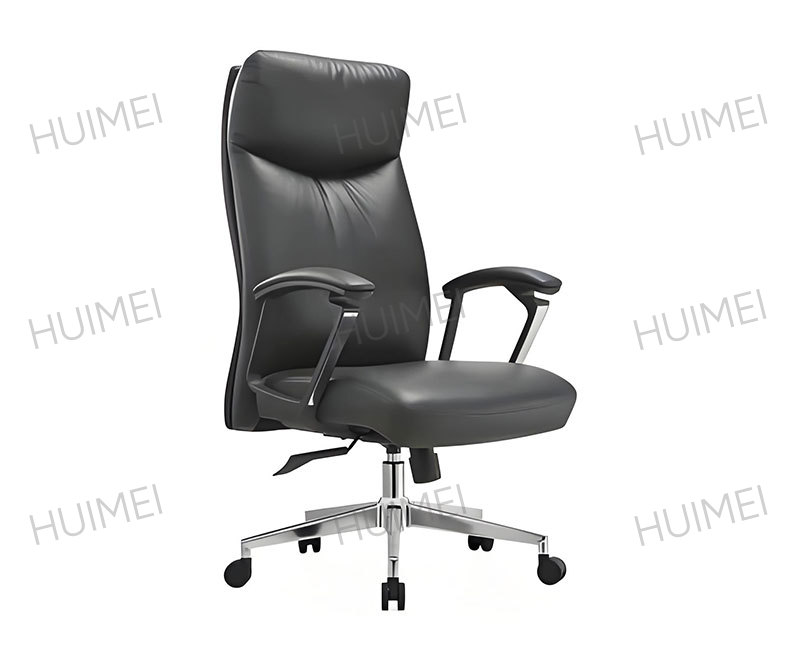 Ergonomic Office Chair with Wheeled Base and Adjustable FeaturesThis chair series includes adjustable headrest, lumbar support, tilt mechanism, and high-density foam, making it a strong baseline for faculty offices where independent seat depth and recline control are needed.View Product →
Fit Standards and Sizing
A custom ergonomic chair must fit the body of the user, and the fastest way to check a specification is to compare seat height and seat depth against the height range of the user group. In a mixed campus environment, one chair size cannot serve both small students and tall faculty members. The ranges below represent the dimensions that manufacturers commonly produce for different user height bands.
| User height | Seat height range | Seat depth range |
|---|---|---|
| 145-155 cm | 36-42 cm | 36-40 cm |
| 155-165 cm | 40-46 cm | 40-44 cm |
| 165-175 cm | 44-50 cm | 44-48 cm |
| 175-185 cm | 48-54 cm | 48-52 cm |
| Over 185 cm | 52-58 cm | 50-54 cm |
These ranges assume an upright working posture with feet flat on the floor. If users share chairs across class periods, choose the wider range and add a tool-free adjustment mechanism. If the difference between the smallest and tallest user exceeds 30 centimeters, a custom build is clearly justified. A one-size solution then forces someone to sit with unsupported feet or a compressed knee angle. Measuring a sample of your actual user group is always better than relying on published charts.
The line chart shows how a custom ergonomic chair holds comfort across a full work session compared with a standard fixed chair. Both curves start high because a new chair feels acceptable to most users in the first half hour. The gray standard chair loses comfort quickly after the second hour as pressure builds on the thighs and lower back. The red custom chair declines much more slowly because seat depth, lumbar position, and backrest angle are tuned to the user. The gap between the two curves widens steadily and becomes very large by the eighth hour. This pattern explains why libraries, offices, and dormitories report fewer interruptions after switching to fitted seating.
For dormitory study desks, where space is tight and the same chair may serve students of very different heights, Huimei's apartment chair series offers fixed, swivel, and lift-height versions with floor-protecting casters.
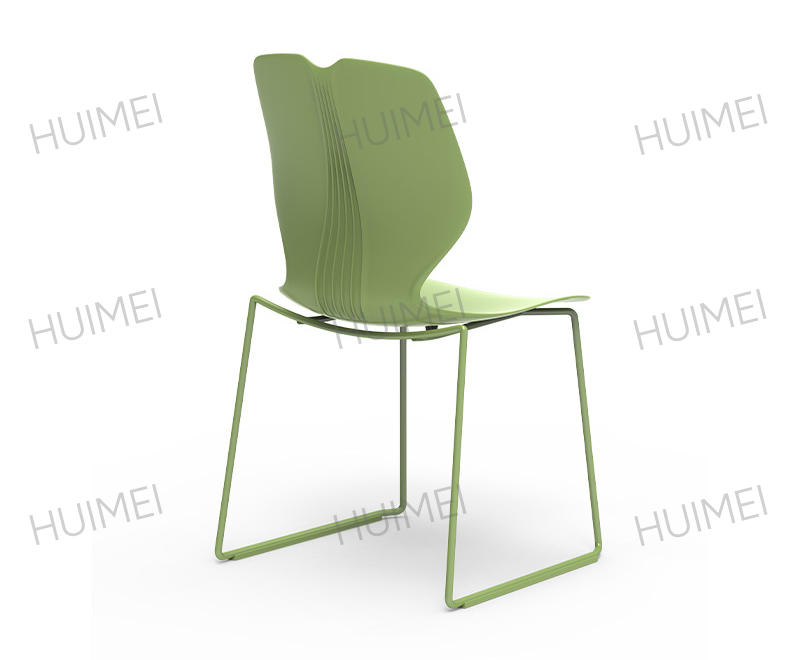 Fixed, Swivel, and Height-Adjustable Chairs for Dormitory Study DesksThese chairs feature a curved backrest and edge reinforcement, designed for comfort during long study sessions. Available in fixed, swivel, and lift-height versions with floor-protecting casters to suit shared spaces.View Product →
Matching Chair Types to Daily Use Patterns
Seating requirements also depend on how long and how often a space is used. Fixed chairs suit short, supervised activities such as tests and presentations. Swivel chairs work well in libraries where users turn between a desk and a shelf. Lift-height chairs help in dormitories and offices where users of different heights share a desk. Multi-position chairs fit meeting rooms and rest areas. The time people spend seated in each setting is the clearest signal for matching chair type to space.
This column chart compares the average hours that students and staff spend seated each day in different campus settings. Dormitory seating leads at nearly eight hours because students study, eat, use screens, and rest in the same chair. Office work follows at seven hours, and library reading sits just above six hours for people who reserve a seat for a full study block. Classroom seating is lower only because classes are broken by movement, yet it still reaches five and a half hours daily. Every one of these settings passes the threshold where seating quality begins to affect health and focus. If any column feels high for your site, custom ergonomic chairs should be treated as an essential investment.
For library and self-study areas, Huimei's reading chair family adds a hanging-bag feature and a contoured backrest that keeps users comfortable during long study blocks.
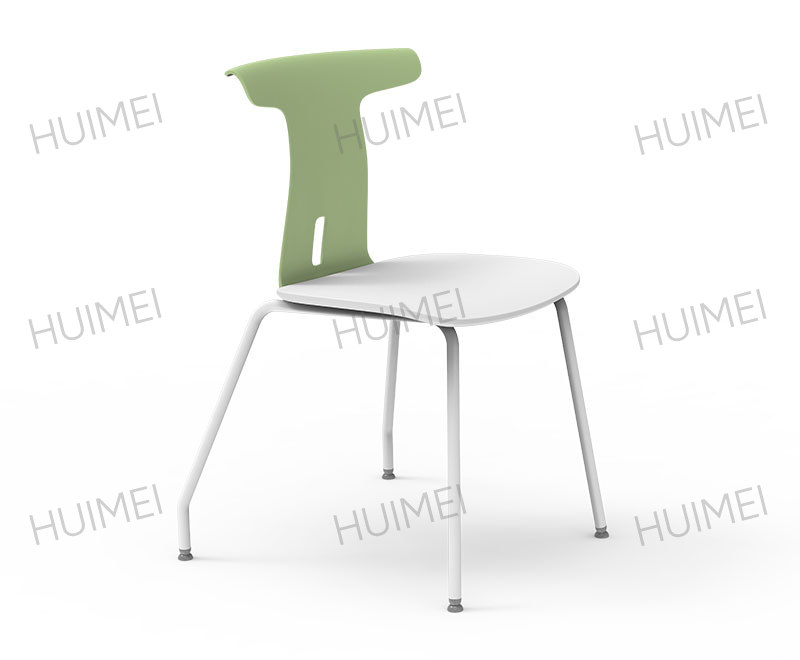 Ergonomic Reading Chair with Hanging Backpack Feature for LibrariesThis chair combines a contoured backrest with a C-shaped lifting handle and a hanging-bag design, supporting long study blocks in libraries and self-study areas while keeping the user comfortable.View Product →
Custom versus Standard: Cost and Risk
The common argument for a standard chair is price. A generic chair always looks cheaper on the purchase order. But the total cost includes complaints, re-adjustment time, premature replacement, and the risk of ergonomic-related claims. A custom ergonomic chair raises the initial price and lowers the lifecycle cost, especially when the chair is used for several hours each day. It also shifts risk from the buyer to the manufacturer when the specification is measured and documented. That is why experienced purchasers ask for a prototype sample and a test period before placing a large order.
This radar chart compares a custom ergonomic chair with a standard chair across five criteria that institutional buyers actually evaluate. Adjustability shows the largest gap because standard chairs usually offer only a height lever, while custom chairs allow independent control of seat, backrest, and armrests. Fit accuracy also favors the custom chair because its dimensions come from user measurements rather than a generic average. Durability is closer, although custom-built frames tend to use heavier steel in the areas that carry the most load. Standard chairs win slightly on first cost, but that advantage shrinks when complaints and replacement time are added. Ease of care completes the picture and explains why many institutions choose the custom route for a five-year service life.
Planning Your Custom Chair Order
A successful custom order follows the same basic sequence every time. Small steps at the beginning prevent expensive errors at the end. The list below reflects the order of work that procurement teams and facility managers use most often.
- Define user groups and measure a representative sample of real users.
- Select adjustment ranges that cover at least the 5th to 95th percentile.
- Confirm floor types, room dimensions, and desk heights before finalizing the base.
- Request a prototype sample and run a two-week trial with actual users.
- Prepare a delivery checklist covering dimensions, mechanisms, and finish quality.
- Agree on installation, spare parts, and after-sales service with the manufacturer.
Following these steps keeps the project practical and measurable. A manufacturer with experience in schools and workplace facilities can help translate your measurements into a specification. Discuss your layout and user profile with the Huimei team before you finalize the order, and you will avoid the most common mistakes in ergonomic chair procurement.
A Final Recommendation
Custom ergonomic chairs are not about luxury. They are about fit, focus, and fewer physical complaints. The difference shows up in measurable ways: steadier posture, longer comfortable study sessions, fewer maintenance requests, and lower replacement frequency. For a school, university, or office that plans to keep its furniture for a decade, specifying seats properly is one of the smartest procurement decisions available. Start with the user profile, verify dimensions, test a sample, and let the data guide the final choice.
Copyright© Zhejiang Huimei Industry & Trade Co., Ltd. All Rights Reserved.
Professional School Furniture Manufacturer School Furniture Supplier