 English
 русский
 Français
 عربى
 Español
 Português
 简体中文

Children's Classroom Chairs: A Practical Fit, Safety, and Buying Guide for Schools
A chair that is 40 mm too high can turn a settled lesson into a round of fidgeting, foot swinging, and slouched writing. That is why children's classroom chairs should be selected by fit first, then by safety and durability, and only after that by features. The right chair keeps feet supported, places the back in useful contact with the backrest, and stays stable when a child shifts, turns, or reaches for a book. Get those basics wrong and even a well-built chair becomes a daily problem.
Content
- 1 Start With Fit, Not Features
- 2 Measurements That Matter in Daily Use
- 3 Fixed Frames and Height-Adjustable Chairs
- 4 When Classrooms Need a Rest Mode
- 5 Safety, Durability, and Maintenance Checks
- 6 A Procurement Plan That Avoids Costly Reorders
- 7 How Huimei Supports School Furniture Projects
- 8 Make the Chair Fit the Child
Start With Fit, Not Features
Classroom chairs for children are not scaled-down adult chairs. Proportions change with age, and one chair size cannot serve a whole primary school well. During a sample review, ask a child to sit with both feet flat on the floor. The knees should sit close to a right angle without the front edge of the seat pressing into the back of the thighs. There should be a small gap behind the knee, roughly two or three fingers wide, so the child can use the backrest without perching on the edge.
The backrest should support the lower back rather than only the shoulder blades. If the child has to lean back excessively to feel support, the seat depth or back angle is wrong. Armrests are usually unnecessary in general classrooms because they can restrict movement and interfere with desk access. A simple, well-shaped chair that encourages a stable seated position is often more useful than a chair with many adjustments that staff never reset.
The common procurement mistake is ordering one size for an entire year group. Children in the same class can differ by several centimeters in lower-leg length. A mix of two or three size marks, managed by classroom and reviewed as children grow, is usually more practical than a single universal chair. Check that desks and chairs come from the same size family, because a correctly sized chair paired with the wrong table height can still produce poor posture.
Measurements That Matter in Daily Use
A chair can look correct in a catalogue and fail in a classroom. Use physical samples and a simple checklist rather than relying on product photos. The points below are the ones that affect comfort, control, and maintenance most often.
| Checkpoint | What to verify | Practical effect |
|---|---|---|
| Seat height | Feet flat, knees close to 90 degrees, no pressure under the thighs. | Reduces foot swinging and supports a steadier writing position. |
| Seat depth | Small gap behind the knee, back supported without sliding forward. | Helps children use the backrest instead of perching. |
| Back support | Contact around the lower back with a comfortable, not forced, angle. | Encourages better posture during longer lessons. |
| Stability | No rocking on a level floor, no sharp frame ends, safe stacking if used. | Reduces tipping risk and everyday damage. |
| Cleaning and repair | Wipeable surfaces, replaceable feet, accessible fasteners, touch-up finish. | Lowers long-term maintenance cost and downtime. |
Fixed Frames and Height-Adjustable Chairs
Fixed-frame chairs are dependable when a school can order and manage several size ranges. They have fewer settings to reset and fewer mechanisms to damage. Their weakness is inflexibility. If a class receives children from different year groups, or if furniture is moved between rooms, fixed sizes can become a mismatch within a term.
Height-adjustable chairs offer more flexibility, but only if the adjustment is simple, visible, and lockable. Look for clear size or height markings, tool-free or controlled adjustment, and a design that does not leave exposed pinch points. Staff should be able to reset a chair in seconds, not minutes. For elementary and junior high classrooms that need a coordinated desk and chair solution, a height-adjustable steel-wood set can simplify sizing while keeping the setting easy to check during daily use.
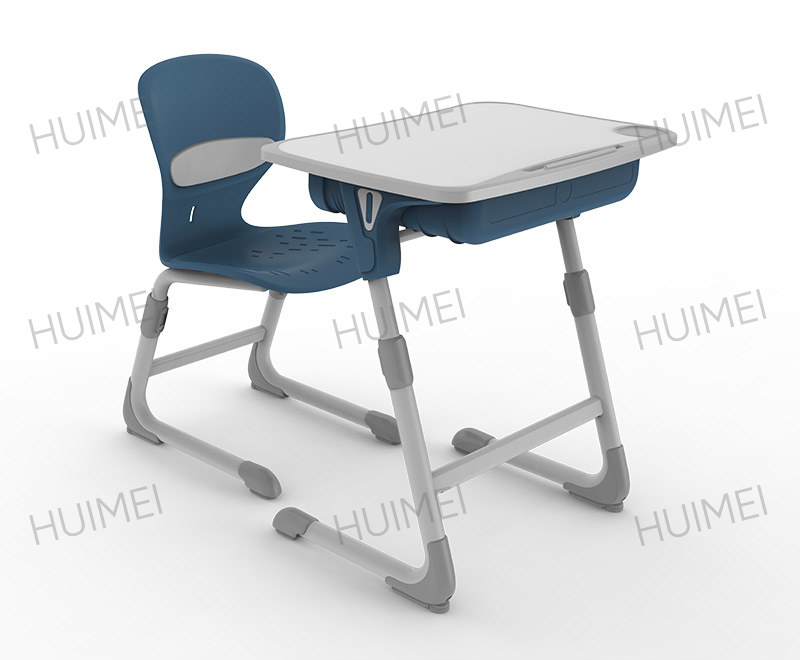 Height-Adjustable Steel-Wood Desk and Chair Set for SchoolsA coordinated classroom desk and chair set with height adjustment for elementary and junior high spaces needing flexible, easy-to-check sizing.View Product →
Adjustability is not a substitute for correct sizing. Set a rule for who checks chair heights at the start of each term, and keep a small stock of spare feet and fasteners so repairs do not pull chairs out of service for weeks.
When Classrooms Need a Rest Mode
Some primary and middle schools now plan for short rest periods within the classroom. A flip table and chair set for lying down and sleeping addresses that requirement, but it should still be judged as a chair first. In the seated position, the same fit checks apply: feet supported, lower back contact, stable frame, and no pressure behind the knees. In the rest position, check clearance, locking security, and the amount of space needed between rows.
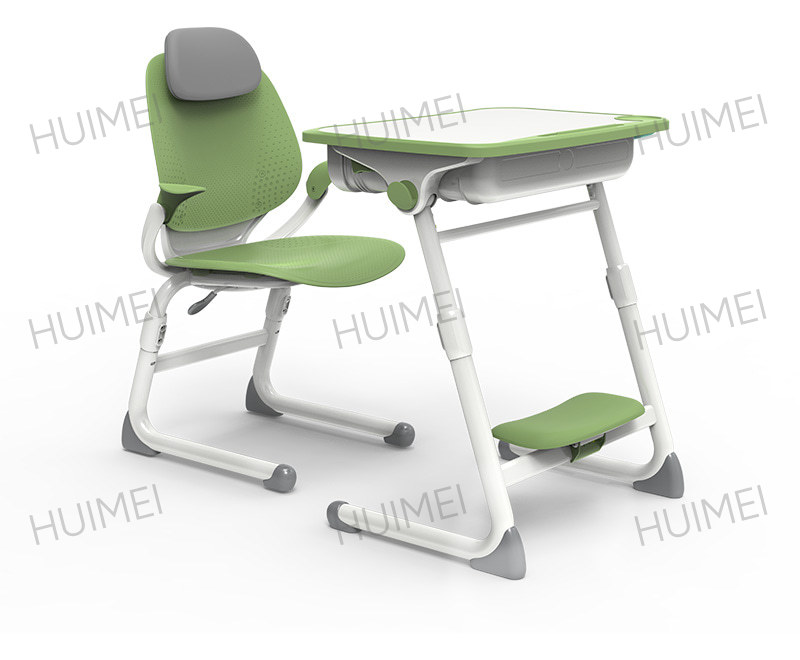 Flip Table and Chair Set for Classroom Nap BreaksA study-and-nap classroom set with flip desktop, rotating chair, adjustable headrest, and foldable foot pedal for lunch-break rest.View Product →
Rest features add mechanisms, so maintenance planning matters. Ask how hinges and locks are protected, whether students can operate them without pinching fingers, and how the fabric or surface is cleaned. A rest-friendly classroom chair should not compromise ordinary lesson use; if it does, the school ends up with a specialist product that is tolerated rather than preferred.
Safety, Durability, and Maintenance Checks
Children's classroom chairs face hard use: pushing, turning, stacking, dropped bags, and cleaning chemicals. The purchase decision should include construction details, not only the visible finish. Thin wall sections, weak welded joints, and undersized feet may pass an initial inspection and fail within two years.
- Check stability on a level floor and on the type of floor covering used in the school. A chair that rocks in the sample room will rock in class.
- Look for rounded edges, closed frame ends, and no exposed screws where clothing or skin can catch.
- Confirm the finish resists ordinary classroom cleaning. Ask for cure time and touch-up guidance before delivery.
- Require replacement feet, caps, and fasteners to be listed separately in the quotation so spare parts can be ordered later.
- Ask for load and cycle test information relevant to school use, and compare it with the expected daily movements in a full class.
Standards can help frame a tender, but they do not replace sample testing. Size-marked ranges, such as those used in educational furniture standards, are useful when the school needs a clear system for matching chairs to tables and age groups. The practical test is still whether a child can sit, write, stand, and return the chair safely.
A Procurement Plan That Avoids Costly Reorders
Procurement teams often focus on unit price and delivery date, then discover that the chosen chair cannot be adjusted to the actual student mix. A better plan starts with a short pilot in two or three classrooms. Record the size distribution, observe how students use the chairs, and ask teachers which settings get changed or ignored. Use that evidence to set the final order rather than guessing from year-group averages.
Write measurable requirements into the tender: seat height tolerance, finish quality, stability, replacement-part availability, packing method, and warranty response time. For phased projects, confirm that later batches will match the first delivery in color, size marks, and frame dimensions. A useful starting point is this classroom desk and chair selection guide, especially when chairs and tables are being purchased together.
- Define the age range and the number of size marks needed per classroom.
- Test samples with children of different heights, not only with adults.
- Set spare-part quantities at 2 to 5 percent of the order, depending on project size.
- Require installation drawings and a simple height-setting guide for teachers.
- Inspect the first delivery before releasing the remaining batches.
How Huimei Supports School Furniture Projects
Zhejiang Huimei Industry and Trade Co., Ltd. operates as a school furniture manufacturer with product categories covering teaching furniture, dormitory furniture, library furniture, dining furniture, and educational office furniture. Its classroom range includes height-adjustable desk and chair sets, university teaching furniture, podiums, and whiteboards. The company's published profile also describes project experience with education authorities, universities, and international organizations, which is relevant when a school needs coordinated furniture rather than a single chair type.
For project teams, the practical questions are the same whether the buyer is a domestic school or an overseas education programme: confirm the size range, request samples, agree on inspection criteria, and clarify packing, delivery, installation support, and spare parts. The company background and product scope are available through Huimei's company profile. A supplier visit or sample review should then test the details that matter most in children's classroom chairs: fit, stability, edge finish, adjustment security, and long-term repair options.
Make the Chair Fit the Child
The best children's classroom chairs are not the most complex or the most heavily marketed. They are the ones that place a child at a comfortable height, support the lower back, stay stable during normal classroom movement, and remain easy to clean and repair. Start with measured fit, test the chair with real students, and buy adjustments only where staff will use them. That approach protects posture, reduces disruption, and gives the school a furniture investment that still works after the first year.
Copyright© Zhejiang Huimei Industry & Trade Co., Ltd. All Rights Reserved.
Professional School Furniture Manufacturer School Furniture Supplier