 English
 русский
 Français
 عربى
 Español
 Português
 简体中文

Chairs With Tablet Arm: How to Specify Lecture Hall and Training Seating
Picture a first-year lecture hall at nine in the morning: forty students, and half of them balancing a laptop on one knee because the writing surface bolted to the chair stops a few centimetres short of the keyboard. The frame is solid, the upholstery is fine, and the room still generates complaints every semester. In most furniture orders the tablet arm is treated as an accessory and priced last, yet it is the part that decides whether a seat works for a three-hour exam or an afternoon of typing.
The practical conclusion first: write the tablet arm specification before you choose the chair model, not after. Arm surface size, mounting side, mechanism and load rating narrow the chair options far more than frame colour or leg design ever will.
Content
- 1 What Chairs With Tablet Arm Means in a Real Specification
- 2 Surface Size, Load Rating and Materials
- 3 Left-Handed Users and Accessible Positions
- 4 Room Layout Math Before You Choose a Model
- 5 Comparing the Main Tablet Arm Configurations
- 6 A Procurement Checklist That Catches Real Problems
- 7 Fitting Tablet Arm Seating Into a Whole Campus Project
What Chairs With Tablet Arm Means in a Real Specification
Suppliers use several names for the same feature: tablet arm, writing tablet, lecture hall arm, symposium arm, training arm. The label changes from catalogue to catalogue; the engineering questions do not. Four variables determine how the seat performs in daily use:
- Usable surface area and depth, measured as flat writing space rather than the outer edge of the board
- Static and dynamic load capacity, including how the arm behaves when a user leans on it to stand up
- Mounting side and whether left-handed units can be ordered in the same batch
- Mechanism type, meaning fixed, folding upward, swivelling sideways or fully removable
A writing tablet sized for a notebook is not automatically a tablet arm for a laptop. That distinction alone causes more returns than material defects, because a 300 by 250 millimetre surface holds an A4 pad comfortably and a 15-inch notebook badly.
Surface Size, Load Rating and Materials
For lecture halls and training rooms where laptops are routine, ask for a usable surface of at least 350 by 280 millimetres, with a front lip or shallow recess so a device does not slide off when the arm tilts slightly under load. Rooms used mainly for written exams can work with 300 by 250 millimetres, but check that the surface still clears a full answer booklet plus a calculator.
Load figures matter because people use tablet arms as support, not as desks. A sensible baseline is a 10 kilogram static rating for normal laptop use and a 25 kilogram proof load applied across the surface when the unit is tested, with the arm returning to level afterwards without permanent deformation. Ask for the test report rather than the catalogue claim.
Materials follow a familiar pattern. Most durable arms use an 18 to 25 millimetre particleboard or plywood core with high pressure laminate on both faces and a 2 millimetre PVC edge band, mounted on a 25 by 25 millimetre steel tube or a die-cast aluminium bracket. Powder coating on steel parts is typically 60 to 80 microns; below that, edges and weld zones show rust within a couple of academic years in humid climates. Hinges deserve their own figure: a cycle rating of 20,000 open and close movements is a reasonable minimum for folding arms in shared rooms, and replacement hinge sets should be orderable on their own.
Left-Handed Users and Accessible Positions
Most tablet arm chairs default to the right side, which leaves roughly one in ten users writing across the body or turning the chair sideways. Plan for 10 to 15 percent left-handed units in a lecture hall order and mark them clearly in the delivery schedule, because swapping sides after production is not a field fix. A simple, effective alternative is a reversible or removable arm on a subset of chairs, kept in a storage cupboard near the room and fitted as needed.
Also reserve at least one accessible position per row or per teaching zone without a fixed arm, with a clear transfer space beside it. Accessibility reviewers check this early, and retrofitting it costs more than ordering it correctly the first time.
Room Layout Math Before You Choose a Model
Tablet arms quietly change seat counts. A fixed arm adds roughly 80 to 120 millimetres to the width of a chair, so a row that fits twelve armless seats often fits eleven with arms. In fixed-row lecture halls, plan a row pitch of 950 to 1,050 millimetres so a user can stand, turn and exit with the arm in place; below 900 millimetres, knees meet tablet boards and rows become slow to leave during fire drills.
Check aisle width against local code before finalising the drawing, then confirm the clear width in the supplier's technical drawing rather than the marketing sheet. Where rows are curving or radial, the arm side should follow the seating direction consistently, otherwise the room looks accidental and left-handed users end up in the wrong seats.
Comparing the Main Tablet Arm Configurations
The table below summarises where each mechanism earns its price, based on how the room is used rather than on the specification sheet alone.
| Configuration | Best suited room | Strengths | Watch-outs |
|---|---|---|---|
| Fixed right-hand arm | Lecture halls, exam rooms | Rigid, few moving parts, lowest maintenance | Blocks left-handed users, needs wider row pitch |
| Folding upward arm | Multipurpose rooms, training spaces | Easy entry and exit, tidy storage when folded | Hinge wear, check cycle rating and spare parts |
| Swivel or side-flip arm | Seminar rooms, computer labs | User exits without shifting the chair | Needs swing clearance and a robust stop |
| Removable and reversible arm | Shared classrooms, conference rooms | Left or right use, reconfigurable layouts | Latch security, part storage, staff training |
A Procurement Checklist That Catches Real Problems
Most failures surface in the first month of term, when a sample is no longer available and replacement parts take weeks. Work through these points before signing:
- Request one fully assembled sample per model and test it with the actual devices students use, including a notebook with a separate mouse.
- Confirm load test data and hinge cycle figures, plus the standard the tests were performed against, such as EN 1729 for educational seating or BIFMA X5.1 for general contract chairs.
- Agree the left-handed share in writing and confirm it appears on the packing list, not only on the invoice description.
- Order spare arms and hinge sets equal to 2 to 3 percent of the quantity, and confirm their lead time.
- Decide delivery condition: fully assembled chairs cost more to ship but save hours of site labour and reduce cross-threaded fixings.
- Match laminate and powder coat finishes to existing rooms, and ask for physical colour samples rather than screen renders.
- Set a warranty that separates frame, mechanism and surface, since each has a different wear profile.
For the wider picture on matching seats to desks, height ranges and classroom ergonomics, this selection guide for classroom desks and chairs covers the adjacent decisions that usually appear in the same tender.
Fitting Tablet Arm Seating Into a Whole Campus Project
Tablet arm chairs rarely travel alone. A single building package usually mixes lecture hall seating, library reading chairs, seminar room chairs and staff training seats, and consistency across those spaces reduces both spares inventory and maintenance confusion. For a school furniture supplier working across an entire campus, the arm specification becomes a shared standard: the same laminate, the same hinge type, the same left-hand convention everywhere.
Zhejiang Huimei Industry and Trade, based in Wuyi County, Zhejiang, builds classroom, library, dormitory, dining and educational office furniture, with steel, wood and coating production under one roof and project experience with education authorities, universities and international organisations. As a one-stop educational equipment manufacturer, the company can align tablet arm seating with the desks, reading tables and storage specified for the same building, which keeps finishes and part numbers consistent from tender to handover.
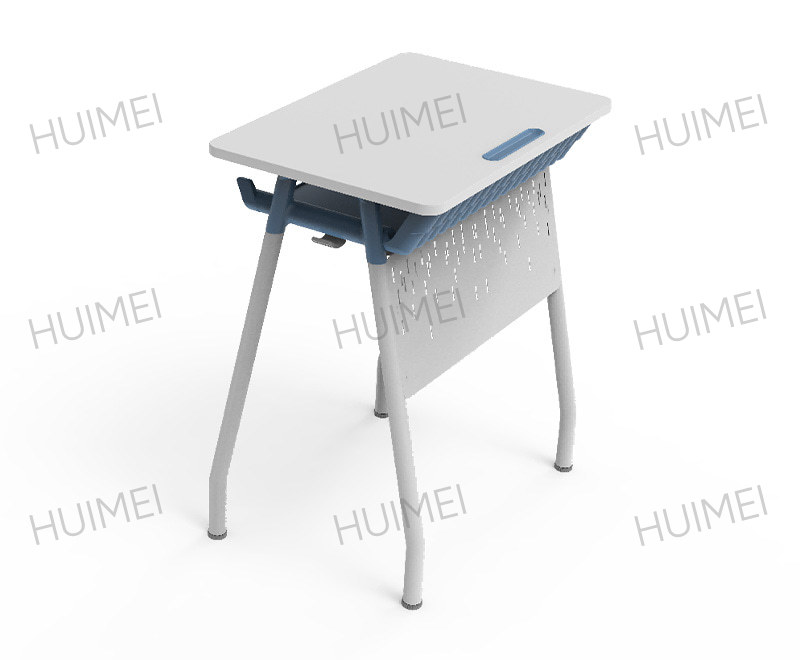 University Teaching Desk and Chair SeriesA manufacturer series for flexible university classrooms, with coordinated desk-and-chair layouts and options for tiered or flat-floor lecture theatres.View Product →
For tiered and flat-floor lecture theatres, the university teaching desk and chair series is the natural place to start, since row pitch and arm side can be fixed together rather than negotiated separately.
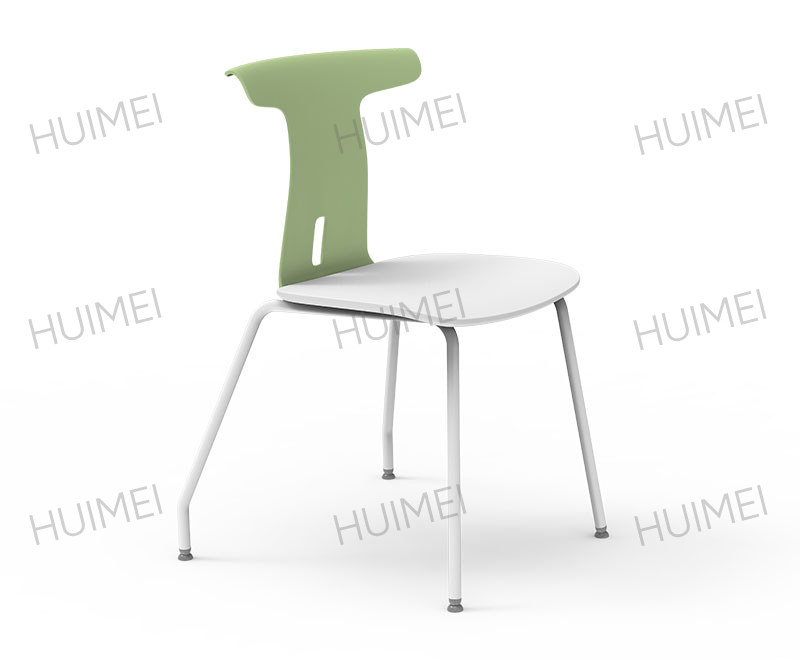 Library Reading Chair with One-Hand Carry HandleDesigned for library and self-study seating, this ergonomic reading chair combines a one-hand lifting handle with curved back and seat support.View Product →
Library and self-study areas have different priorities: quiet movement, long sitting tolerance and a surface that supports a laptop without dominating the seat. Reading chairs with a compact writing surface handle that balance better than full lecture hall units.
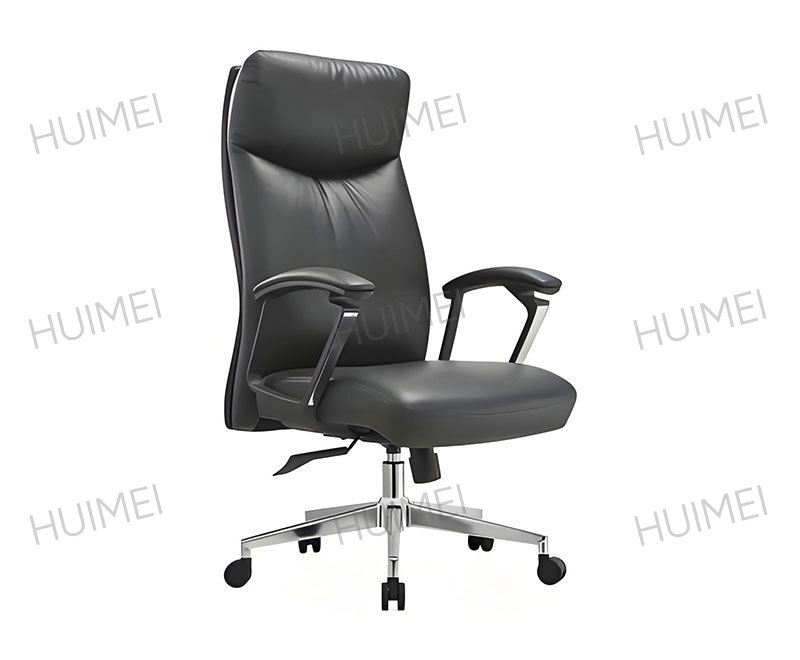 Ergonomic Teacher Workstation and Office Chair RangeWheeled ergonomic seating for teacher workstations and office use, with multiple series offering adjustable support for changing training-room layouts.View Product →
Training rooms, staff development spaces and seminar corners usually sit between classroom and office use, so an ergonomic chair range with optional arms keeps the specification flexible when room functions change.
The short version: decide the arm surface size from the devices in use, decide the mechanism from how the room is entered and cleaned, decide the mounting side from the real student population, then confirm load and hinge data with a physical sample. Those four decisions cost nothing extra at the quotation stage and save an entire academic year of improvisation afterwards.
Copyright© Zhejiang Huimei Industry & Trade Co., Ltd. All Rights Reserved.
Professional School Furniture Manufacturer School Furniture Supplier