 English
 русский
 Français
 عربى
عربى Español
 Português
 简体中文
简体中文
Can ergonomic chairs really improve learning posture and prevent myopia?
Addressing a common concern among parents and educational institutions, the answer is a resounding yes: ergonomic chairs, through their scientifically designed curves, can effectively improve learning posture and thus help prevent myopia. A good ergonomic chair provides precise lumbar and back support, helping children maintain a healthy "one fist, one foot, one inch" posture, avoiding incorrect postures such as slouching or leaning due to physical fatigue. This reduces the risk of myopia caused by excessively close viewing distances from a physical standpoint.
Content
How do ergonomic chairs "reshape" posture?
Ordinary chairs often lack the necessary support, leading students to unconsciously slouch after prolonged periods of study. High-quality ergonomic chairs address this problem through the following design principles:
1. Comfortable curved backrest and conforming support
Ergonomic chairs typically use a curved backrest that conforms to the physiological curve of the spine. This design fills the gap between the lumbar spine and the chair back, providing effective, conforming pressure support. When the lower back is supported, the spine can naturally straighten, effectively relieving fatigue caused by prolonged sitting in the classroom.
2. Streamlined design and improved concentration
The scientific streamlined design is not only for aesthetics but also promotes air circulation, reducing the stuffiness and discomfort caused by prolonged sitting. A comfortable physical state helps students maintain concentration and reduces distractions caused by frequent adjustments of posture.
Detailed craftsmanship: Dual guarantee of protection and comfort
As a professional manufacturer, we pay more attention to the details that affect long-term use when manufacturing ergonomic chair products:
Edge pressing design: Special pressing technology makes the edges smooth, reducing pressure on the back of the thighs and preventing leg numbness caused by poor blood circulation, allowing children to sit comfortably and stably.
Rolled edge protection design: This design enhances the chair's wrapping effect and effectively protects the edges from wear and tear, extending the product's lifespan and preventing sharp edges from scratching students.
Stable reinforcement at design junctions: Compared to swivel chairs, fixed chairs emphasize stability at design junctions, ensuring a smooth and stable base transition for students while writing and reading, without wobbling.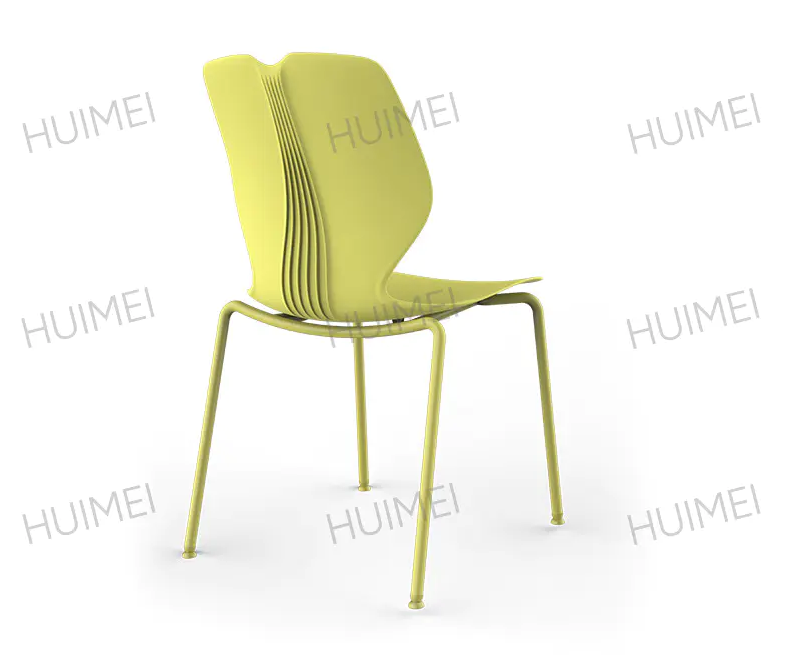
Why is a "fixed" ergonomic chair necessary for preventing myopia?
In a learning environment, stationary ergonomic chairs often have advantages over swivel chairs with wheels:
- Constant Distance: The fixed base ensures that the distance between the body and the desk remains within the standard range, preventing the viewing distance from becoming too close due to chair movement.
- Stable Posture: The fixed structure and ergonomic design of the chair encourage good sitting posture, preventing scoliosis and the associated vision problems.
Purchasing Advice: How to identify a truly ergonomic chair?
When choosing an ergonomic chair, it is recommended to pay attention to the following three points:
- Check the curves: Does the backrest truly conform to the curve of the lower back?
- Feel the edges: Are there smooth edges and safety features?
- Test the stability: Are the structural components securely joined, and are there any unusual noises?
An ergonomic chair is more than just a chair; it's a professional aid for preventing myopia in young people and protecting spinal health. Through its comfortable curved backrest and precise pressure support, it makes correct sitting posture a habit, not a burden.
Copyright© Zhejiang Huimei Industry & Trade Co., Ltd. All Rights Reserved.
Professional School Furniture Manufacturer School Furniture Supplier