 English
 русский
 Français
 عربى
 Español
 Português
 简体中文

5 Tier Lockers Buying Guide: Steel Gauge, Sizes, Safety, and School Use
Five tier lockers solve a common storage problem: they give five people a private compartment in roughly the footprint of one full height cabinet. That density is useful in schools, staff rooms, clinics, gyms, and temporary facilities, but it also creates trade offs. A poorly specified 5 tier locker can sag, jam, rust, or become a security weak point. A well specified unit can serve daily use for a decade or more.
The short answer is this: buy 5 tier lockers by steel gauge, compartment dimensions, door stiffness, lock type, ventilation, and installation method before you compare color or price. Those factors decide whether the lockers fit the people using them and whether maintenance stays manageable. The rest of this guide explains what to check, where the format works, and how to avoid common procurement errors.
Content
What a 5 Tier Locker Is and When It Makes Sense
A 5 tier locker is a vertical bank of five individual compartments, each usually with its own door and lock. The bank may be one column wide, or it may be part of a wider bank with two, three, or more columns joined side by side. Each compartment is typically sized for a backpack, bag, helmet, shoes, books, or personal protective equipment. The door opening is the critical dimension: if the user cannot slide a standard backpack in without forcing it, the locker will be left open or overloaded.
This format makes sense when personal storage must be assigned to many people in a small area. In a student corridor, a 5 tier locker bank can serve five learners in a space that would hold only one or two wider lockers. In a staff room, it can separate coats, bags, and small tools. In a clinic or workshop, it can hold uniforms and personal items while keeping them off benches and floors.
It is less suitable for bulky equipment, hanging garments, or long items. If users need to store a coat on a hanger, a full height locker or a mixed bank is usually better. If they need to store tools and parts, a wider compartment or a cabinet with shelves may be more practical. The 5 tier format works best when the stored item is compact and handled daily.
The Specifications That Matter Most
Two locker banks can look identical online and behave very differently after a year of use. The table below summarizes the specifications that deserve attention during evaluation.
| Specification | Why It Matters | Practical Check |
|---|---|---|
| Steel gauge | Thinner steel dents easily at the door edge and hinge. Thicker steel holds shape but adds weight and cost. | Ask for gauge on the door, frame, and shelf. Confirm whether gauge is measured before or after coating. |
| Compartment size | Door opening and internal depth decide whether bags, books, or helmets fit without cramming. | Measure the clear opening, not the outer cabinet. Test with the largest item users will store. |
| Locking system | Key locks, padlocks, coin locks, and digital locks have different management and replacement costs. | Check keying options, master key control, and how lost keys or forgotten codes are handled. |
| Ventilation | Closed compartments can trap moisture and odors, especially in warm or humid locations. | Look for door vents, rear vents, or perforated panels that allow air movement without weakening the door. |
| Door and hinge design | Reinforced doors and welded hinges resist twisting and slamming better than light folded edges. | Open and close a sample under load. Check for sharp edges, stoppers, and quiet closing. |
| Finish and coating | Powder coating protects against rust, scratches, and cleaning chemicals. | Ask about pretreatment, coating thickness, and color fastness. Inspect corners and welds for coverage. |
Cost should be compared after these specifications are fixed. A lower price achieved by reducing gauge, omitting ventilation, or using light hinges usually returns as repair work, replacement doors, and complaints. For institutional buyers, the most useful comparison is total cost over the expected service life, not the invoice price alone.
For manufacturers, repeatable quality comes from controlled steel fabrication, coating, and assembly. Buyers can review a supplier's manufacturing technology and sample inspection process before placing a large order.
Where 5 Tier Lockers Work Best
Schools and student storage
In schools, 5 tier lockers are often placed in corridors, locker rooms, homeroom areas, and sports facilities. Primary and secondary students may store bags, books, shoes, and sports clothes. The compartment should be sized for the age group. Younger students need a lower hook height and lighter doors; older students and university students often carry larger bags and laptops. If the lockers are installed in a busy corridor, recessed handles and rounded edges reduce snagging and injury risk.
For boarding schools and university dormitories, personal storage often works alongside beds, desks, and shared cabinets. A locker bank can be combined with dormitory furniture to create a complete sleep, study, and storage zone without filling the room with separate cabinets.
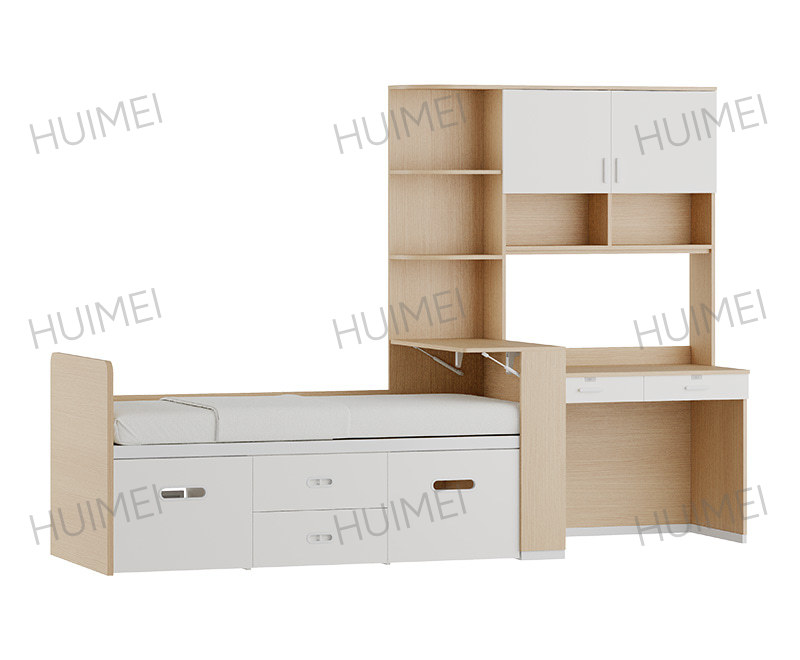 Dormitory Furniture Range for Boarding and Campus HousingHuimei groups apartment combination beds, apartment beds, and chairs for dormitory sleep, study, and storage, with custom design and installation support.View Product →
In staff rooms and administrative areas, 5 tier lockers are usually assigned to employees, part time staff, or visitors. They hold handbags, coats, headphones, documents, and small personal items. The main planning issue is management: who holds the master key, how temporary users receive access, and how lockers are cleaned between assignments. A simple numbered system and a written allocation log prevent most disputes.
Where documents or valuables need stronger protection, a lockable cabinet may be a better fit than an open locker bank. Options such as confidential, intelligent, fireproof, and administrative file cabinets can complement locker storage in offices that handle sensitive records.
 Confidential, Intelligent, Fireproof and Administrative File CabinetsHuimei file cabinet series supports educational and administrative record storage, with confidential, intelligent, fireproof, administrative, and multifunctional options in E1-grade construction.View Product →
Health, sports, and industrial settings
Clinics, gyms, workshops, and factories use 5 tier lockers for uniforms, shoes, helmets, and personal protective equipment. Ventilation becomes more important in these settings because damp clothing and footwear can remain in a closed compartment for hours. Look for ventilated doors and a finish that resists cleaning agents. If the lockers are near wet areas, choose adjustable feet or a base plinth that keeps the cabinet off the floor.
Locking, Ventilation, and Daily Durability
Locks are the most frequently replaced component in any locker program. Key locks are simple and familiar, but they require key control and a plan for lost keys. Padlock hasps give users control, but they also allow different padlock sizes and may be removed. Coin or token locks suit public areas, while digital locks reduce key management but depend on batteries, codes, and software. There is no universal best choice; the right lock matches the supervision level and the value of the stored items.
Ventilation is easy to overlook until odors and condensation appear. A small vent pattern in the door or side panel can improve air movement without compromising privacy. In humid climates, avoid sealed compartments with no airflow, and do not place lockers directly against a damp wall without a gap. If the room is washed down regularly, raise the locker bank on a plinth or legs.
Durability comes from details: welded hinge points, reinforced door edges, a stiff frame, and a coating that covers the inside of the door as well as the outside. A sample inspection should include opening all five doors, checking alignment, and looking for sharp edges or exposed fixings. For high traffic settings, specify a heavier door and a lock that cannot be twisted off from the outside.
Sizing, Layout, and Installation Planning
Start with the users and the items they carry. Measure the largest bag, helmet, or pair of shoes, then add clearance. A compartment that is too tight will be forced; a compartment that is too wide wastes space and reduces the number of users served. Standard 5 tier lockers vary by market, so do not rely on a catalog photo. Ask for a dimension drawing that shows the clear opening, internal depth, shelf position, and door swing.
Layout is equally important. Door swing needs clearance in front of the bank. If the corridor is narrow, recessed handles and a flat door profile save space. Anchor the bank to the wall or floor to prevent tipping, especially in schools and public facilities. Leave a gap behind the lockers for air movement and cleaning. If the floor is uneven, use adjustable feet rather than packing pieces.
For offices and educational administration areas, locker planning should connect with the wider furniture layout. A storage wall can combine lockers, file cabinets, and work surfaces so that personal storage and document storage do not compete for the same floor area.
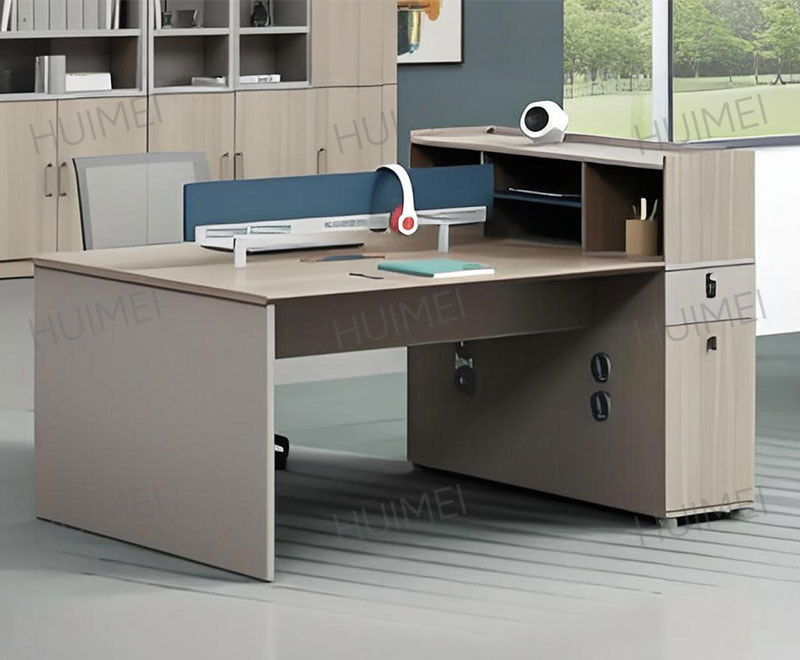 Educational Office Furniture for Schools and AdministrationsHuimei offers office desks, chairs, and file cabinets for educational administration, with custom and OEM options for universities and international organizations.View Product →
Buying Checklist for Schools and Institutions
- Confirm the clear compartment opening with the largest item users will store.
- Check steel gauge for door, frame, and shelf, not only the cabinet body.
- Decide on lock type and write a key or code management policy.
- Require ventilation in humid, athletic, or industrial locations.
- Inspect door alignment, hinge welds, and edge finish on a sample.
- Plan anchor points, door swing, cleaning access, and floor clearance.
- Compare warranty, spare parts, and replacement door availability.
- Calculate cost per user and expected service life, not just unit price.
Making the Right Storage Decision
5 tier lockers are a practical choice when many people need compact, assigned storage in a limited area. They are not a universal answer. The best results come from matching compartment size, lock strategy, ventilation, and installation to the actual users and the room. A buyer who checks those details before ordering will avoid the most expensive problems: doors that do not close, locks that fail early, and banks that cannot be cleaned or serviced efficiently.
For a school furniture or educational equipment project, the storage decision should also fit the wider supply plan. Review the supplier's company profile, production scope, and project experience alongside the product sample. That approach keeps 5 tier lockers from becoming an isolated purchase and turns them into a durable part of the facility.
Copyright© Zhejiang Huimei Industry & Trade Co., Ltd. All Rights Reserved.
Professional School Furniture Manufacturer School Furniture Supplier