 English
 русский
 Français
 عربى
عربى Español
 Português
 简体中文
简体中文
2026 Modern School Furniture Procurement Guide: Balancing Quality, Safety, and Budget
In the educational landscape of 2026, the core conclusion for successful school furniture procurement is: "Total Life Cycle Cost" must be prioritized over the "Initial Purchase Price." Modern procurement is no longer just about filling classrooms; it is an investment in Teaching Furniture that possesses resilience, safety, ergonomics, and aesthetic design, directly enhancing student focus and reducing long-term maintenance expenses. A scientific procurement list should prioritize furniture that meets spinal development needs, is non-toxic and eco-friendly, and offers modular flexibility.
Content
Prioritize High Resilience: Shifting from "Consumables" to "Long-term Assets"
In a context of limited educational budgets, durability is the best path to fiscal responsibility. Traditional cheap desks and chairs often suffer structural damage within 3-5 years, whereas modern Teaching Furniture standards for 2026 demand a design life typically exceeding 15 years.
- Material Selection: High-Pressure Laminate (HPL) desktops and powder-coated steel frames are recommended. Compared to ordinary melamine boards, HPL improves scratch and heat resistance by approximately 40%.
- Maintenance Costs: High-quality furniture components (such as chair glides and drawer slides) should be independently replaceable, which can reduce overall scrap rates by 80%.
| Feature | Cheap Conventional Furniture | 2026 Standard Modern Furniture |
| Average Lifespan | 3 - 5 Years | 12 - 20 Years |
| Cleaning Difficulty | Easy ink/stain penetration | Chemical-resistant surface, easy to wipe |
| Structural Connection | Self-tapping screws (easy to loosen) | Mechanical bolt connections (more stable) |
Safety First: Collision-Free Design and Environmental Health
The frequent movement of students within classrooms requires furniture with extremely high safety redundancy. Procurement trends in 2026 have shifted from mere "sturdiness" to "fool-proof and error-proof" designs.
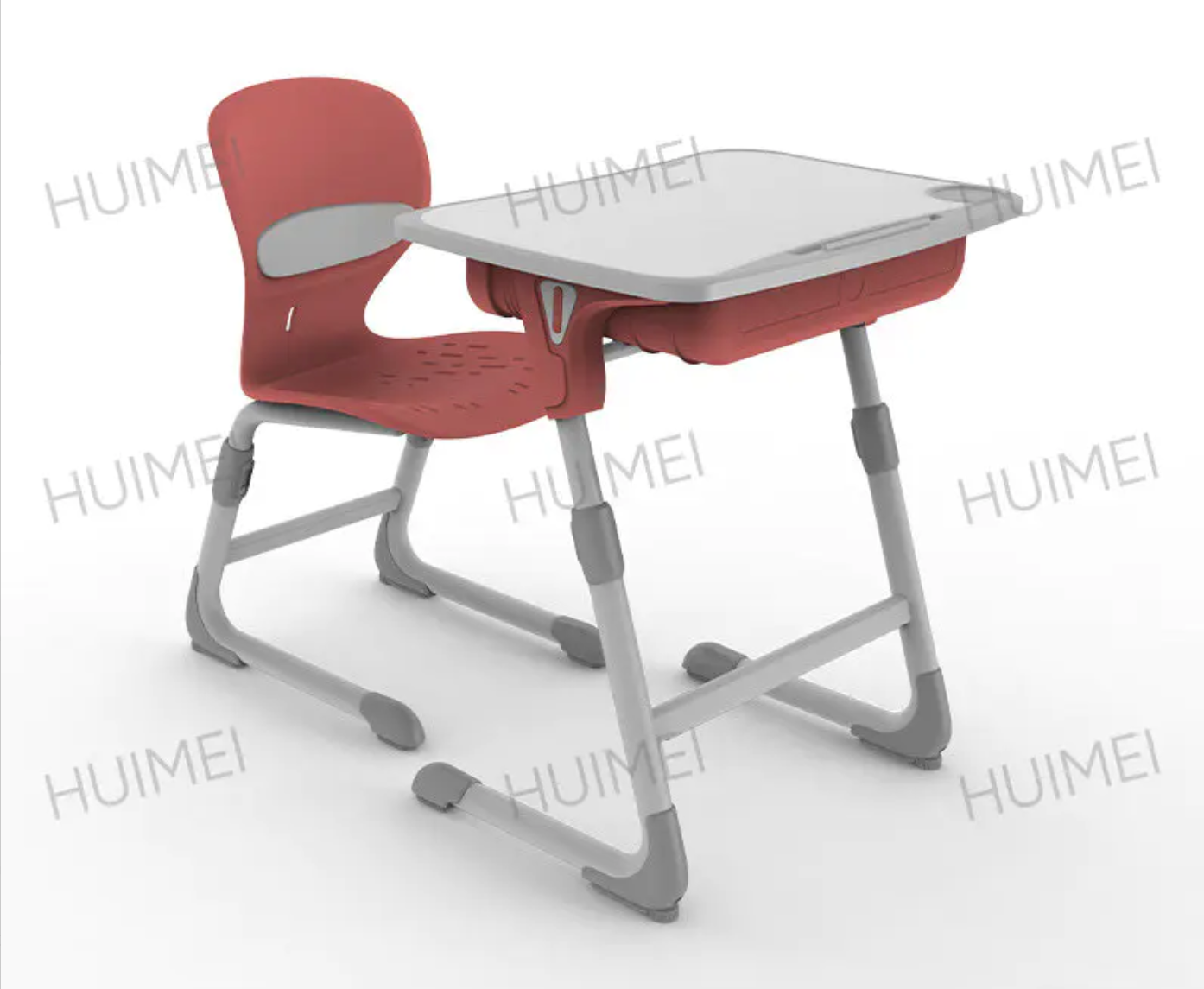
Collision-Free Design
All table corners and chair edges must feature large rounded designs (R-angle radius not less than 20mm). Statistics show that classrooms using rounded designs see a reduction in student injury rates from bumps by approximately 65%.
Chemical Safety
Suppliers must be required to provide "Zero Formaldehyde" or higher international standard test reports. As indoor air quality standards rise, low VOC (Volatile Organic Compound) emission furniture is key to protecting student respiratory health.
Ergonomics: Supporting Spinal Development to Enhance Focus
Long periods of sitting with incorrect posture are the leading causes of myopia and scoliosis in students. Modern Teaching Furniture is viewed as a "pedagogical tool" that directly affects a student's cognitive load.
- Spinal Support: Chair backrests should have dynamic flexibility to support the S-curve of the lumbar spine. Research indicates that chairs providing good spinal support can extend a student's continuous concentration time by 15-20 minutes.
- Height Adjustability: Considering that height differences among peers can be as much as 20cm, procurement should include at least 30% height-adjustable desks and chairs to ensure every student can "keep feet flat and elbows level."
Modern Aesthetics: Creating Well-being and Collaboration
Aesthetics are not just for looks; they influence campus culture through color psychology and spatial layout.
- Color Psychology Application: Using low-saturation natural tones (such as sage green or soft blue) helps relieve exam anxiety, while bright-colored furniture in public discussion areas can stimulate social activity.
- Modular Layout: Modern furniture should be capable of rapid rearrangement. For example, flip-top tables with silent casters can switch from "independent study mode" to "group collaboration mode" within 2 minutes, greatly improving classroom space utilization.
Strategies for Budget Balancing
To achieve high quality without exceeding the budget, school procurement departments can adopt these practical solutions:
- Phased Upgrades: Prioritize replacing furniture in classrooms with the highest frequency of use, and defer update plans for administrative areas or special function rooms to concentrate funds on top-quality core teaching equipment.
- Bulk Customization: By combining standardized parts with different color schemes, schools can enjoy bulk purchase discounts (typically 15%-25% lower than fragmented purchases) while maintaining unique designs for each grade.
- Focus on Warranty Agreements: Premium suppliers in 2026 typically offer warranties of 10 years or more. Incorporating potential repair costs into the initial contract effectively hedges against future financial fluctuations.
Expert Tip: Conduct a "Pilot Classroom" test before purchasing. Let teachers and students use selected models in a sample room for a week. Gathering feedback before placing a large-scale order is the most effective way to avoid decision errors.
Copyright© Zhejiang Huimei Industry & Trade Co., Ltd. All Rights Reserved.
Professional School Furniture Manufacturer School Furniture Supplier